

New York is a story that is not only about skyscrapers that almost touch the sky. It’s a city that has unusually beautiful green oases in the midst of tall buildings, a frantic flow of cars and beautiful architecture around it.
In New York, you have the opportunity to relax in cozy squares and parks that are scattered in different parts of the city. Some of them are world-famous, others have been used for filming the world’s most popular bestsellers, and there are those that are simply loved not only by citizens but also by tourists. Local authorities are interested in arranging picturesque vacation spots in a bustling metropolis. That’s why there are more than 180 park areas for recreation in New York. Every year, their infrastructure is improved and updated to meet the tastes of everyone — adults and children alike.
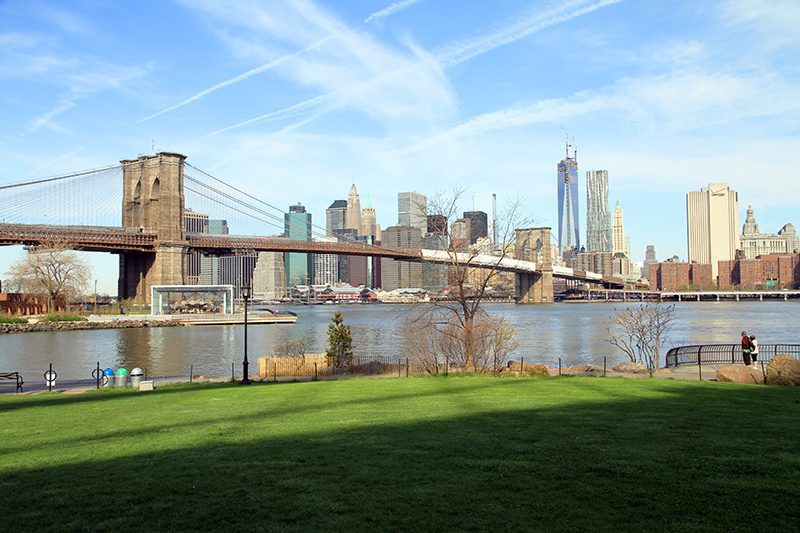
City residents recommend taking a walk in Brooklyn Bridge Park, which offers an incredibly beautiful panorama of Manhattan. Without exaggeration, this is the perfect place for an outdoor picnic with a unique view of the surroundings. Learn more at new-york.name.
The history of the future park
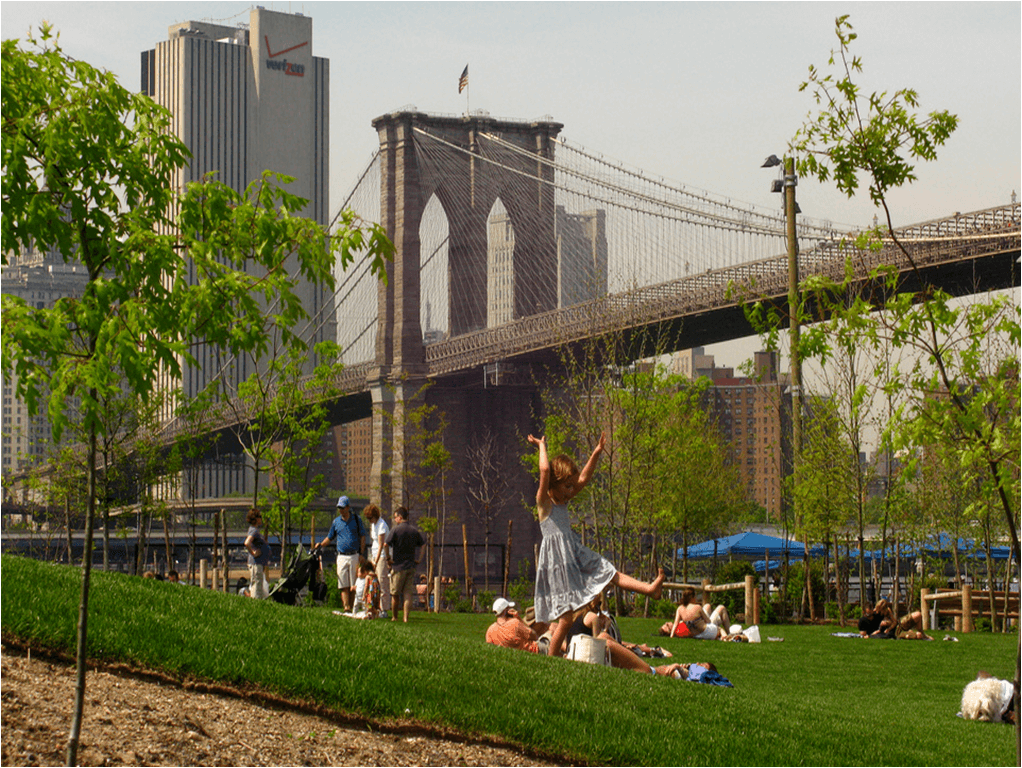
In 2010, one of the most picturesque parks in Brooklyn was opened on the banks of the East River, which is a great place to relax. Children, adults and couples in love, who are often seen in the shade of the trees, are fond of this place. There are lots of entertainment for all preferences, including soccer and basketball fields, tennis courts, children’s carousels, picnic areas and the most delicious ice cream from the old Brooklyn Ice Cream Factory.
The territory of Brooklyn Bridge Park stretches over 34 hectares and there are parts of the park that are still under construction. Every year, the park area is updated, improving the leisure time of vacationers.
It’s hard to believe, but a few centuries ago, on the site of a beautiful park, there was a port that received various cargoes and transportation from other parts of America. At first, it was a small settlement, but in the nineteenth century it became a large residential area that stood out from the rest. In fact, it was an important port, the territory of which was replenished with new brick warehouses every time. People even nicknamed it the walled city. Starting in 1870, in addition to warehouses, Empire stores began to be actively built.
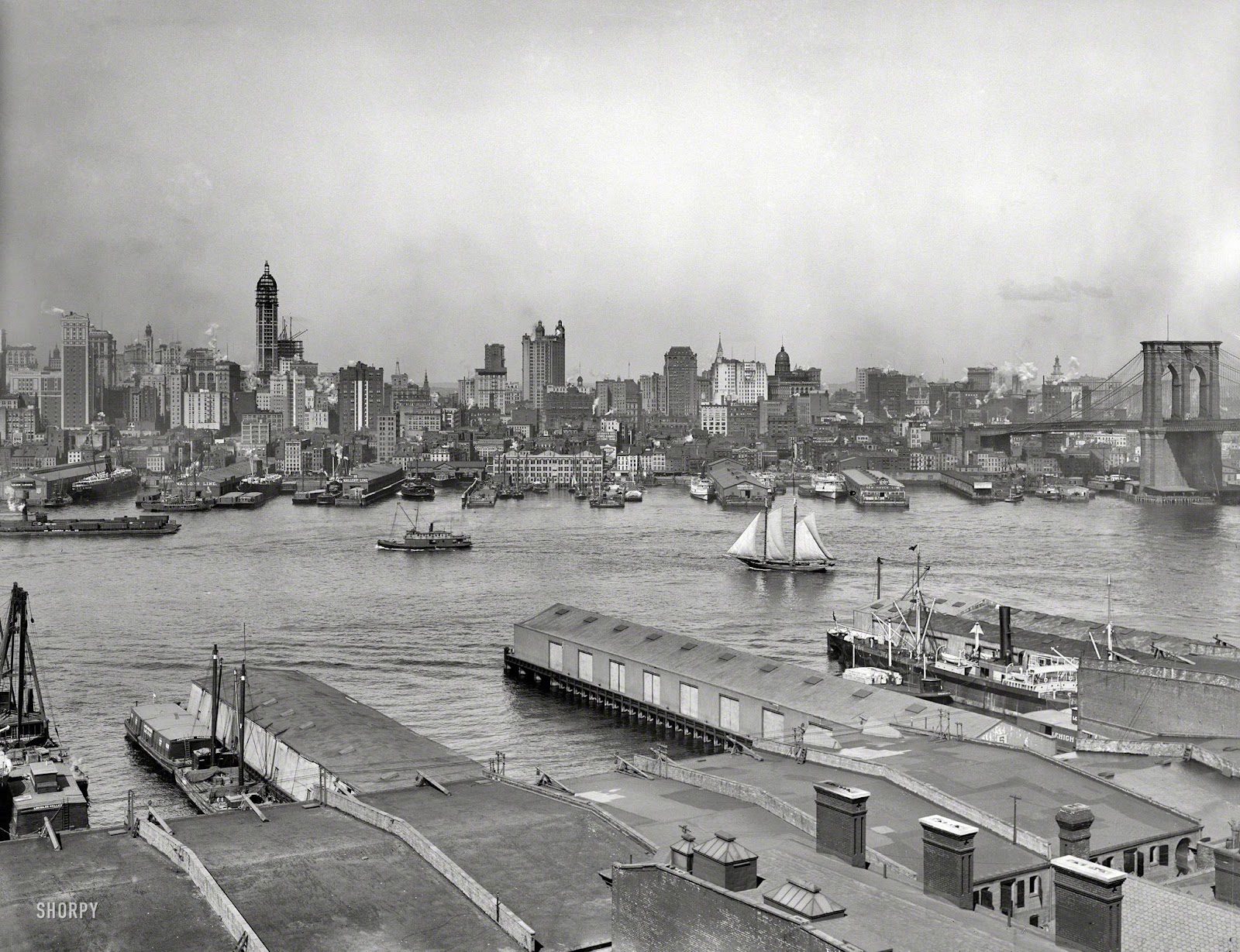
It is important to add that in August 1776, the Continental Army, led by its commander-in-chief George Washington, used this area as a strategically important object in the Battle of Long Island in the struggle for independence.
The opening of the Brooklyn Bridge in 1883 had a negative impact on the ferry service, as the bridge became one of the main means of communication and transportation between Brooklyn and Manhattan. Subsequently, in 1909, the Manhattan Bridge was opened, which enhanced the development of internal city traffic, completely bypassing the East River and the cessation of any trade operations.
During the 1950s, more than a hundred warehouses and two dozen small berths were eliminated. Over time, the development of trade routes and technology led to the decision of the New York City administration to end cooperation with cargo ships in 1983. Gradually, all the warehouses of that time were demolished.
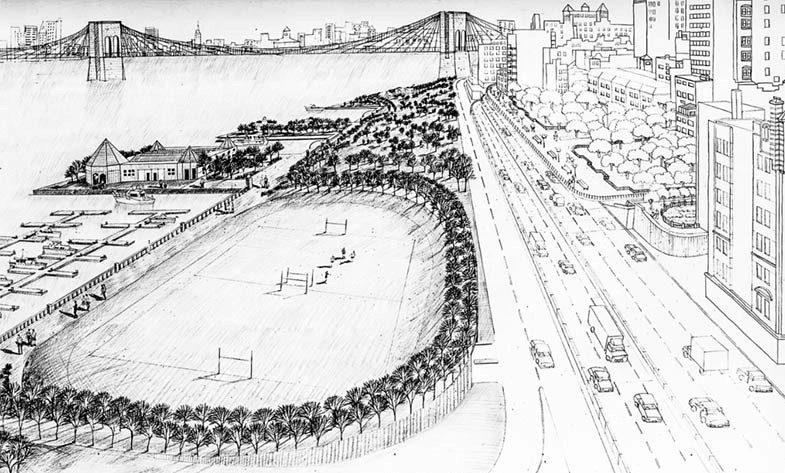
After the end of trading activities, the Port Authority decided to transfer its territory to private construction companies on a commercial basis. The plan was to build residential complexes, despite the marinas that remained in addition to the old port. However, the townspeople protested against this development. They demanded the creation of a park area for recreation. It took many years to resolve this conflict, and only in the early 2000s did the Port Authority finally agree and hand over its property for the construction of the long-awaited park.
Controversy and gossip around the Brooklyn Bridge Park development
It so happens that the history of Brooklyn Bridge Park is shrouded in controversy. There were many heated discussions about this tidbit of a large port area. Initially, the port administration insisted on building a residential area and planned to place a small park around it to bring economic benefits. However, the non-profit organization Brooklyn Heights advocated building a park on most of the land and placing cafes and hotels in the park area with minimal involvement of private entrepreneurs.
To calm the local population and resolve the conflict, the construction of the park was initially started by promising the townspeople that residential and commercial buildings would be limited to the main boundaries of the park. This decision was justified by the fact that the economic benefits from residential buildings would cover the maintenance of the park area, which costs about fifteen million dollars a year. By the way, the total cost of building Brooklyn Bridge Park is over $190 million. This is probably one of the most expensive public projects in the history of New York.
The local authorities emphasize that the money was allocated not from the local budget but from the state’s reserves, which will not affect the welfare of the citizens.
An interesting story developed with the head of the Brooklyn borough, Howard Golden, who had personal preferences for the park’s development. The American politician planned to organize a market with authentic food products and creative handmade art products instead of a recreation park. Howard Golden justified his decision by economic feasibility and the corresponding support of local communities in Brooklyn. But his plans never materialized.
Various sections for leisure in Brooklyn Bridge Park
The vast territory of the park is divided into several parts, each of which has its characteristics. Thanks to this, visitors can choose the part of the park where they want to relax. It can be quite active leisure, leisurely walks in the flowering gardens or along the coastline and delicious food in the open air or in cozy restaurants.
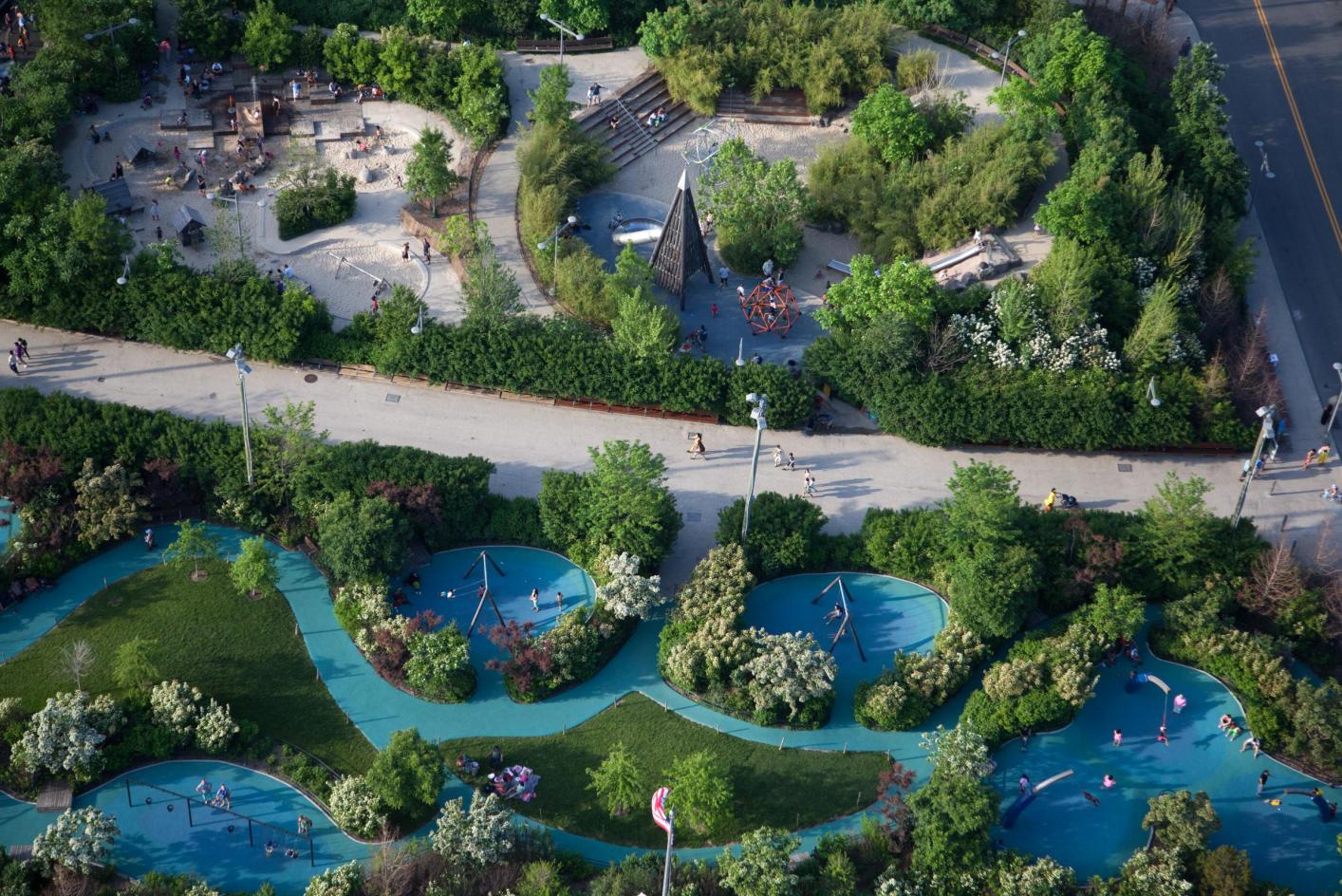
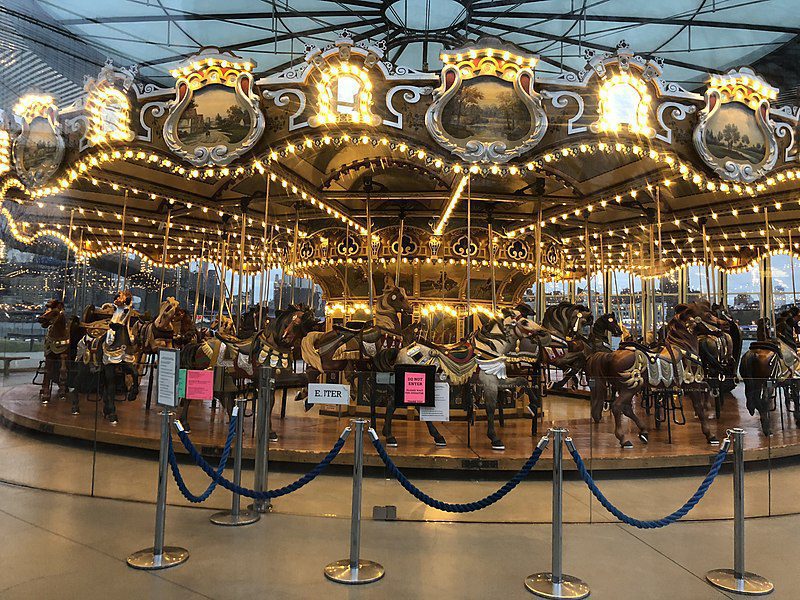
Several small parks and playgrounds have been organized for children, where the youngest visitors can ride bicycles, rollerblades and skateboards. In addition, younger guests have a unique opportunity to ride the special Jane’s Carousel, which is listed on the National Register of Historic Places. This wooden merry-go-round was built in 1922 for a park in Ohio, but in 1984 it was bought by billionaire couple David and Jane Valentas for $385,000. After repairing and restoring the unique carousel, it was placed in a glass pavilion on the banks of the East River in Brooklyn Bridge Park.
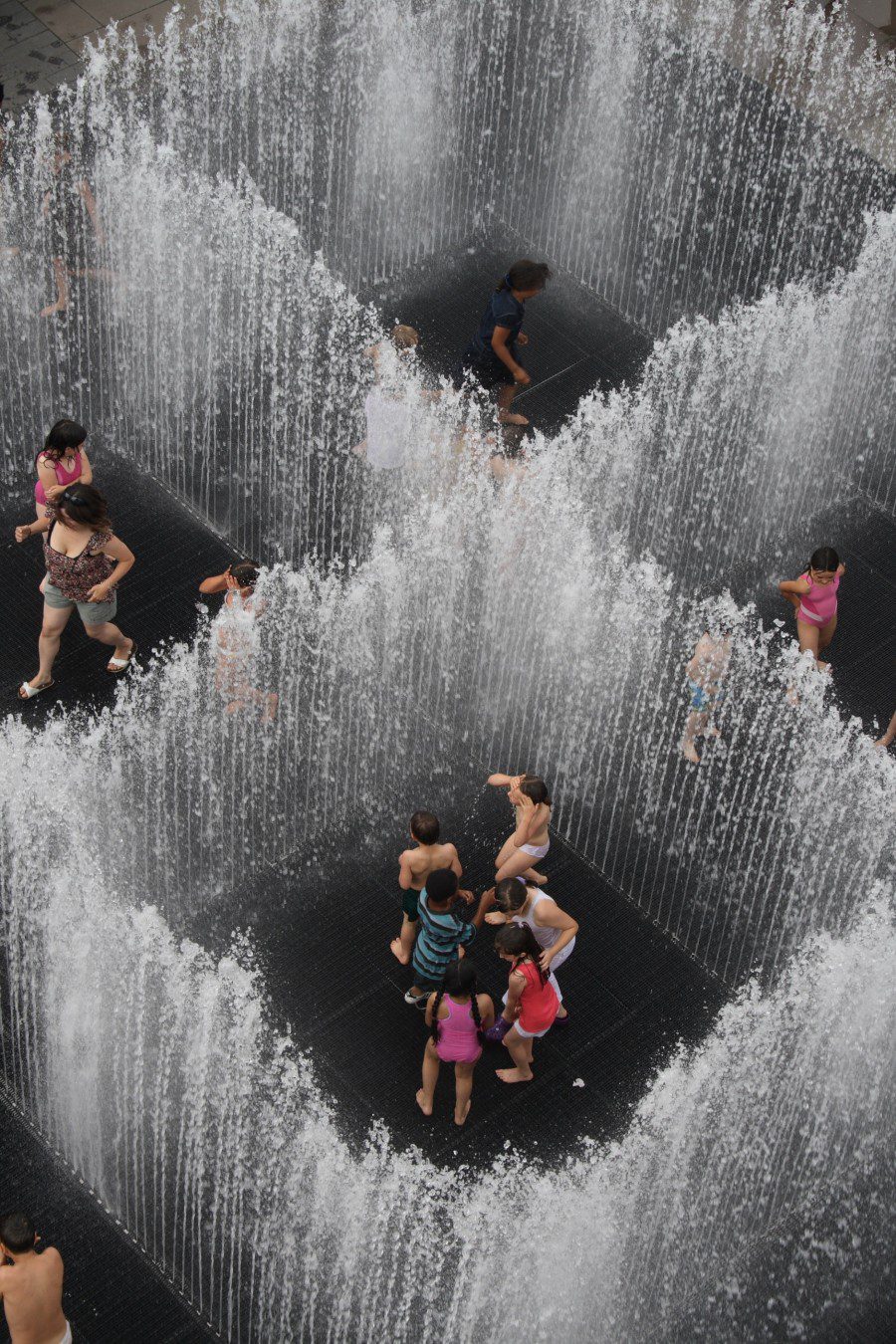
On hot days, children enjoy playing in the Art Installation in Brooklyn fountain, which consists of four rooms with streams of water gushing out of the perimeter. If you are in these rooms, you will not come out dry. Even though this is entertainment for children, everyone bathes in the fountain.
The most delicious places in Brooklyn Bridge Park
Crispy pizza from Fornino, fantastically delicious lobsters from Luke’s Lobster, or just sandwiches on the lawn? Yes, that’s right! Brooklyn Bridge Park has many cafes and restaurants where visitors can have a delicious meal, choosing their favorite dishes. In addition, the park has places where you can have a barbecue. The only prohibition is drinking alcoholic beverages brought with you. You can order drinks at the catering facilities.
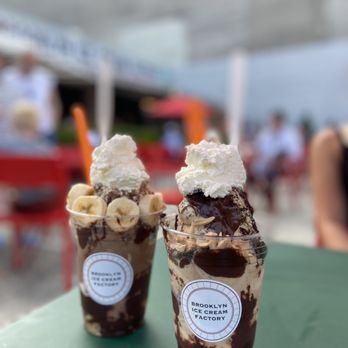
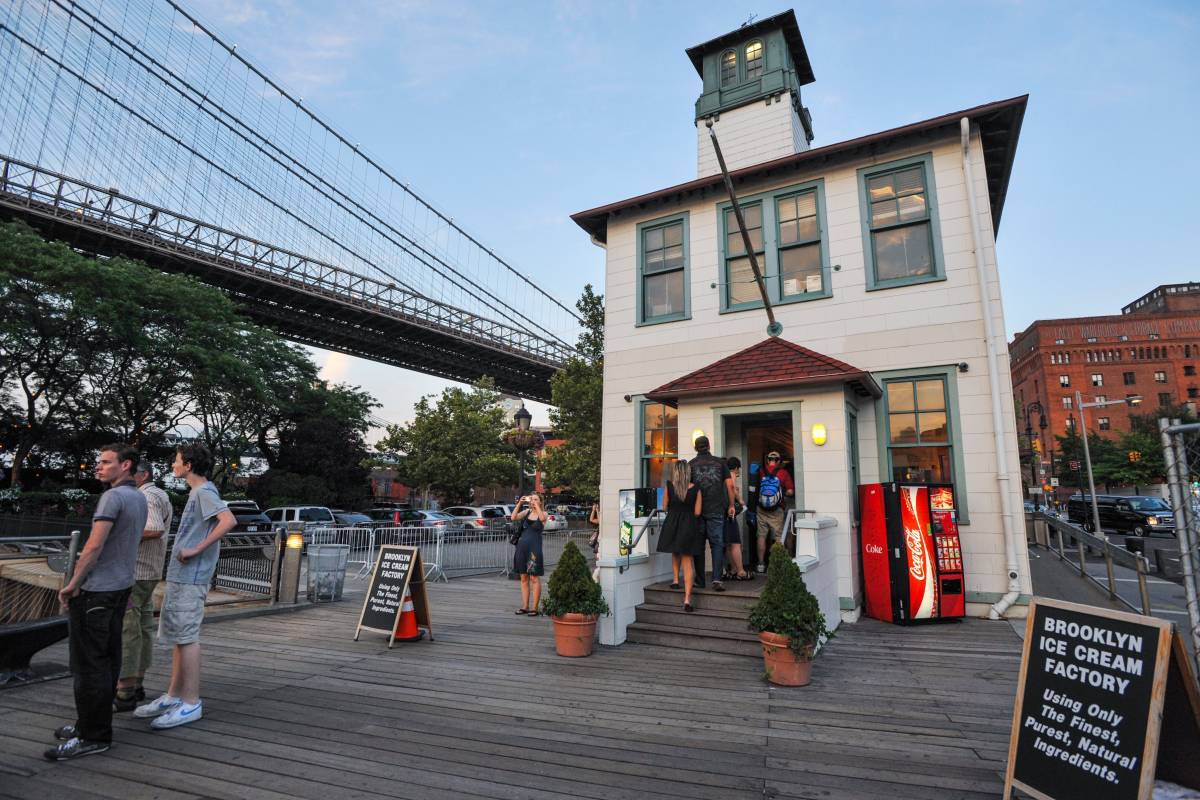
But the most delicious ice cream is worth trying at the Brooklyn Ice Cream Factory. This is the first ice cream factory in Brooklyn, which was reorganized from an old firehouse in 1920. In hot weather, there may be long lines, but it’s worth all the wait.
It is no coincidence that the townspeople love this park and visit it often, recommending that all tourists visit it. After all, spending your leisure time there is a real pleasure for everyone.