

What comes to mind when you imagine the ideal weekend for a typical New Yorker? Outdoor recreation, diverse physical activities, a delicious barbecue, or just sunbathing on the grass – yes, New Yorkers absolutely love it. For that, they choose Prospect Park, located in the heart of Brooklyn. It is a gigantic park that attracts with its serenity and tranquility. You won’t find endless crowds of tourists, representatives of different subcultures, or restless athletes doing laps around. Prospect Park is filled by locals who long for coziness and harmony with nature.
For more than 150 years, Prospect Park has been a magnificent treasure of Brooklyn. It is just as impressive now as when it was first opened to the public. And, of course, there have been stories, mysteries and obscure facts throughout the park’s history. Let’s reveal the most captivating events further at new-york.name.
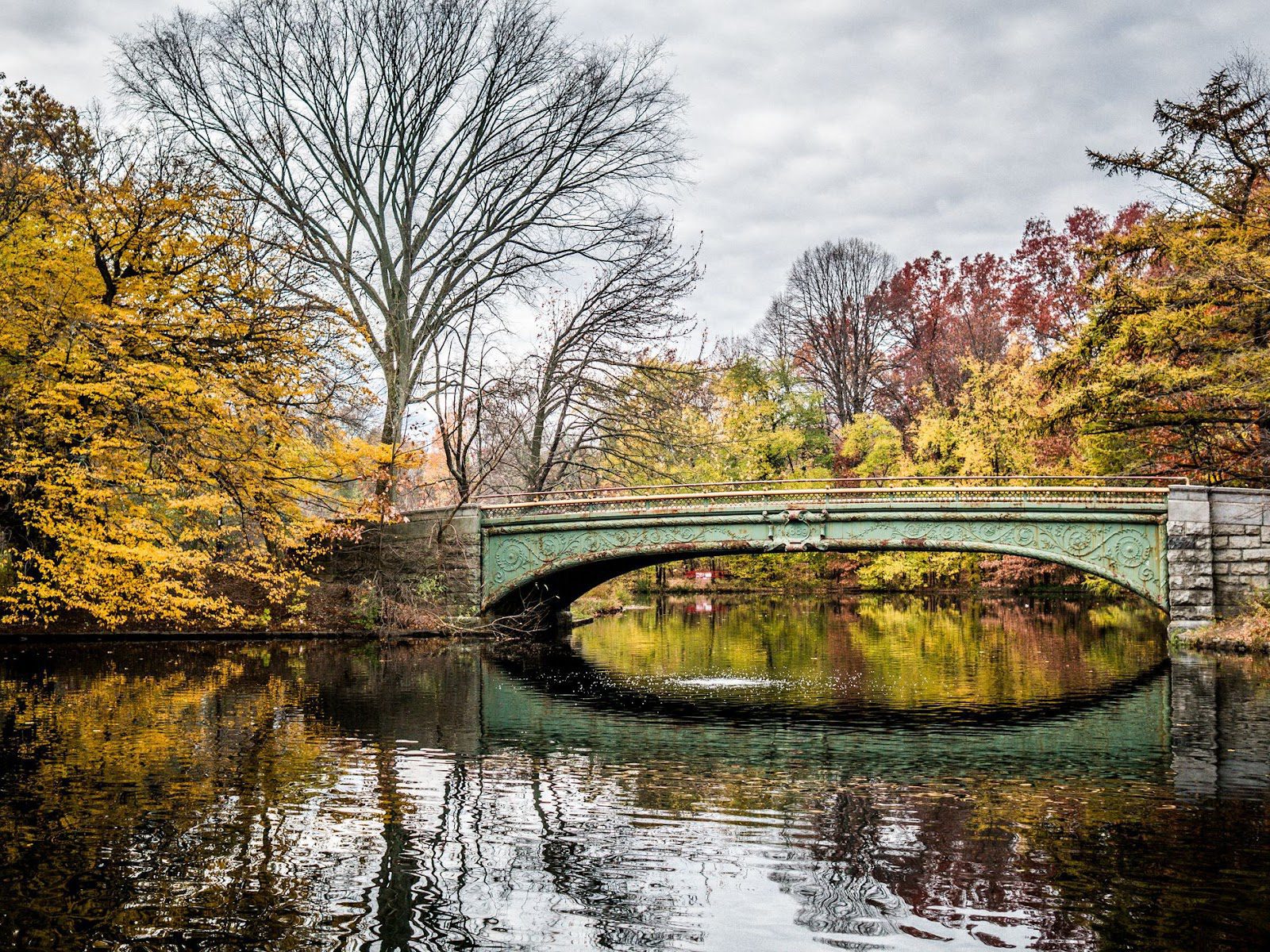
A cherished masterpiece by Frederick Law Olmsted and Calvert Vaux
Renowned landscape architects Frederick Law Olmsted and Calvert Vaux worked on the park project. Prospect Park was their second project, following the widely acclaimed and largest Central Park. Nevertheless, Prospect Park remained a beloved choice for the architects. During their work on it, Frederick Law Olmsted and Calvert Vaux corrected all the errors and inaccuracies that occurred during the planning of Central Park.
For instance, Central Park has roads that pass through green spaces and lawns. Prospect Park’s roadways run around the outer circle of the park, leaving meadows, ravines and groves undisturbed. Once within the park, you can stroll amidst the breathtaking scenery without dodging cars or enthusiastic joggers.
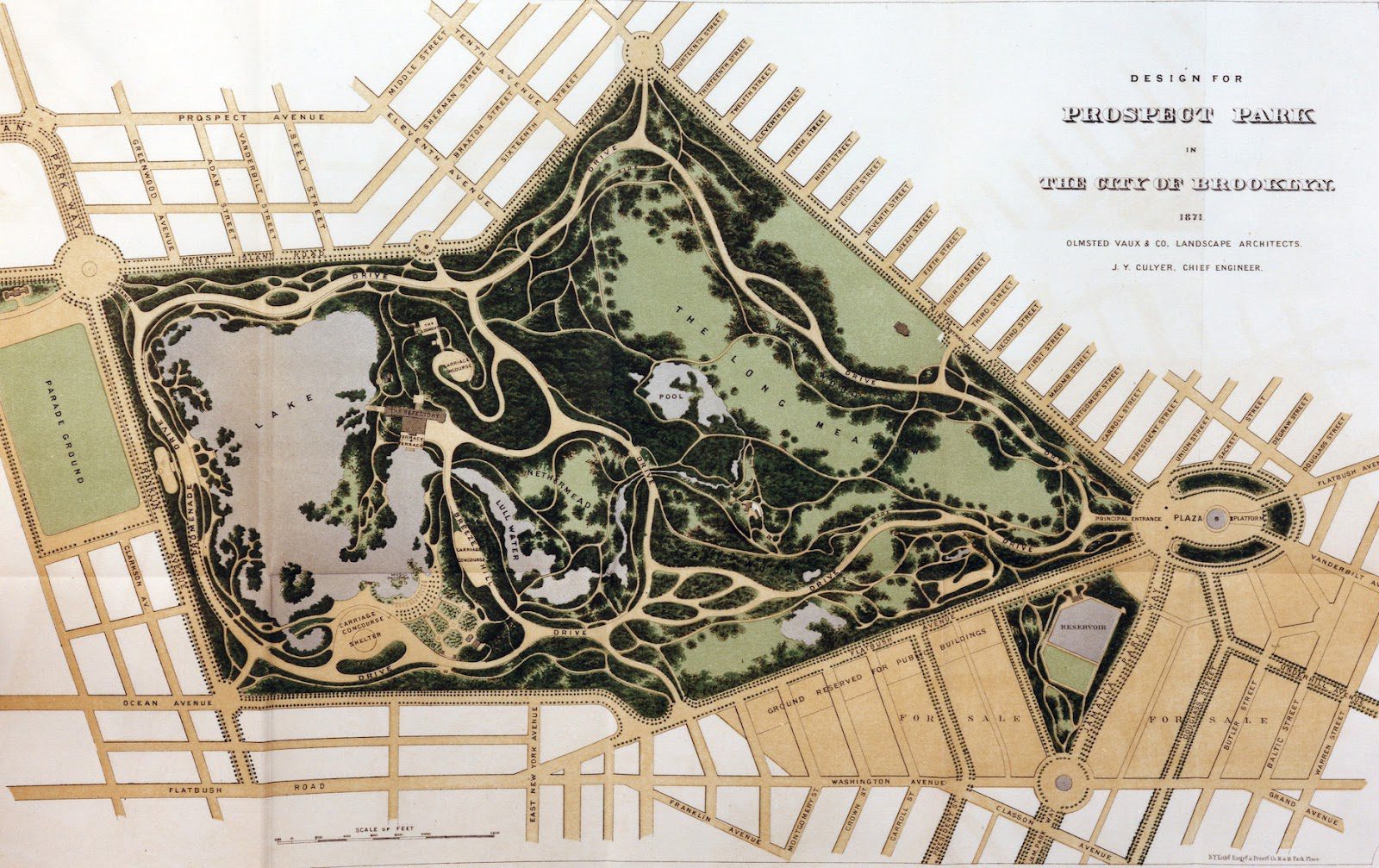
The park had its big opening in 1867. On what was then 526 acres, landscape designers skillfully placed artificial ponds, planted forests and arranged green meadows. In addition, it features a zoo, children’s carousels, sports grounds and comfortable areas for outdoor activities.
The development of Prospect Park spanned a long thirty years.
The construction ended up costing nearly 10 million dollars, despite the initial estimate being under 300 thousand dollars.
The events of the American Revolution and the retreat of the glacier long before Prospect Park was established
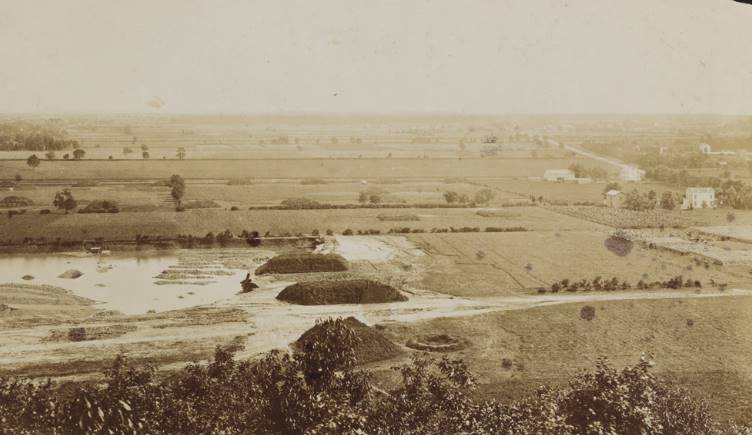
The land that is now Prospect Park has a long and fascinating history. The hills here were formed about 17 thousand years ago by the retreat of the Wisconsin Glacier. This powerful natural phenomenon shaped the contours of Long Island and created a series of hills and valleys in the northern part of today’s park.
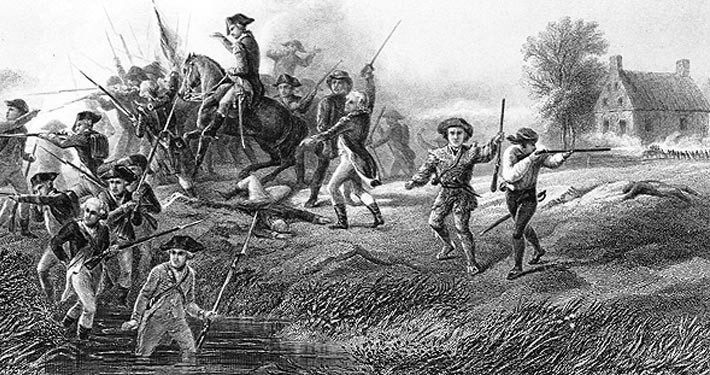
In addition, the grounds of Prospect Park were the scene of the historic Battle of Long Island. One of the decisive battles during the American Revolution took place in this very place. Despite losing the battle, the Continental Army successfully delayed the British long enough for Washington’s forces to retreat across the East River and reach Manhattan.
In 1856, the Brooklyn authorities built the Prospect Hill Reservoir to remind people of the importance of this land. The reservoir also prompted the establishment of a vast and stunning park.
Pigs, cows and horses are regular visitors to Prospect Park
Before the park was established and designed, local farmers used to graze their livestock, such as cows, sheep and horses on those lands. There were so many domestic animals that they had to be caught and returned to their owners. This situation kept repeating itself even after the park had been already open to the public. Archival sources documented that in 1872 the authorities seized 44 pigs, 35 goats, 18 cows and over 20 horses.
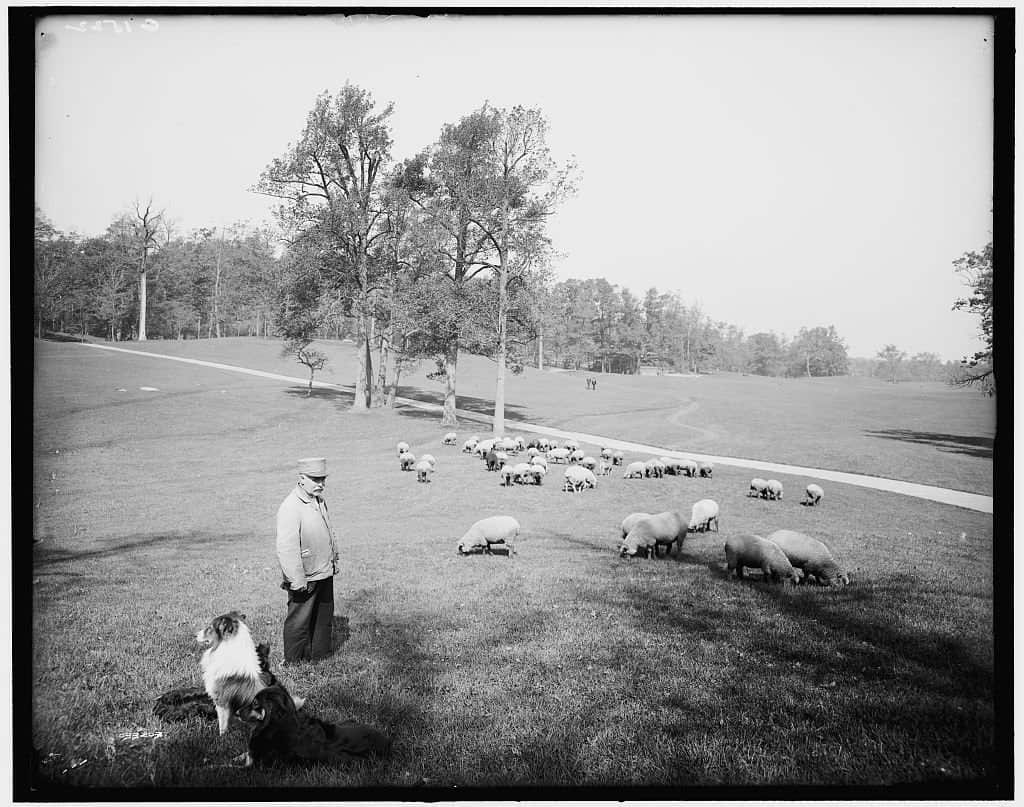
The neglected area and reconstruction of Prospect Park
It was the intention of the architects that the park would be designed to require minimal maintenance. Nevertheless, the usual neglect and budget cuts to the park, along with management and maintenance staff reductions, have led to its deterioration. The renovation and reconstruction of Prospect Park were necessary as far back as the late 19th century. In the 1890s, the park underwent renovation and restoration, with the local government contributing about 100 thousand dollars to the effort.
During the 1960s, while New York City was actively fighting crime, Prospect Park suffered another decline. There was even a perception among locals that the park had become very unsafe to visit. In the 1980s, a non-profit organization called the Prospect Park Alliance was formed. This Alliance began the gradual restoration and renovation of the park. Their primary goal was to correct all deficiencies and improve the landscaping to match Olmsted and Vaux’s initial plan.
Villa Litchfield, an Italianate style mansion, is a historic landmark in Prospect Park
The park features four prominent buildings that are registered with the National Register of Historic Places. One of them is an Italianate style mansion called Litchfield Villa. Built between 1854 and 1857, the mansion belonged to Edwin Clark Litchfield, a businessman who made his fortune in land speculation and the railroad business.
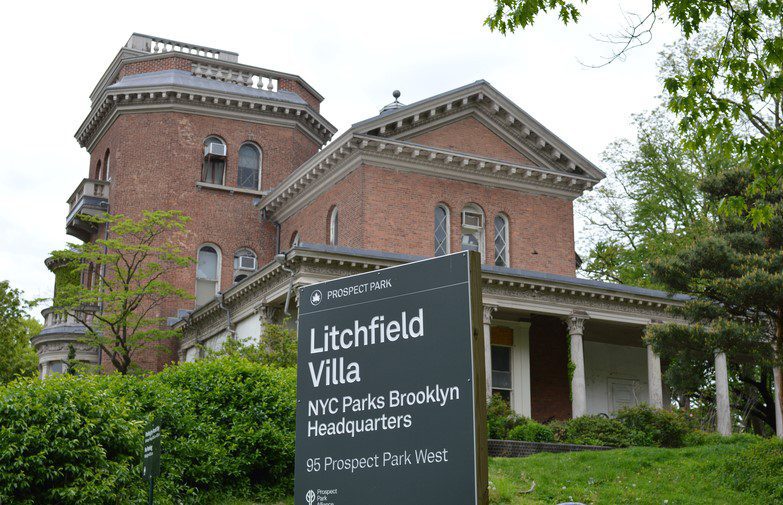
Litchfield was a prominent figure of his time, known for his immense wealth and influence. In fact, the 585 acres that comprise Prospect Park today were only a fraction of all the land he owned in Brooklyn.
Currently, the mansion houses the New York City Department of Parks and Recreation’s headquarters, responsible for preserving and expanding Prospect Park.
Prospect Park Boathouse
The story of the iconic boathouse that started off the preservation of old American traditions and historical events is of great interest. For years, despite their historical worth, under the leadership of influential American government official Robert Moses, the demolition of underutilized constructions continued. It all began in 1963 with the dismantling of Pennsylvania Station, unleashing resentment and anger in the community and launching a social movement for historic preservation.
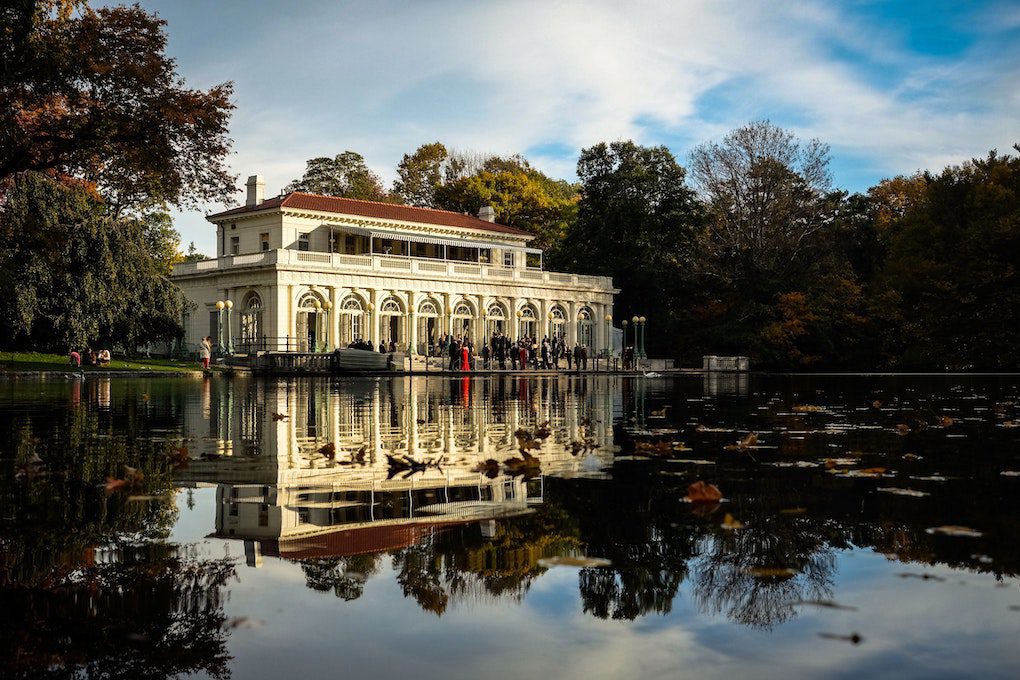
The boathouse was built in 1905. It was nearly demolished in 1964 due to lack of use by park visitors. For twenty years, however, this very building served as a visitor center and park ranger station. This outstanding structure is currently leased as a venue for events, corporate parties and weddings. It is also home to the Audubon Center, an organization committed to preserving the bird population. In addition, the organization offers a variety of educational programs that engage nature enthusiasts in a fascination of knowledge and exploration.
The Prospect Park Boathouse was spared from demolition thanks to the Friends of Prospect Park, a local preservation group. This organization garnered public attention to the park’s historical structures that were in danger of disappearing. In 1964, the public pressure compelled the park commissioner to halt the demolition plans.
Notably, decades later, Prospect Park Boathouse was the setting for Martin Scorsese’s 1993 film The Age of Innocence.
Lefferts Historic House Museum
The city dwellers highly recommend visiting another renowned historical landmark, the Lefferts Historic House. Here, visitors get a live glimpse of Brooklyn’s past, which resonates in every corner of the colonial farmhouse. It was constructed in 1783 by the Lefferts, a family of Dutch immigrants. The house was originally situated on Flatbush Avenue and in 1918, it was relocated to Prospect Park. The fast growth of Brooklyn’s urban area prompted the owners to turn the house over to the City of New York to avert demolition.
The Lefferts Historic House is a museum featuring a variety of exhibits and artifacts that display 18th-century farm life. The processes of making candles and whipping butter are particularly fascinating to children.
Although Prospect Park retains the signature style of Frederick Law Olmsted and Calvert Vaux, encouraging a peaceful escape from the city, there is something seductive about these overlooked and tranquil places. These mysterious places take you back to another time when parks were created not just as playgrounds or sports but when landscape architecture was first considered an art form.