

This metropolis is impressive not only for its enormous skyscrapers but also for its stunning nature. The city has many beautiful green spaces, and the New York Botanical Garden is considered its eco-symbol. It’s also one of the largest and oldest gardens in the world. Next to the huge buildings of the Bronx, you’ll find incredibly beautiful landscapes: a wide variety of plants, ponds, and walking paths. All this and more was created for locals and tourists who love to visit the Garden. What else is there to know? Find out on new-york.name.
How Did the New York Botanical Garden Come to Be?
For many New Yorkers, this is a favorite place for outdoor recreation and fun. But many years ago, there was nothing here but a forest. It’s been preserved to this day, making for a wonderful place to walk. Everywhere you look, you’ll see mushrooms, moss, ferns, and many other plants.
Historically, this land once belonged to the Lorillard family. In 1884, as part of the New Parks Act, a portion of the property (640 acres) was purchased with city funds. The main goal of this initiative by New York City officials was to create and develop a new botanical garden to advance local botany, conduct research, provide education, and offer a space for public recreation.
After that, it was decided that a board of directors would manage the garden. Its members included the president of Columbia College, professors of biology, chemistry, and geology, the presidents of the Torrey Botanical Society, the New York City Board of Education, and the Department of Public Parks, the city’s mayor, and nine other individuals.
Developing and Opening the New York Botanical Garden
The new property covered a massive area that needed to be landscaped. To do this, the Board of Directors hired landscape designer and architect Calvert Vaux and his partner, Samuel Parsons. In 1895, they began surveying the site. The architects conducted a topographical survey and created a master plan for the park. It was divided into several zones for easy navigation and the harmonious placement of different buildings, flowerbeds, trees, and other plantings.
April 28, 1891, was a landmark event in the history of local botany. That’s when the New York Botanical Garden officially opened, though its development continued for several more years. During that time, the area was transformed into a paradise in the middle of a major city: many plants and trees from around the world were planted, and paths, ponds, fountains, greenhouses, and much more were created.
Many local public figures also decided to provide financial assistance to the Garden. In addition to budget contributions, around $250,000 was invested in its landscaping, scientific research, and educational programs in botany.
Unique Places to Visit at the New York Botanical Garden
The New York Botanical Garden is recognized as one of the most beautiful and largest in the world. Everyone can enjoy a pleasant escape here and find an activity they love. The entire area has many unique places to spend time and learn something new. These include:
School of Professional Horticulture
Landscaping is a skill that requires a lot of knowledge. At the Garden, you can not only see how plants and trees are cared for but also learn how to do it yourself. The School of Horticulture has been offering classes since 1932. The program lasts two years and is designed to train professional gardeners. After successfully completing the program, students receive a diploma in horticulture from the New York Botanical Garden.
The Lab
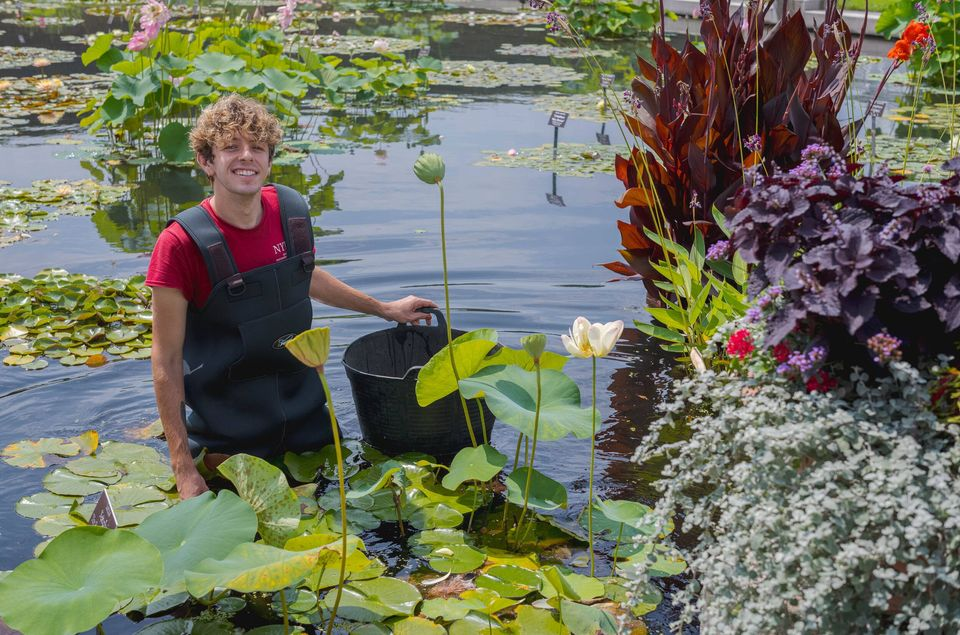
In addition to education, the Garden is a center for scientific research. The Pfizer Laboratory was opened here specifically for this purpose. Lab employees study plant genomics, molecular systematics, and other plant characteristics. Information about the DNA of every plant is also stored in a special archive. This includes many rare species that are endangered and some that are already extinct.
LuEsther T. Mertz Library
This is a real treasure for nature and literature lovers. It holds one of the world’s largest collections of texts on botany. The library is located in a building that was constructed in 1900 in the Renaissance style. It’s also known that this building was once a museum and an administrative building for New York University.
Interestingly, in addition to literature, the library houses more than 6.5 specimens of plants. Some are hundreds of years old! Some were brought from America, while others came from countries all over the world. All of them were grown in the Garden in the open air or in greenhouses.
Enid A. Haupt Conservatory
This building with a glass roof is home to thousands of heat-loving plants. It’s one of the most beautiful in the Garden. Its design was inspired by the Palm House at the Royal Botanic Gardens and Joseph Paxton’s Crystal Palace.
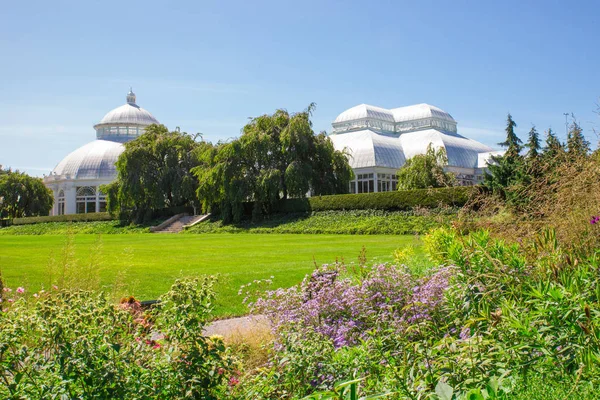
Inside is a greenhouse. This amazing place offers an incredible experience in the atmosphere of a real tropical environment. Here you can find palms, cacti, lilies, orchids, and other plants. Visitors can also see the winter garden, which was created in the late 1890s.
The William and Lynda Steere Herbarium
This herbarium is the pride of the New York Botanical Garden, as it’s one of the largest in the world! It contains more than 7 million specimens of dried plants. They were collected from different parts of America and brought to the Garden. Since then, the herbarium has always been a major attraction for visitors.
According to historical records, it was named in honor of William Steere (the son of William C. Steere) and his wife Lynda. The couple donated the herbarium to the Garden in 2002.
Fun Facts About the New York Botanical Garden
1. The Garden is a mix of recreation, entertainment, and education. Throughout its history, it has hosted many events focused on developing environmental and socio-cultural activities, such as exhibitions, workshops, lectures, and tours for young and adult nature lovers alike.
2. A walk in this Garden is a true outdoor adventure, as it covers a massive area. It spans 250 acres. There are many zones for recreation and scientific-educational activities.
3. This place is home to plants from all over the world: tropical flowers, shrubs, unique ferns, as well as palms and cacti. They impress with their sheer number and diversity.
4. This landscaped area is made up of 50 different gardens. Among them are a flower garden, a rock garden, a tree garden, and more. When you’re here, it feels like a real paradise in a huge city.
5. In the center of the Garden is an old-growth forest that existed here even before European settlers arrived in the 17th century. It is divided by the Bronx River, the only freshwater river in New York City.
6. Throughout its history, the New York Botanical Garden has remained a popular place for landscape exhibitions. Every year, each one is dedicated to a new theme.
7. The New York Botanical Garden is a protector of the plant world. Unlike many others, it has a mission to act as a living plant collection museum and an eco-center for educational and scientific programs in horticulture and beyond.