

New York never ceases to amaze with its many facets. On one hand, traveling through the city, you feel the fast pace of a metropolis, see dizzying skyscrapers, admire the architecture, and try dishes you’ve never heard of. But on the other hand, New York captivates with its nature. The waterfalls and mountains are simply stunning. Learn more on new-york.name.
The Adirondack Mountains are one of New York’s most beautiful natural treasures. Here’s a look at their terrain and history.
How the Mountains Formed
The formation of the Adirondacks was part of a process linked to the movement of Earth’s tectonic plates.
The oldest rocks in New York State were deposited about 1.3 billion years ago in shallow seas. Around a billion years ago, these rocks were involved in a collision of two continents, known as the Grenville Orogeny, which caused the formation of a high mountain range and plateau.
Over the next 400 million years, these mountains and plateaus were eroded into flat lands. Around 660 million years ago, this supercontinent began to break apart, gradually forming what’s called the Iapetus Ocean (the predecessor of the modern Atlantic Ocean).
Between 650 and 600 million years ago, the Earth’s crust in the eastern parts of what would later become the North American continent stretched and large faults appeared. These faults run from north to northeast through the eastern Adirondacks.
About 20 million years ago, for reasons that still remain unclear to geologists, a dome began to rise, which would later become the Adirondack Mountains. As a result of erosion, a system of parallel valleys formed, which stripped away surface deposits and exposed rocks that were billions of years old. The Adirondacks continue to rise at a rate of about a foot per century.
The northeastern faults in the Adirondacks created long, straight valleys that stretch from north to northeast. Some of them contain lakes, such as Lake George, Schroon Lake, Indian Lake, and Long Lake. Kettle holes, lakes, and ponds formed during the melting of the glacier, which left behind massive chunks of ice.
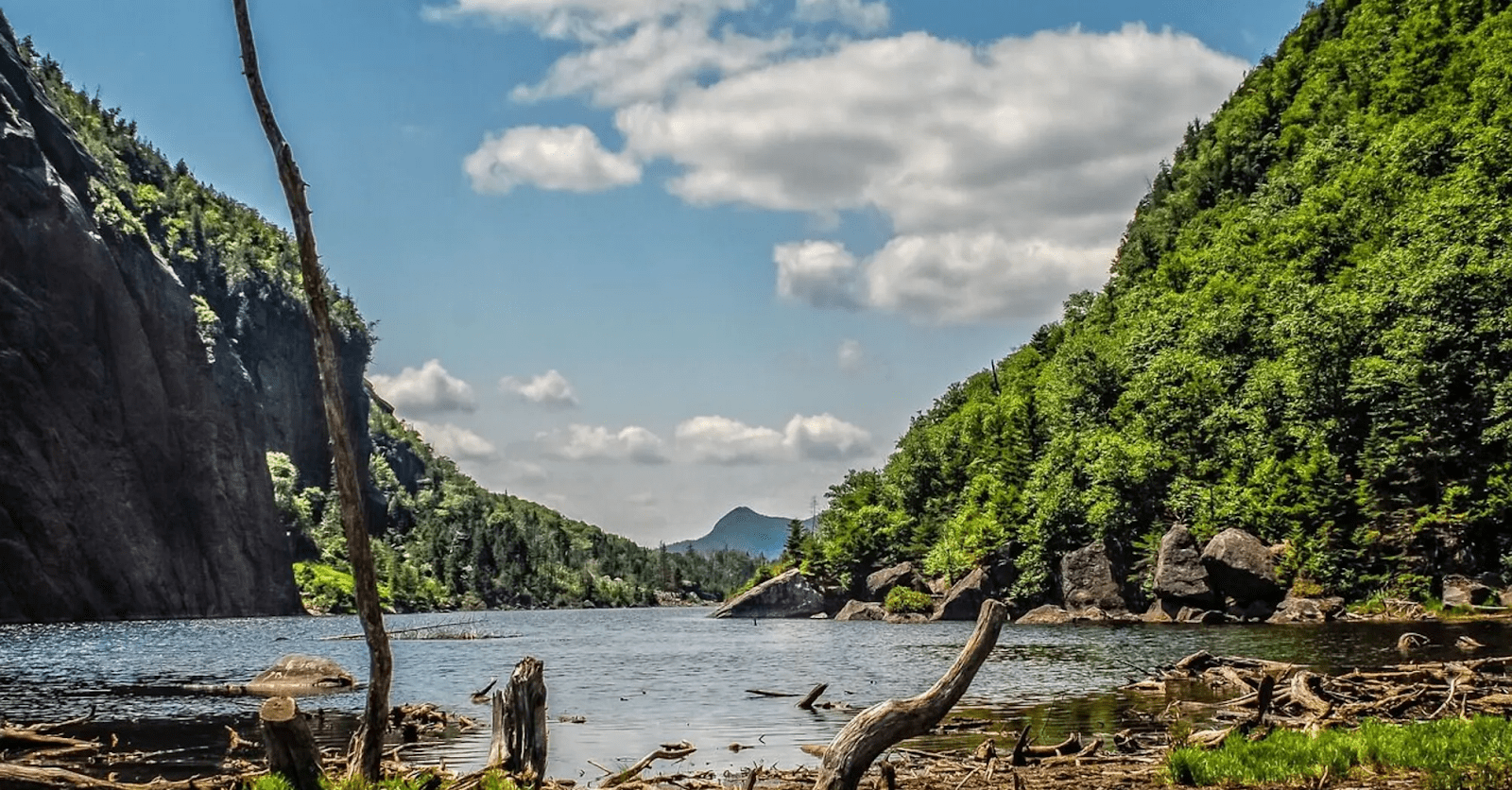
Exploring the Adirondack Mountains
The Adirondacks were among the first mountains in the U.S. to be designated “Forever Wild,” and for centuries, they have been accessible and open to everyone.
The mountains have a significant impact on the region’s weather, which has helped create a unique ecology, habitats, and alpine zones. The Adirondack Mountains have become an “ecological paradise” for researchers and travelers.
The mountains themselves are densely covered in hardwood forests, and there are three types of wetlands, which are ideal for sustaining wildlife, including great blue herons, turtles, grouse, and loons. Thanks to the large climate difference between seasons, the mountains are also a great spot for several types of migratory birds. Hundreds of visitors come to the region to see large flocks of migratory birds with their own eyes.
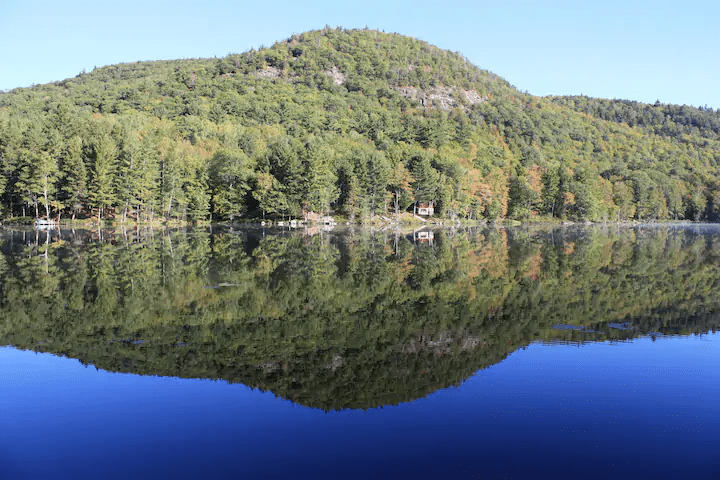
Skiing in the Adirondacks
If you’re a skier or snowboarder, the mountains in New York are a great place for a winter getaway.
The Adirondack Mountains offer some of the best ski trails on the East Coast. Thanks to the mountainous terrain, the influence of the lakes, and the dynamics of the jet streams, the region is known for perfect snowy weather, which creates excellent conditions for skiing or any other winter sport. Snow usually starts to fall in October or November and can last until April or May. The most snow falls between December and March.
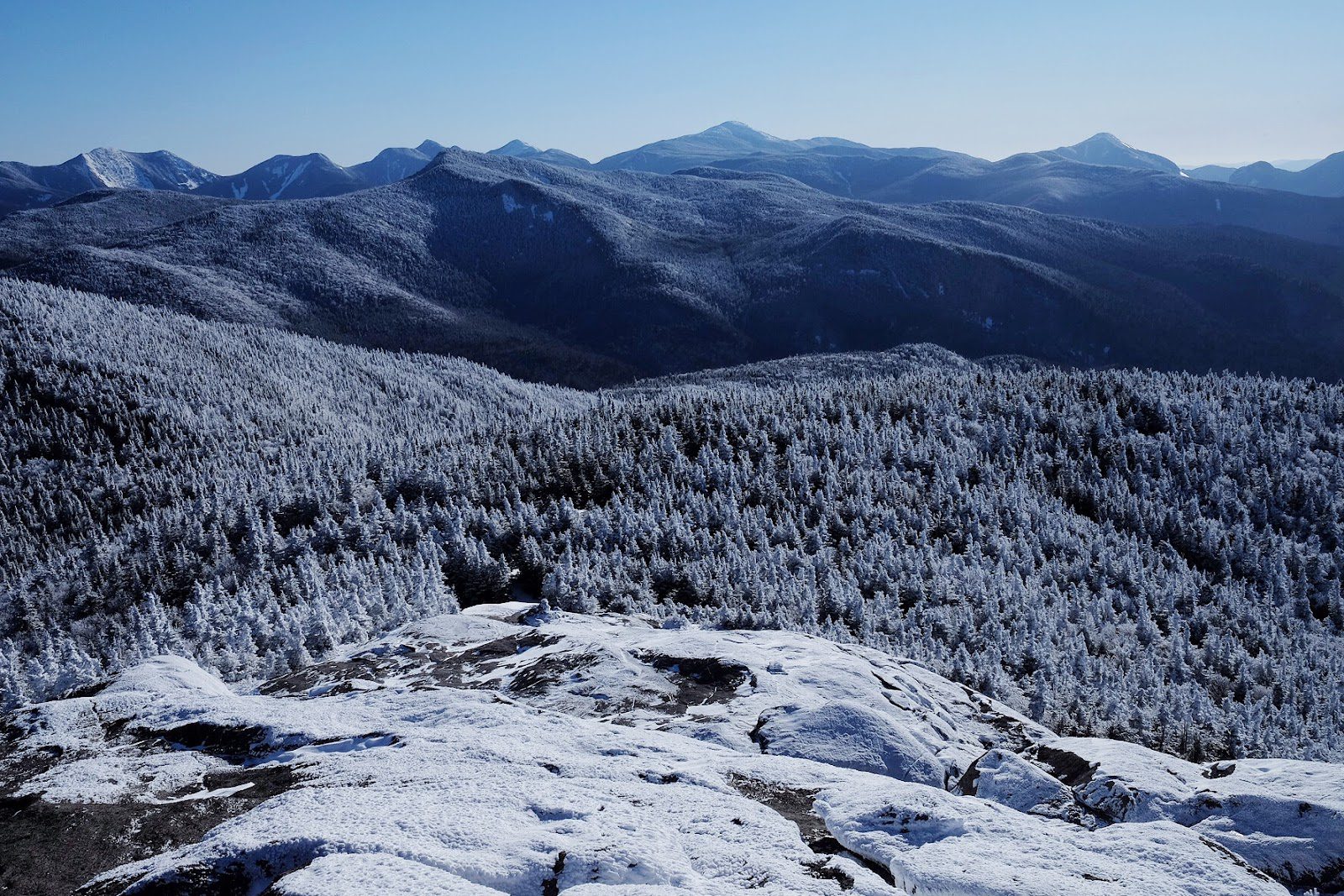
How New York Cares for the Mountains
The Adirondack Mountains are a place you can enjoy any time of year.
The Department of Environmental Conservation and the Adirondack Mountain Club take great care and pride in preserving the mountains. They maintain the trails for hiking and camping, and the Department of Environmental Conservation also provides important information for tourists who come to explore the mountains.
Every year, hundreds of volunteers head to the mountains to perform specific trail maintenance tasks and help with the reconstruction of various structures on the peaks.
Fun Facts About the Adirondack Mountains:
- The rock that makes up most of the mountains is anorthosite. This rock is more commonly found deep underground than on the Earth’s surface and is also very common on the Moon. The Adirondacks are considered young mountains, but these young mountains are made of some of the oldest rocks on the planet.
- There are fire towers in the mountains. They were built after the great forest fires of 1903 and 1908, which destroyed over 700,000 acres of forest. The first metal towers were erected in 1917.
- The Adirondacks have 46 high peaks, each of which was originally estimated to be over 4,000 feet tall. The highest is Mount Marcy at 5,344 feet.
- The Adirondack Park was created in 1892 by New York State. The park covers six million acres, making it the largest park in the United States.
- According to statistics, the Adirondacks are visited by seven to 12.4 million people every year. That’s more than the Grand Canyon.
Sources:
- https://visitadirondacks.com/about/mountains
- https://wildadirondacks.org/adirondack-geology.html#:~:text=Adirondack%20Geology%3A%20The%20complex%20geologic,in%20northeastern%20New%20York%20State.
- https://pureadirondacks.com/pages/adirondack-facts?srsltid=AfmBOorMusPOLvDZ2maTVZ2J8-PCzpGzipKhsvd13-rAaL4rCweafFfV
- https://wgna.com/30-amazing-facts-about-the-astonishing-adirondack-mountains/