

Modern technology is transforming different industries, and the agricultural sector hasn’t been left behind. Smart farming, also known as precision agriculture, is a modern approach that uses cutting-edge technologies to enhance agricultural practices. Through advanced technology, tasks that used to be tedious and time-consuming can now be done quicker and more efficiently.
Traditional Vs. Smart Farming
Traditional farming differs from smart farming in certain ways. Check out the table below to understand these differences.
| Traditional Farming | Smart Farming |
| Data is collected through manual observation. | Data is collected in real time by automated sensors and IoT devices. |
| Farmers make decisions based on past experiences, intuition, and historical data. | Farmers make decisions based on data-driven insights. |
| Periodic inspections to monitor plants and livestock. | Continuous monitoring of plants and livestock. |
| General application of pesticides and treatment to address pests and diseases. | Targeted treatment using real-time data and detection systems. |
| There is a high risk of overusing resources and an increased risk of environmental damage. | Less risk of overusing resources as technology allows optimized resource use. |
| It tends to be less efficient because of the use of manual methods. | High efficiency, thanks to precise and data-driven farming methods. |
Smart Farming Technologies
The following are some of the most common smart agriculture solutions.
The Internet of Things (IoT)
IoT refers to connecting various devices, sensors, drones, and other tools to collect and exchange data in real-time. These systems offer solutions like precise watering, smart pest and disease control, and remote pasture and livestock management.
The adoption of IoT in agriculture has been increasing over the last few years, contributing to the growth of the global smart agriculture market. In fact, according to Markets and Markets, the global smart agriculture market was valued at approximately $13.7 billion in 2022. However, it’s projected to reach $22.9 billion by 2027, growing at a CAGR (Compound Annual Growth Rate) of 10.4% during the forecast period. This growth is driven by the increasing adoption of IoT and artificial intelligence in agriculture.
Agricultural Drones
These devices give farmers a bird’s-eye view of their fields, allowing for crop and soil monitoring. Farming drones are equipped with cameras, sensors, and other technologies, allowing them to collect data on humidity, temperature, and soil conditions.
Smart Sensors
Smart sensors collect data about crops and fields, allowing farmers to monitor soil pH, moisture, temperature, humidity, and pests and diseases. Many smart sensors are integrated into an Internet of Things (IoT) network, allowing them to communicate with each other and central management systems.
Precision Farming
When talking about IoT-based farming, you’re likely to hear the term precision farming as well. Precision agriculture encompasses IoT-based methods that enhance control and accuracy in farming.
Precisions Livestock Farming
Like precision farming, this time, precision livestock farming focuses on animals. Farmers use this tech to monitor animals’ individual needs and give them the help they need.
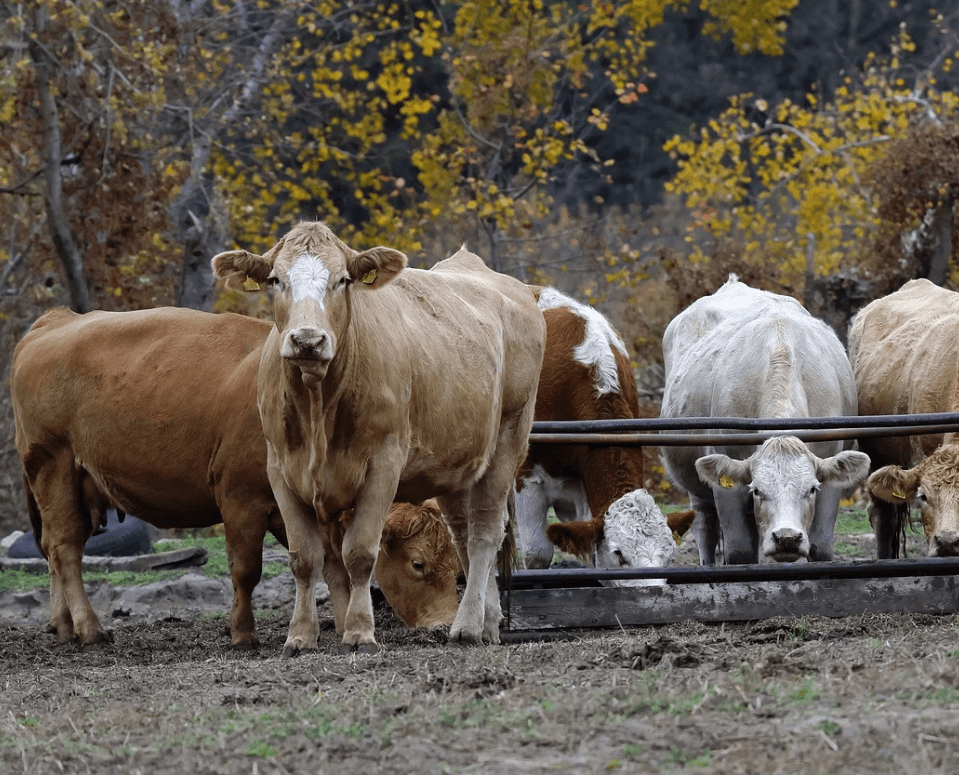
Photo: pixabay.com
The Benefits of Smart Farming
Smart farming solutions make farming more intelligent and connected, leading to various benefits such as the following:
- Water conservation
- Reduced operational costs
- Reduced production costs
- Increased production
- Simplified risk forecasting
- Enhanced sustainability
Robotic systems, drones, smart farm plant data management platforms, and satellite image analysis tools benefit not only the farmer but also insurance agents, input suppliers, agricultural cooperatives, and financial institutions, among other stakeholders.
The Influence of Smart Farming on the Farming Cycle
Smart farming doesn’t change the farming cycle much; rather, it optimizes it. Here is what it looks like:
- Observation: Sensors and other devices observe and record data such as soil conditions, humidity, atmosphere, etc.
- Diagnostic: Data is fed to the IoT platform via the internet to determine the next course of action based on the observations.
- Decisions: These are decisions based on data made by a human or a machine-learning system.
- Action: Once the decision is made, an action is taken. This, too, can be done by humans, robots, or autonomous machines. After this, the cycle repeats itself.
Smart Farming Challenges
While smart farming is revolutionizing agriculture, it’s not all roses. It comes with certain challenges, such as the following:
- Lack of internet in certain regions.
- Some farmers lack awareness of the benefits of smart farming.
- Limited ongoing maintenance and technical support, particularly in remote areas.
- The lack of scalability means that farming technologies may not easily adapt to different sizes of operations.
Future of Smart Farming
Smart farming is paving the way for a third green revolution using technologies like IoT sensors, precision equipment, and unmanned aerial vehicles. These technologies enhance control over agricultural processes, allowing for better risk management, precise planning, and reduced labor and waste. In other words, smart farming has the potential to create a more productive and sustainable agriculture by adopting a precise and resource-efficient approach.
Smart Farming With Cropler
The Cropler agri-camera plays a pivotal role in smart farming by enabling 24/7 remote crop management and reducing scouting time. Its web platform consolidates data, simplifying agronomic decision-making. Cropler helps farmers achieve smarter, more sustainable farming practices by integrating constant monitoring with unified data.