

When people hear the word New York, they immediately imagine a huge metropolis, a real concrete jungle with heavy traffic jams and countless people constantly rushing somewhere. Undoubtedly, this is what NYC is like. However, back in the 20th century, the New York government acknowledged a daunting issue of urbanization, the rapid and extensive growth of the city, as well as the increase in population. All of this led to the construction of new buildings, deforestation, and consequently, a shortage of green spaces. It made New York face many environmental problems. Therefore, in the 21st century, it is not just a choice for the city’s authorities and its residents to transform the city into a landscaped area but a vital necessity. Read more at new-york.name.
What are the environmental challenges for New York?
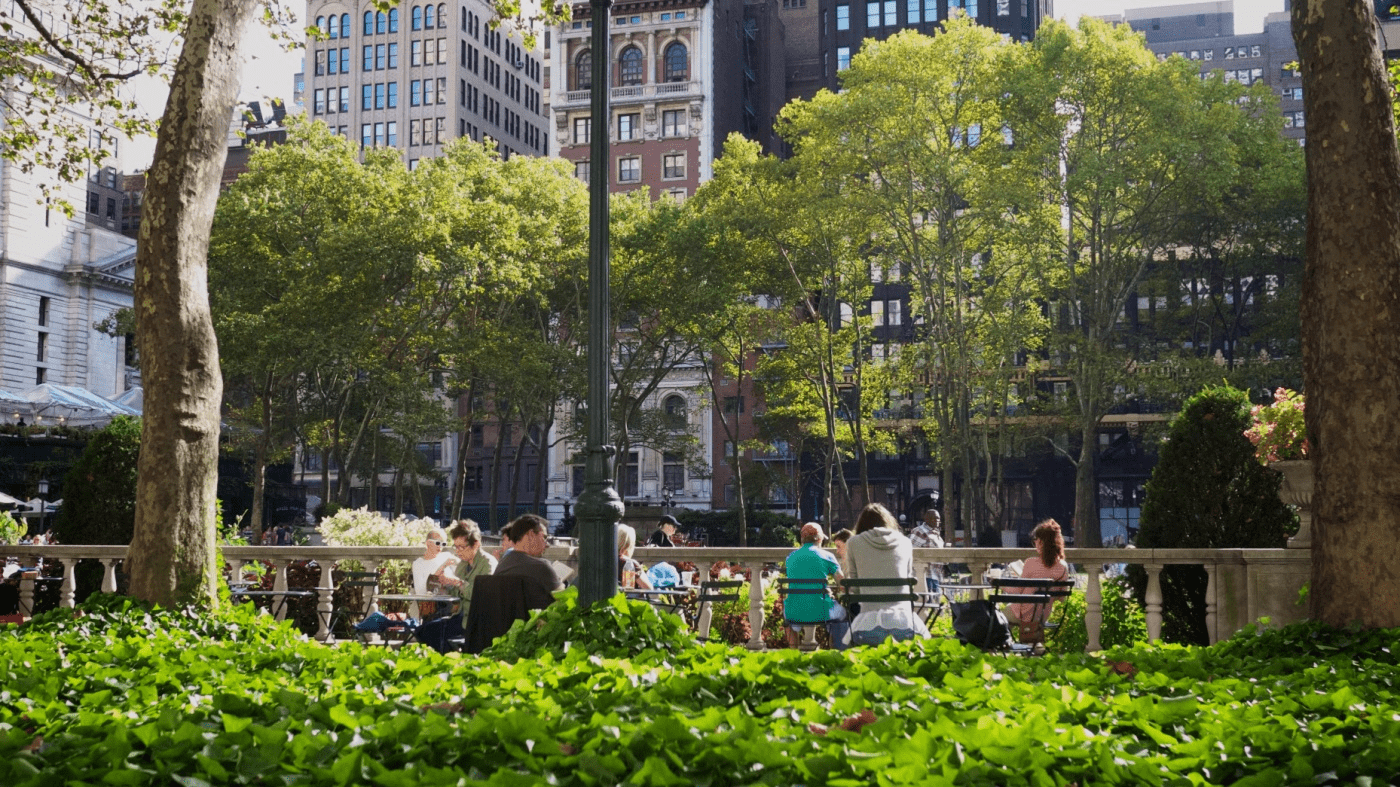
With the growth of urbanization and population, NY has slowly encountered various challenges and ecological problems. As early as 1900, over 3 million people inhabited the city. The population has increased exponentially over the 20th century, reaching more than 8 million people in the 2020s. Because of a large population, constant city expansion, an immense amount of vehicles and numerous businesses, a number of environmental problems have emerged that require immediate intervention.
What is the air quality like in New York?
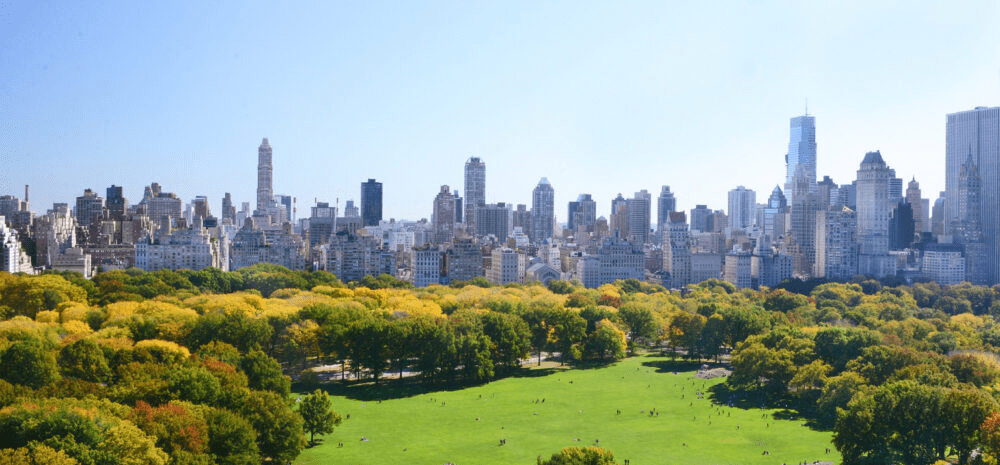
One of the most urgent problems that has existed for many years and concerns many residents and the city authorities is air quality. The number of citizens has been constantly growing, and even in the current century, it is increasing. This, in turn, leads to a rise in the number of vehicles, which have a detrimental impact on the environment by emitting pollutants into the atmosphere.
Yet, the severe air pollution in New York is caused not only by heavy traffic but also by industrial activities and even energy consumption. The issue of air pollution in NY gives rise to health concerns among the public, including respiratory conditions, heart diseases and even cancer.
The New York officials have been confronting this problem for a long time. In particular, the city has implemented a transition to electric urban transportation, created bike lanes, and opened companies for renting zero-emission vehicles such as bicycles or scooters. Owners of electric cars also received benefits from the government.
Why isn’t New York green enough?
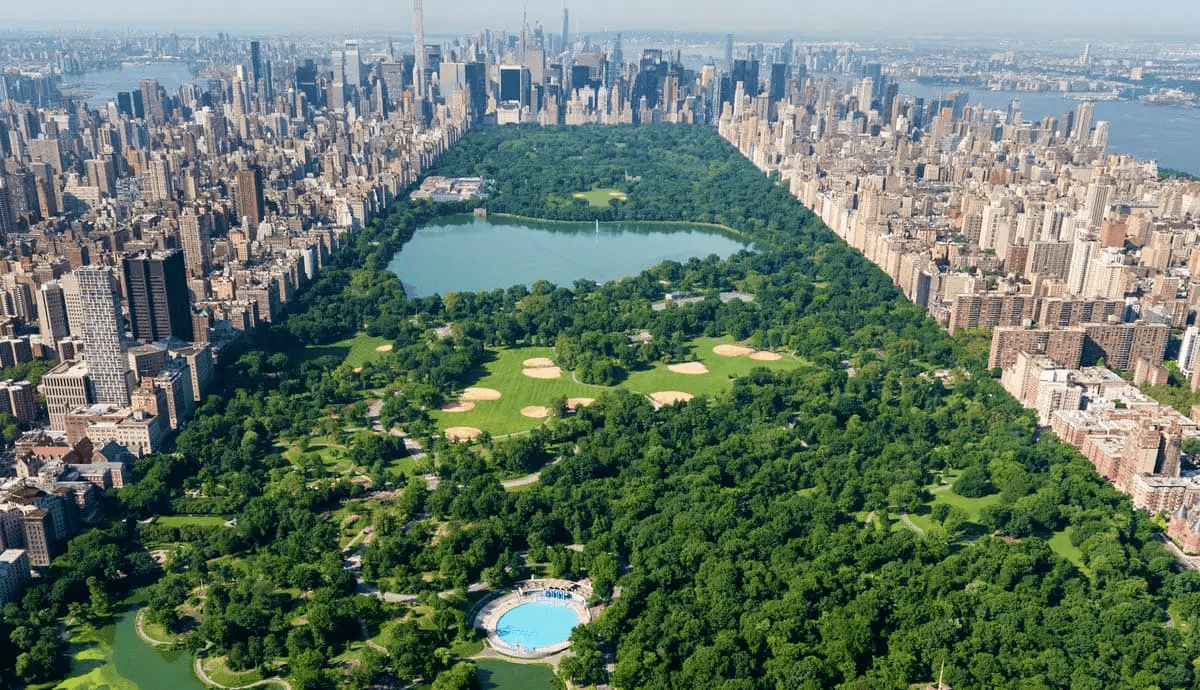
The ongoing expansion of NY has led to an acute shortage of green areas in the city in the 21st century. The city’s residents have limited access to recreational areas, while rapid urbanization is suppressing biodiversity. Numerous animals and birds are on the verge of extinction in the 21st century. The scarcity of greenery in the city exacerbates this problem. In order to address the biodiversity issue, New York has started to hold regular events to conserve it. For example, favorable conditions for nesting are preserved or artificially created for birds, wetlands are conserved, trees are planted and much more. All of this certainly contributes to the gradual greening of the city.
Other challenges to landscaping in New York
For many years, New York has been generating a huge amount of waste every day. Throughout history, the city saw periods when the streets were littered with trash and waste management was extremely inefficient. In the 21st century, NY still suffers from impromptu landfills. However, effective waste management is already in force, which gradually paves the way to dealing with pressing problems related to landfill filling and the environmental consequences of waste disposal.
Besides waste issues, NY has repeatedly suffered from the aftermath of climate change. The residents, like no other, constantly feel the wrath of nature that manifests in rising sea levels and unusual weather activities such as strong winds, storms, snowfall and more. One of the recent natural disasters that hit New York was Hurricane Sandy in 2012. This weather event proved the vulnerability of the city and the importance of immediate intervention to counter climate change. Greening is one of the constituents of a smooth transition to a sustainable and ecologically friendly future.
Why is landscaping so vital for NY?
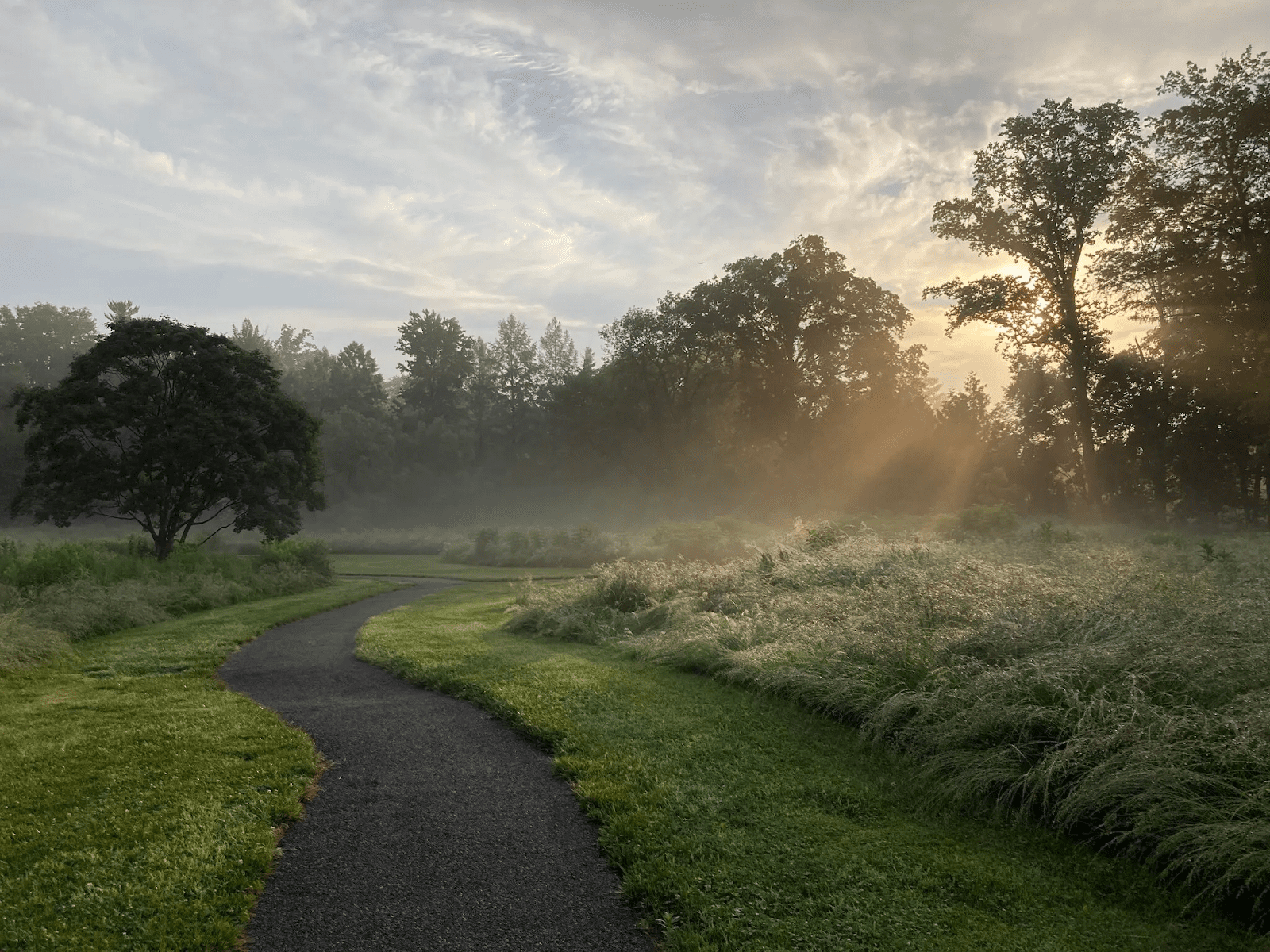
Improving air quality and expanding green spaces directly benefit the health of New Yorkers. Thus, health concerns connected with air pollution are reduced and the overall well-being of the population is improved. While walking through urban green spaces, people feel peace, tranquility and happiness. One can escape from the city noise and relax in such places.
Furthermore, New York’s greening maintains biodiversity by providing habitats for various animals and birds. Tree planting and the creation of new green areas in the city also help purify the air and regulate temperature. This is crucial because NY often experiences the phenomenon known as the urban heat island. It is an effect when the temperature within the city is significantly higher than beyond.
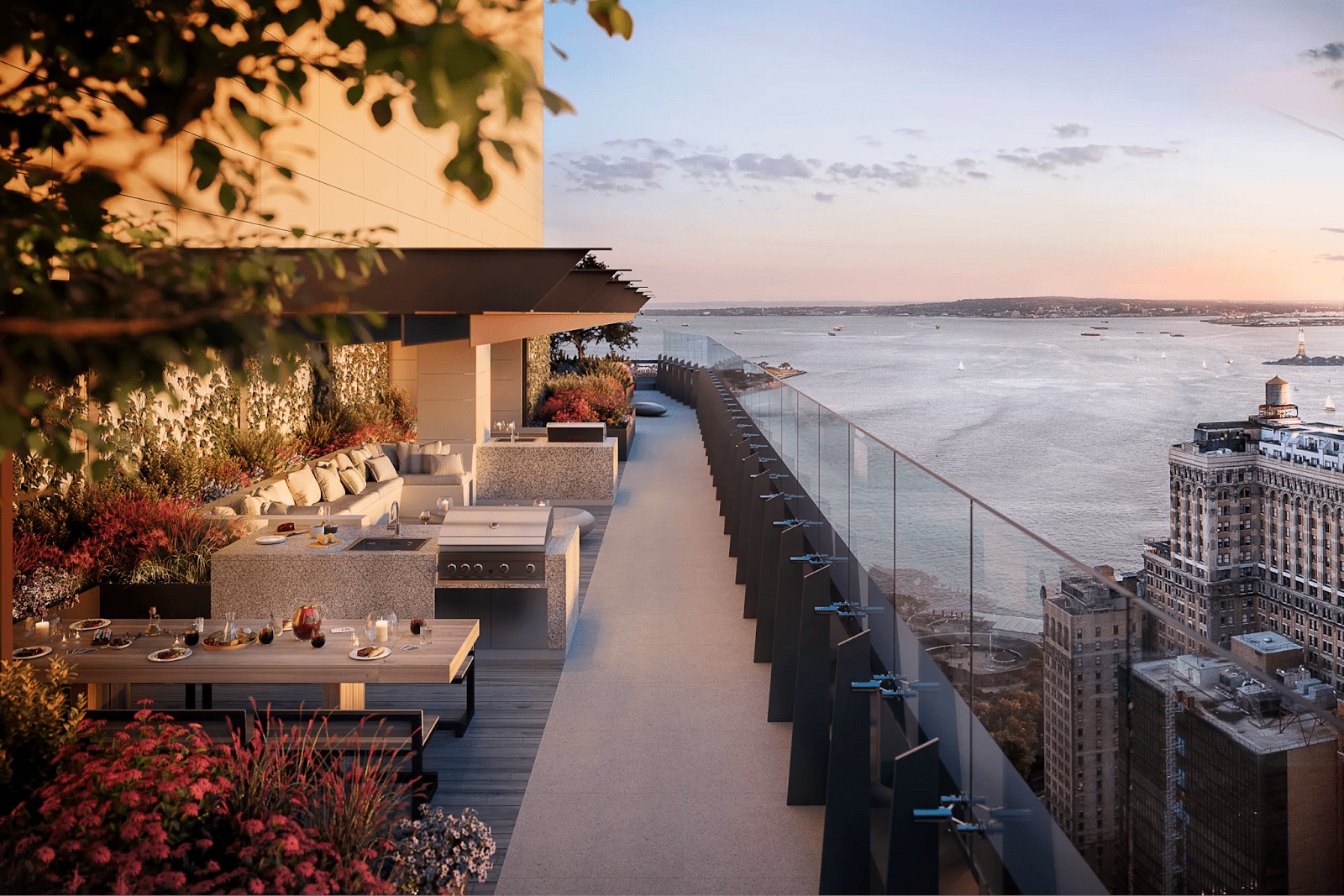
The city government, through various projects, programs, initiatives, and even laws and regulations, is greening the city step by step. Over the past decades, people started noticing landscaped spaces not only on the streets of New York but also on rooftops. Parks and botanical gardens have been created there, as well as green waterfronts and much more.
Slowly but steadily, NY is moving towards a sustainable future and mitigating its impact on climate change. By reducing greenhouse gas emissions, the city is pivotal in global efforts to combat ecological turnover.
Making New York a greener and more sustainable metropolis is crucial not only for the city itself but also for the planet as a whole. The city’s government has successfully implemented such interrelated objectives as environmental management, climate change mitigation, greening and improving the quality of life for New Yorkers since the 20th century. New York landscaping is a major step towards a sustainable future and a healthy and happy life for the next generations.