

The winemaking industry in New York has a rich history, and Konstantin Frank holds a special place in it. He was one of the first and most influential winemakers in New York during the 20th century. Frank revolutionized the region’s viticulture by proving that European grape varieties could successfully thrive in New York State’s cold climate. Thanks to his innovative methods and perseverance, winemaking in the region developed significantly, and his wines earned international recognition, laying the foundation for New York’s future winemaking success. Read more at new-york.name.
A Bit About Konstantin Frank
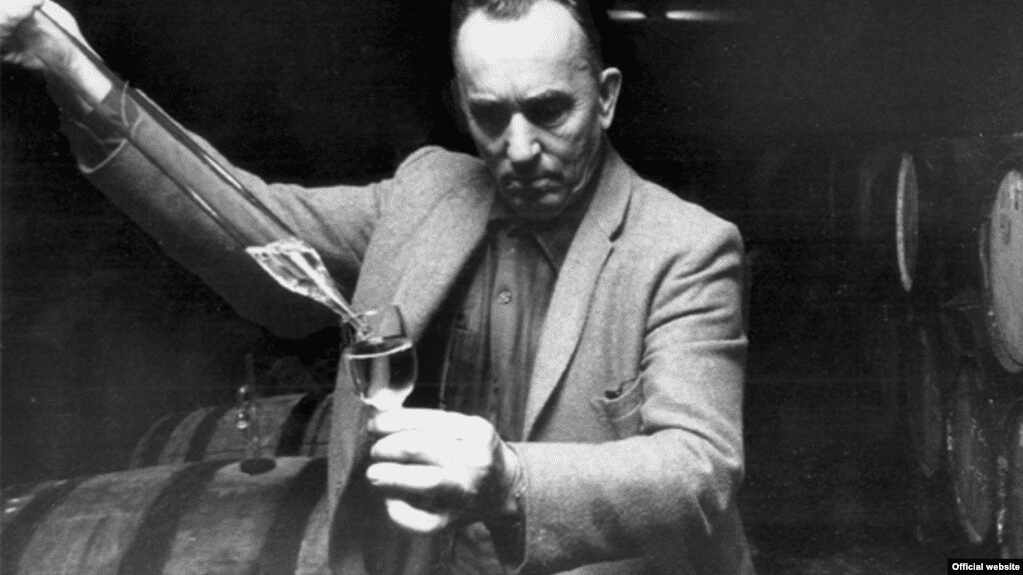
This New York vintner hailed from Odesa, Ukraine. He was born near the sea in 1899, on fertile land rich with vineyards.
He spent his early years in Odesa, where he completed his primary education and earned a doctoral degree in viticulture from the Odesa Polytechnic Institute. His doctoral thesis focused on the methods of growing the “Vitis vinifera” grape variety in cold climates.
He dedicated several years to working in Georgia, a country where winemaking holds a prominent place. There, he managed a state vineyard. After working there for some time, Konstantin decided to move to the U.S. in 1951.
Life in New York
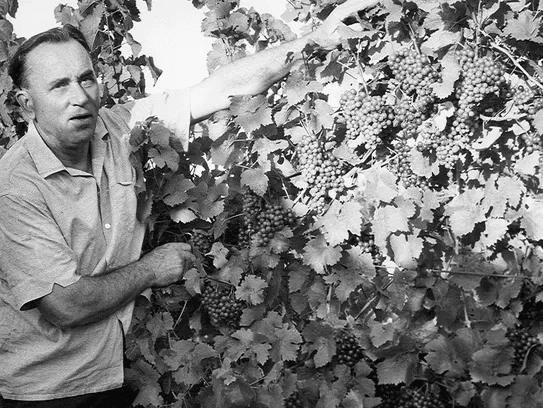
Konstantin was a highly intelligent and well-read man. He spoke about nine languages fluently, but unfortunately, English wasn’t one of them. So, after moving to the U.S. in 1951, he settled in New York and was forced to work as a dishwasher. He worked in this job for about two years. After saving enough money, he was able to move with his family to the Cornell University’s Geneva Experiment Station.
Konstantin’s Development of Viticulture in New York
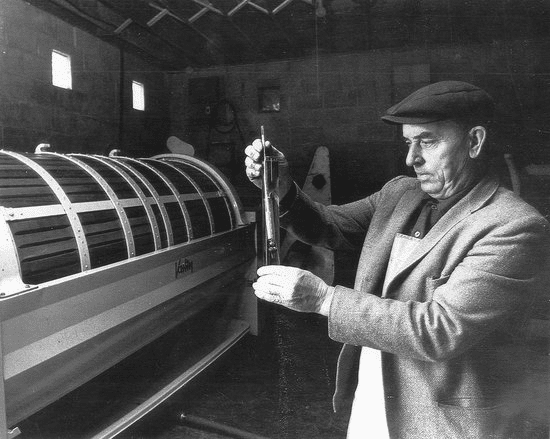
Upon his move, Konstantin began his journey to revolutionize the American winemaking industry. At the time, the Finger Lakes region in New York was known for producing mostly low-quality wines because the climate was considered too cold for the European “Vitis vinifera” grape, the variety used to make the world’s most revered wines. Undaunted by local skepticism, Frank believed that with the right approach, this grape could thrive in the Finger Lakes. After all, he had written his doctoral dissertation on this very grape variety while studying at the Odesa Polytechnic Institute.
Unfortunately, while working on some of his research in grape breeding, many of his findings were largely dismissed by the established winemaking community.
It’s worth a quick dive into the history of winemaking in New York to note that for more than three centuries, various winemakers had tried to grow the “Vitis vinifera” grape, but all attempts were unsuccessful. New York’s harsh climate simply wouldn’t let the grapes thrive. When Konstantin moved to New York, he refused to believe that growing this grape variety in the region was impossible, so he took on the challenge. It’s important to mention that when he undertook this difficult task, Konstantin already had extensive experience growing European grapes in sub-zero temperatures in Ukraine.
Although previous winemakers’ attempts to grow “Vitis vinifera” were unsuccessful, Konstantin knew it was possible using the grafting methods he had developed. At first, the New York winemaking community simply scoffed at Konstantin’s ideas. No one believed that “Vitis vinifera” would grow in the cold northern region of New York State.
But this mockery and disbelief only strengthened Konstantin’s resolve. In 1958, he bought a small plot of land on the western side of Keuka Lake, not far from New York, and began growing the “Vitis vinifera” grape variety there. His first harvest was collected in 1962, along with a Trockenbeerenauslese Johannisberg Riesling made from botrytized grapes.
Over the years at his vineyard, Konstantin planted, grew, and harvested more than sixty different grape varieties. He became not just a successful vintner in New York but also proved to the world that the eastern part of the U.S., including New York, could grow noble European grape varieties like “Vitis vinifera.”
Having earned a reputation as one of New York’s best winemakers, he began consulting for other well-known wineries, including Gold Seal Winery. Furthermore, Konstantin is also the founder of the Vitis vinifera vineyard. Throughout his career, he urged all New York winemakers to abandon low-quality grape varieties like “Vitis labrusca” and others and instead practice growing “Vitis vinifera”—the traditional grape variety in Europe.
Konstantin Frank’s story is a testament to the power of vision and perseverance. He not only transformed the region’s viticulture but also left a lasting mark on the global wine industry.
The life of the distinguished New York vintner ended in 1985 at the age of 86. After Konstantin’s death, his work was continued by his son, Willy Frank. Like his father, Willy made a special contribution to the development of New York’s wine culture by introducing the state and the entire country to new sparkling wines made using the traditional “méthode champenoise” technique.
Sources: