

David Harvey is a renowned and prominent scholar, a founder of modern geography who became a key figure in the development of the discipline. For many years, he worked in fields like geography, sociology, political economics, and urban studies. But Harvey gained widespread popularity for his Marxist analyses, which focused on urban geography and also extended to economics in a broader sense. Additionally, Harvey is a Distinguished Professor of Anthropology and Geography at the City University of New York. Read more at new-york.name.
Early Years of a Future Innovator
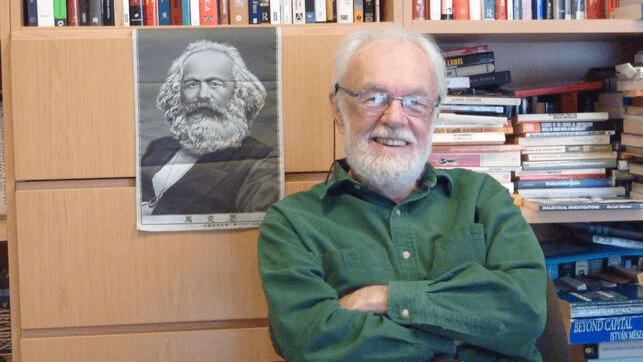
The future innovator was born in Kent, England, in 1935. Harvey’s first steps into academia were also in England. He attended St. John’s College at Cambridge, where he earned a Ph.D. in geography. His early research was based on the quantitative revolution, a movement that focused on using mathematical models and statistics in geographical studies. But Harvey became truly famous for his research and his shift to Marxist theory and critical social theory. This work allowed Harvey to rise to a new level in his career and forever change the perception of modern geography.
His active period of work in the field of Marxist geographical theory marked a significant transition from descriptive approaches to more analytical, scientifically rigorous methods. Harvey’s work was centered on spatial science, using quantitative methods to understand spatial patterns and processes. One of his first works, titled “Explanation in Geography,” published in 1969, advocated for the application of scientific principles in geographical research, positioning geography as a more empirical and objective science.
How Harvey Ended Up in New York
Harvey’s research and career eventually brought him to the U.S. He moved there in the 1970s when he transferred from the University of Bristol to Johns Hopkins University in Baltimore. While working at this university, Harvey took center stage in the new field of radical and Marxist geography. At the time, Baltimore proved to be an incredibly suitable location for his work, as issues like injustice, racism, and exploitation were incredibly palpable in the 1970s, perhaps even more so than in Great Britain.
Another landmark event for Harvey’s work in the U.S. was the creation of the journal “Antipode” at Clark University. Harvey became one of its first authors. In addition, the regular meetings of the Boston Association of American Geographers became a pivotal moment in Harvey’s career, as he was able to challenge his colleagues’ traditional approach to the science. Specifically, he advocated for the creation of a “revolutionary theory,” a theory “verified by revolutionary practice.”
The 1980s were no less productive for Harvey. During this period, he published numerous scientific articles and works. Among them, “The Limits to Capital,” published in 1982, in which Harvey developed a radical geographical analysis of capitalism, and “The Condition of Postmodernity,” published in 1989, which presented a materialistic critique of postmodernist ideas and arguments, suggesting they actually arise from contradictions within capitalism itself, deserve special attention.
In the 1990s, Harvey returned to his native England, where he spent most of his time as a speaker. He was also a Miliband Fellow at the London School of Economics. In addition, Harvey didn’t forget about his academic and publishing activities and actively continued to write. In 1996, his latest scholarly work, “Justice, Nature and the Geography of Difference,” was published, which gave primary importance to social and environmental justice.
It wasn’t until the early 21st century that Harvey returned to the U.S., and in 2001, he settled in New York. There, he began working at the City University of New York as a distinguished professor and later moved to the anthropology department.
The Shift to Marxist Geography

Despite his early support for quantitative methods, Harvey became increasingly disillusioned with their limitations in addressing issues of social inequality and injustice. The social upheavals and political movements of the late 1960s and early 1970s prompted him to explore more critical approaches. As a result, Harvey’s introduction to Marxist theory became a turning point in his career. He began to study how capitalism and its inherent contradictions shape the urban environment and spatial relationships. It was a very unusual approach to geography as a science.
His groundbreaking work, “Social Justice and the City,” reflected this transition. In it, Harvey criticized traditional urban theories and presented a Marxist perspective, arguing that urbanization and spatial planning are fundamentally linked to capitalist processes. This work laid the foundation for critical geography—a field that examines the socio-political and economic aspects of geographical phenomena.
Harvey’s academic research had a tremendous impact on urban geography. His analysis of urbanization, especially through the lens of Marxism, provided a critical look at the dynamics of urban spaces. Harvey explored the role of urbanization in the accumulation of capital and emphasized the importance of spatial strategies used by capitalists to overcome economic crises in cities. He argued that urban spaces are not just a passive backdrop but are active components of the capital accumulation process.
One of Harvey’s most influential concepts was what he called “spatial fix.” He suggested that capitalism periodically restructures spatial changes in order to mitigate economic crises. This theory has played a crucial role in understanding patterns of municipal development, gentrification, and the globalization of capital.
Thanks to his research in urban geography, Harvey is incredibly popular in the 21st century, not just in New York but far beyond its borders.