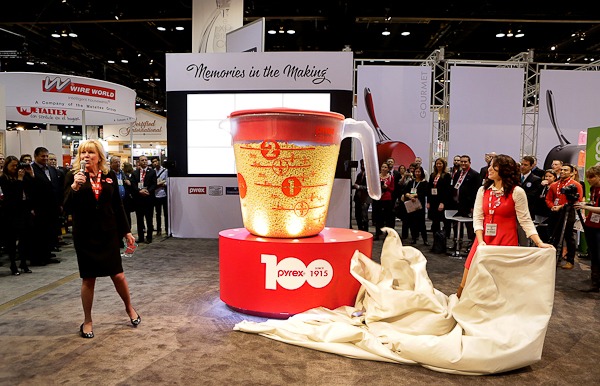
Today, durable and stylish glass cookware is nothing out of the ordinary. But back in 1915, it was a true sensation. The breakthrough came from a New York based company, and the product was called Pyrex. Within just a few years, the brand became the No. 1 choice for American homemakers and expanded internationally. Its shapes, patterns, and collections sparked debate and redefined how people thought about kitchenware design. Today, collectors around the world hunt for legendary pieces stamped with Corning Incorporated’s name. So it’s time to travel back to the pivotal era that shaped Pyrex and the modern kitchen industry. Read more at new-york.name.
A Happy Accident That Changed Everything
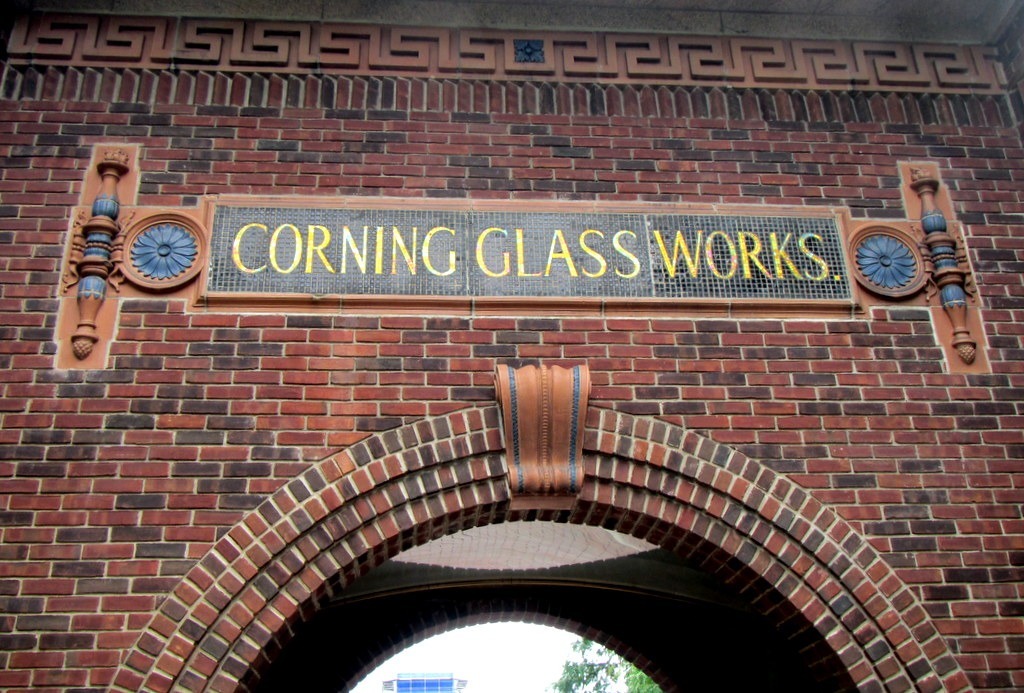
The story of Pyrex begins in the small town of Corning, New York. In 1868, Corning Glass Works, known today as Corning Incorporated, relocated there and never left. Over time, the company carved out its niche in the glass industry, focusing largely on technical and industrial orders. One notable challenge came from railroad companies, which struggled with fragile signal lanterns and components. In response, Eugene Sullivan, head of Corning’s research department, introduced a new, more durable type of glass in 1908. Inspired by the work of German scientist Otto Schott, Sullivan developed borosilicate glass, branded for industrial use as Nonex.
The material performed exceptionally well, but it raised a new question: where else could it be used? The answer arrived in 1913, when Sullivan hired researcher Jesse Littleton. Corning already had a strong research culture, with a laboratory that attracted scientists from across the country. Yet it was pure chance that determined Pyrex’s future. Littleton discovered an unexpected application for borosilicate glass at home. His wife, Bessie, complained about her baking dishes cracking under heat. Jesse gave her a makeshift solution – an old Nonex jar with the top cut off. It withstood high temperatures and proved remarkably practical. The idea was ready to become reality.
By 1915, Corning Glass Works introduced a full line of kitchenware under the Pyrex name and quickly patented the innovation. The origin of the name sparked debate. Some linked it to “pie,” since the first dish was a pie plate. Others pointed to the similarity between Nonex and Pyrex. There’s even a theory that the name hinted at “fire glass.” Whatever the truth, Pyrex marked the beginning of a new era in kitchenware and beyond.
Building a Household Name
Pyrex cookware caught consumers’ attention almost immediately. The company showcased it in department stores, backed by an effective advertising campaign. By 1919, sales had surpassed 4.5 million pieces. Still, Corning wanted more. Early Pyrex was expensive, produced largely by hand, and affordable mainly for wealthy families. Many households also lacked ovens or equipment that could fully take advantage of its heat-resistant qualities. Something had to change.
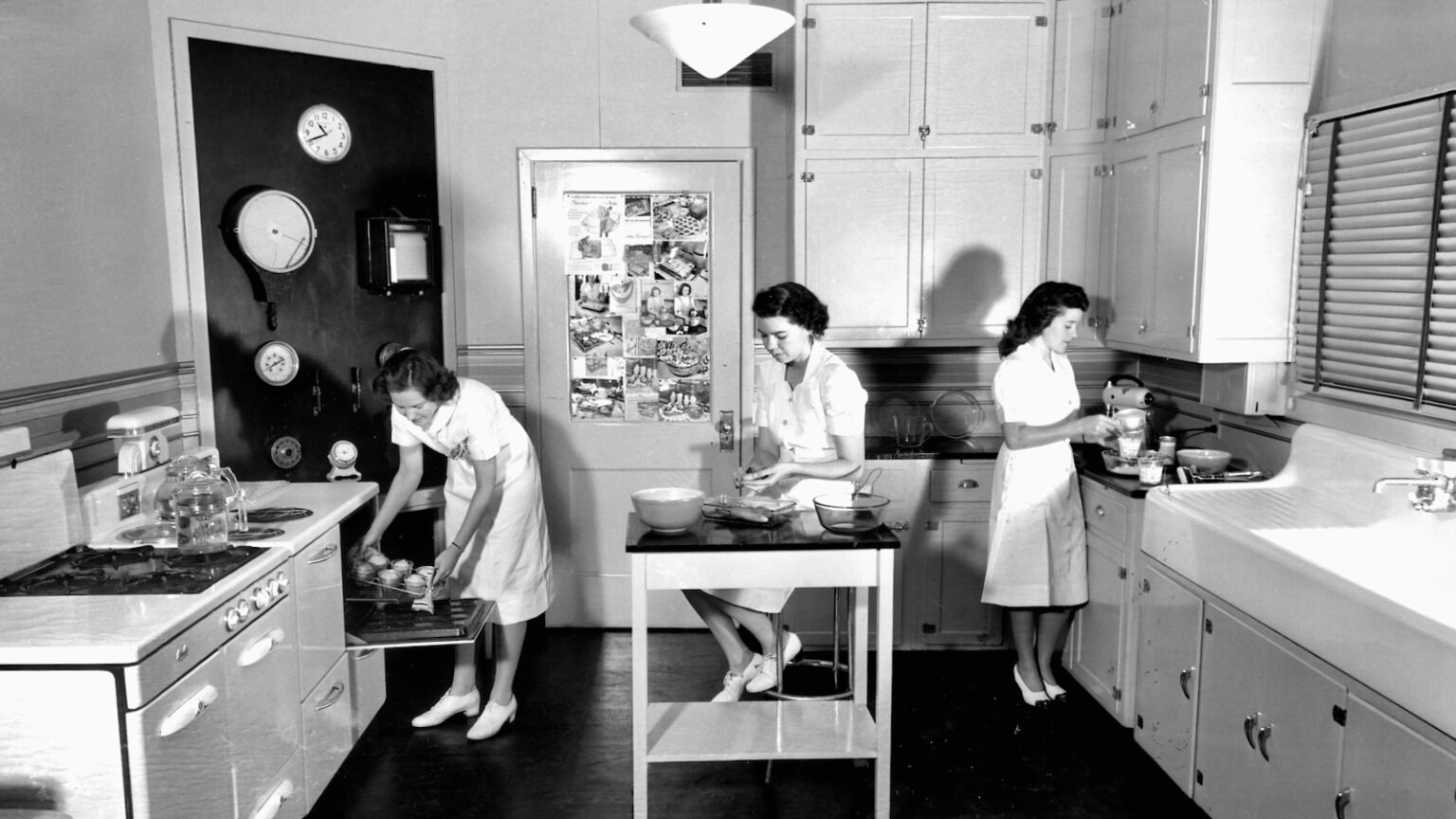
Several factors aligned at once. World War I ended, factory processes became automated, and the company revised its strategy. Prices dropped, production scaled up, and Pyrex became both accessible and fashionable. A key figure in this transformation was Lucy Maltby, who joined Corning in 1929. With a master’s degree in kitchen design and equipment use, she brought much-needed expertise to the Pyrex division. Her involvement began with a critical letter she sent to the company. Corning invited her for a meeting and soon after, offered her a job. Maltby established a test kitchen that quickly became central to Pyrex’s success. Her team experimented with shapes, sizes, recipes, and designs. They tested how dishes fit into ovens, how easy they were to use, and whether recipes matched the cookware. Corning actively communicated with customers, visiting homes and responding to letters from homemakers nationwide. This open dialogue helped turn Pyrex into a truly people-driven brand.
In the 1940s, Corning introduced Opal Pyrex. Made from opaque soda-lime glass, it served a different purpose. While borosilicate Pyrex was ideal for baking, Opal Pyrex was designed for serving. It couldn’t handle high heat, but it resisted chips and impacts, making it perfect for diners, cafés, and restaurants. Another innovation was Pyrex Flameware, which allowed cooking directly over an open flame and handled rapid temperature changes with ease. Design also took center stage. In 1958, Corning launched a dedicated design department led by John Ward. New collections debuted regularly, each decade defined by its own colors, patterns, and style. Consumers didn’t just want Pyrex, they wanted every piece.
Franchises and Global Expansion
Pyrex’s success was closely tied to Corning Glass Works, but interest in the brand extended far beyond one company. In the U.S., Corning collaborated with Macbeth-Evans Glass Company. The two merged in 1936, and Macbeth-Evans became a Corning division. Production expanded, including at a plant in Charleroi, Pennsylvania.
In Europe, Pyrex’s breakthrough came through a factory in Sunderland, England. Licensed in 1922, British Pyrex initially replicated American designs before developing its own. As demand grew, so did innovation. However, the Sunderland plant closed in 2007, and production moved to the French company Arc International. Since 2014, the European division has operated as International Cookware.
Meanwhile, Corning Glass Works became Corning Incorporated in 1989. In 1998, it spun off its consumer products division. Pyrex manufacturing passed to World Kitchen, later renamed Corelle Brands. After a merger with Instant Pot, the company declared bankruptcy in 2023. In 2024, Pyrex was acquired by competitor Anchor Hocking, which closed the Charleroi plant in 2025.
What Happened to Corning?
Corning Glass Works was founded in 1851 in Somerville, Massachusetts, before moving to Corning, New York, in 1868 its home ever since. Pyrex was the company’s first mass-market success, but far from its only one. The launch of Pyrex was a gamble. Corning excelled in technical glass, not kitchenware. Yet through collaboration, experimentation, and persistence, Pyrex became the company’s calling card. Even after Corning Incorporated exited the consumer cookware business in 1998, the brand’s legacy remained intact. Collectors still seek out pieces made in Corning, and vintage Pyrex collections are considered true treasures.
What sets Corning apart is its refusal to rest on a single achievement. The company refocused on research and innovation. It still produces laboratory glassware under the Pyrex name and takes pride in that legacy. Corning’s achievements go far beyond cookware. In 2007, the company introduced Gorilla Glass, developed for the first iPhone. It soon became an industry standard for smartphones and other devices. Add to that automotive glass, spacecraft windows, glass for Edison’s light bulbs, designer sunglasses, and more. Today, Corning Incorporated continues to push boundaries creating technologies that may well become the next chapter in history.