

Park · New York · ⭐ 9.5/10 · 3566 reviews · updated: 2026-08-04 20:08:22
Address: Payson Ave. &, Seaman Ave, New York, NY 10034, United States
Inwood Hill Park — the last wild ground on Manhattan
Everything else on this island has been graded, filled, drained or planted. Inwood Hill has not. The forest on these ridges is the last natural woodland on Manhattan, the marsh at its northern edge is the last natural salt marsh, and the valleys, boulders and rock shelters between them were shaped by ice rather than by anyone’s design. People lived here for centuries before Europeans arrived, a Revolutionary army camped on the heights, and a tulip tree that stood for roughly two hundred and eighty years marked the spot where the sale of Manhattan is said — on very thin evidence — to have taken place. Two hundred acres at the top of the island, and hardly any of it looks like New York.
Highlights
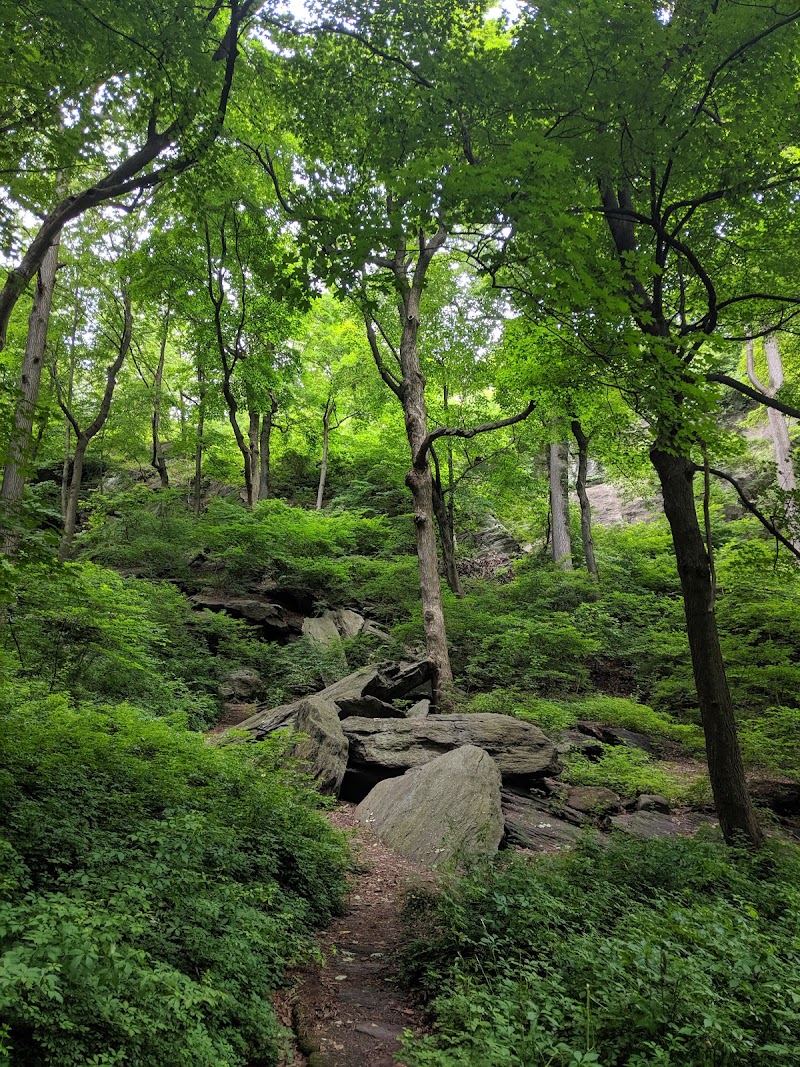
- The last natural forest on Manhattan — around a hundred and fifty acres of genuine woodland with old tulip trees, oaks and hickories, recognized as part of the Old-Growth Forest Network. No landscape architect laid this out.
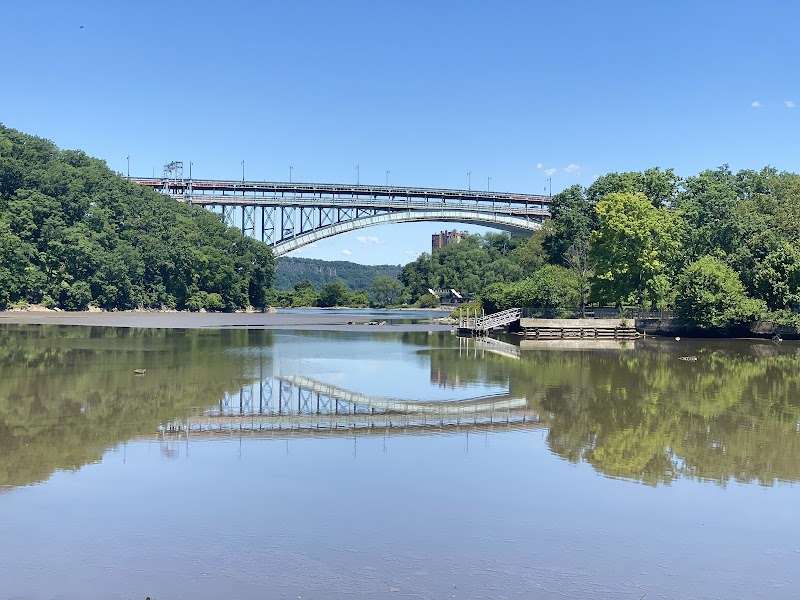
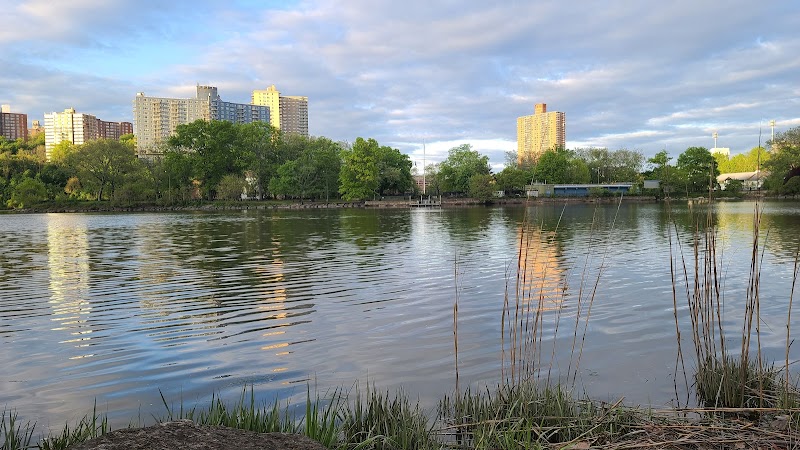
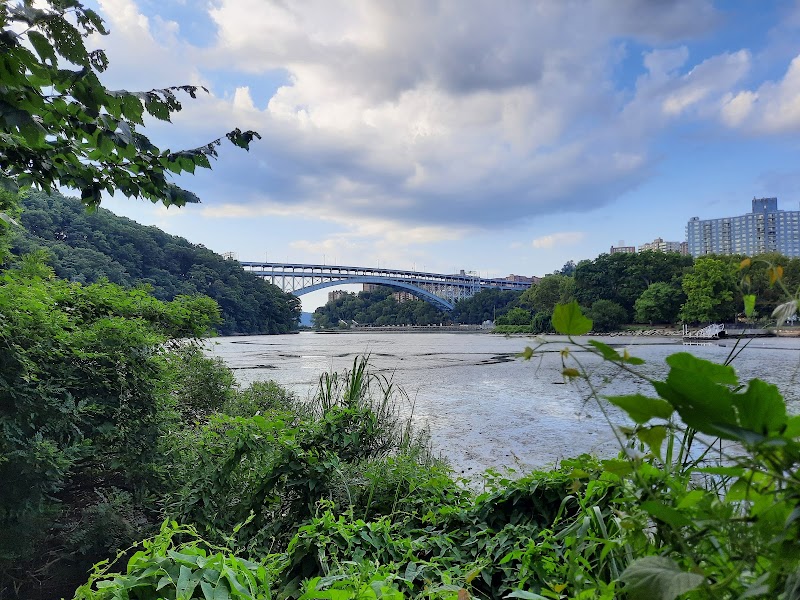
- The salt marsh — Manhattan’s last, brackish and tidal, holding mummichogs, ribbed mussels, crabs and the wading birds that feed on them, at the point where the island meets Spuyten Duyvil Creek.
- The caves of the Clove — rock shelters formed where glacial boulders came to rest against the valley walls, used seasonally by the Lenape and excavated in the early twentieth century by Reginald Pelham Bolton and William Louis Calver, who recovered pottery, tools and shell. The valley itself, with its potholes and erratics, was carved during the last ice age.
- Shorakkopoch Rock — the plaque near the marsh marking the site of a tulip tree that lived roughly two hundred and eighty years and died in 1938, and claiming this as the place Peter Minuit bought Manhattan in 1626. The tree was real; the transaction’s location is legend.
- The bird list — more than a hundred and fifty species recorded, including bald eagles, which the city released here as young birds in a hacking program in the early 2000s.
- Muscota Marsh — a small waterfront park opened in 2014 at the northern edge, designed by James Corner Field Operations, with a cantilevered overlook and a boat launch onto the creek.
What you’ll find
The park has two halves that barely resemble each other. The flat eastern edge along the water holds ballfields, lawns and the playground, and functions as an ordinary neighborhood park. Climb west and the ground rises into ridges and a steep wooded valley, and within five minutes the city is out of sight and mostly out of earshot.
- Miles of unpaved forest trails over real elevation, including the ridge path and the descent through the Clove.
- The salt marsh and its boardwalk edge, best at low tide when the mudflats bring in herons and egrets.
- Ballfields, open lawns and a playground on the flat eastern ground, heavily used by the Inwood neighborhood.
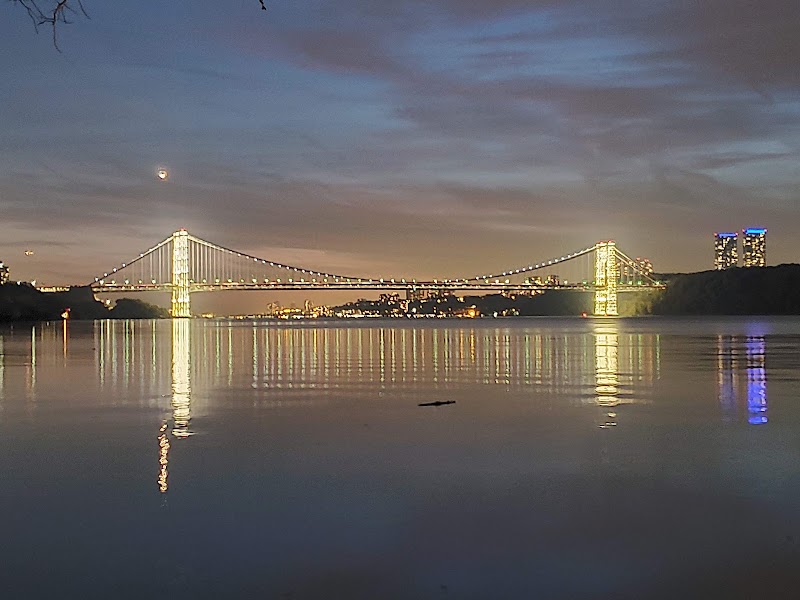
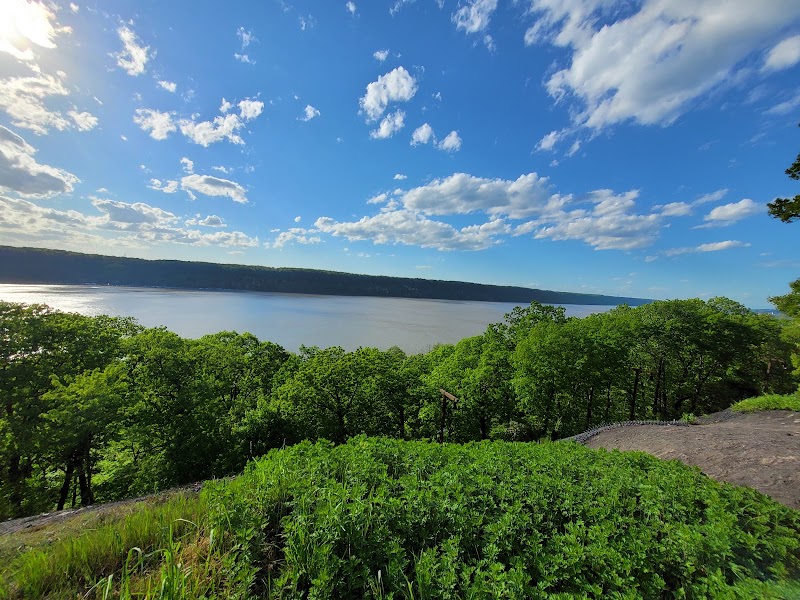
- Overlook Meadow and clearings on the heights, with sightlines across the Hudson to the Palisades and up toward the Henry Hudson Bridge, opened in 1936.
- Remnant earthworks and terraces from Revolutionary-era fortification on the ridges, unmarked and easy to miss.
- The nature center near the northern entrance, with exhibits and ranger-led programming.
Things to do — and who it’s for
- Hikers — the only place on Manhattan where you can walk unpaved trails with sustained climbing and genuinely lose the street grid.
- Birders — one of the strongest lists in the borough, with raptors over the ridge, waders in the marsh and heavy warbler traffic in migration.
- History and archaeology readers — Lenape rock shelters, an eighteenth-century military position and a hundred years of amateur excavation, all within one park.
- Families — the flat eastern side gives you a playground, fields and lawns; the forest is there when the children are older.
- Paddlers — the launch at Muscota Marsh puts kayaks and canoes onto Spuyten Duyvil Creek, the channel that separates Manhattan from the Bronx.
- Anyone tired of curated parks — this is the antidote to the designed landscape, and the contrast with the rest of the island is the whole point.
Getting there & practical
The park occupies the northwestern corner of Manhattan in the Inwood neighborhood. The A train terminates at the 207th Street–Inwood station, a short walk from the northern entrances and the nature center; the A also stops at Dyckman Street for the southern end, and the 1 train reaches 215th Street and Dyckman Street. Buses M100, Bx7, Bx12 and Bx20 all serve the surrounding streets, and the Bronx side is reachable on foot across the creek. Entry to the park is free, including the trails, the marsh overlooks and the nature center; there is nothing ticketed inside it, and no reservation is needed for anything except organized group programming. The park keeps standard city hours from early morning until late evening, but the forest trails are unlit and should be treated as daylight-only. Allow two hours for a proper loop of forest and marsh, three or more if you are birding or walking the full ridge.
When to visit
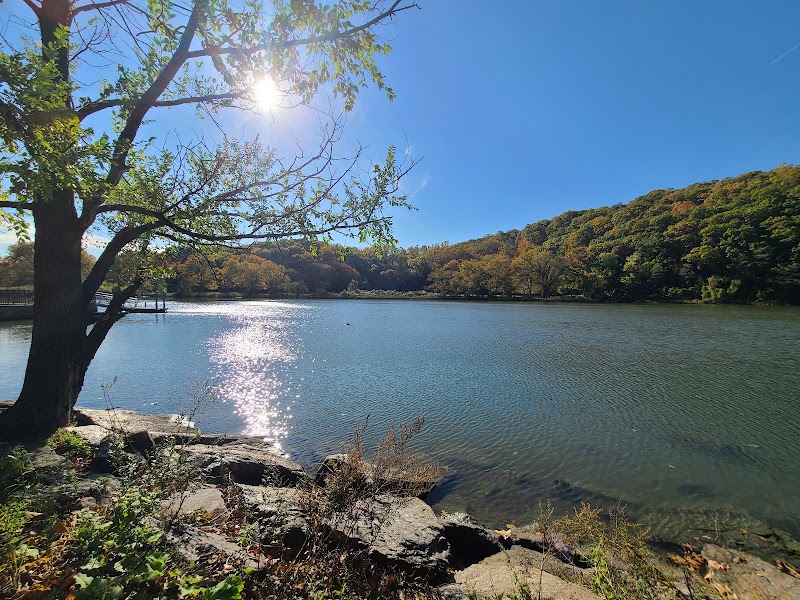
Spring is the peak: the forest floor greens before the canopy closes, spring ephemerals come up on the slopes, and late April through May brings the heaviest warbler migration of the year through the treetops. Summer closes the canopy completely, and the woodland becomes noticeably cooler than the surrounding streets, though the trails get humid and the mosquitoes near the marsh earn their reputation. Autumn is the finest walking season — the ridge turns gold and russet through October, the views across the Hudson open as leaves drop, and hawk migration passes overhead. Winter is the connoisseur’s season and arguably the most revealing: the glacial landforms, the caves and the old earthworks are all visible with the leaves gone, waterfowl gather in the creek, and eagles are most reliably seen along the water in the coldest weeks.
Good to know
The Munsee-speaking Lenape, including the group recorded as the Wickquasgeck, used this ground for centuries; the place name Shorakapok is generally translated as “the sitting-down place” or “the place between the ridges”. The rock shelters in the valley served as seasonal camps, and shell, pottery and stone tools have been recovered from them — most systematically in the early twentieth century by Reginald Pelham Bolton and William Louis Calver, working for the New-York Historical Society. In November 1776, following the Battle of Fort Washington, British and Hessian troops occupied and fortified these heights, and terraced earthworks survive on the ridge. The plaque at Shorakkopoch Rock states that Peter Minuit purchased Manhattan from the Lenape here in 1626 for goods valued at sixty guilders; historians do not accept the location, the famous dollar figure is a nineteenth-century conversion, and there is no reason to think either party understood the exchange the same way — the tulip tree that once stood at the spot, however, was real, and lived roughly two hundred and eighty years before dying in 1938. The city began acquiring the land in 1916 and assembled the park through the following decades. Muscota Marsh, at the northern tip, opened in 2014 as part of an agreement tied to Columbia University’s neighboring athletics complex. The Inwood Hill Nature Center was wrecked by Hurricane Sandy in October 2012 and stayed closed for twelve years, finally reopening on June 1, 2024. Nearby, the Dyckman Farmhouse of 1784 survives as the oldest remaining farmhouse on Manhattan and is worth pairing with a visit.
Visitor tips
- Wear real shoes. These are unpaved, rooted, sometimes steep forest trails, not park promenades, and they hold water after rain.
- Time the marsh for low tide if you want herons and egrets; at high water the mudflats they feed on disappear.
- Go in winter at least once. With the leaves down you can finally see the caves, the glacial boulders and the old earthworks that are invisible for eight months of the year.
Questions & answers
Is Inwood Hill Park really Manhattan’s last natural forest? Yes. Roughly a hundred and fifty acres here are natural woodland that was never cleared and replanted as landscape, which makes it unique on the island. It is recognized as part of the Old-Growth Forest Network.
Was Manhattan actually sold at Shorakkopoch Rock? Almost certainly not there. The plaque records a nineteenth-century tradition, not evidence. The 1626 transaction is documented in a letter, but the location is unknown and the famous dollar valuation is a much later conversion.
Are the caves open to explore? They are visible from the trails through the valley, but they are fragile archaeological sites and shallow rock shelters rather than caves you enter. Look, photograph, and stay out.
Is the park free? Entirely. Trails, marsh overlooks, ballfields and the nature center all cost nothing, and none of it requires booking.
Has the nature center reopened after Hurricane Sandy? Yes. It was closed for twelve years following the October 2012 storm and reopened on June 1, 2024.
Can I see bald eagles here? It is realistic, especially in winter along the water. The city released young eagles here in a hacking program in the early 2000s, and the species is now regular in the area.
How hard are the trails? Moderate by hiking standards, but genuinely steep in places and unpaved throughout the wooded half. The eastern flat side along the water is easy and stroller-friendly.
Is it safe to walk in the forest? In daylight, yes — it is a busy neighborhood park and the trails see steady use. The woods are unlit, so plan to be out of them before dark.
Photos
Show 1 more photos
Visitor reviews
Reviews last updated: 2026-08-04 20:08:22
Data is refreshed monthly. Sources: new-york.name and editorial picks based on reviews.
Це такий чудовий парк, повний природи, і вам навіть не потрібно залишати Мангеттен. Тут ви можете знайти дитячі майданчики, спортивні майданчики, туалети та пішохідні стежки, тож люди можуть займатися різноманітними вида…
The pictures really don’t do this place justice, it’s a real hiking park with absolutely breathtaking views of Spuyten Dyvil, Henry Hudson Bridge, Hudson River, and the Palisades. The park is usually empty and very quiet…
Останній справжній ліс Мангеттена. Стежки здаються північною частиною штату, краєвиди на Гудзон і Палісейдс чудові. Індіанські печери, старі дерева, справжня дика природа — одного разу бачили білоголового орлана. Місцями…
Я був у цьому парку вже близько 30 разів! Я пройшов усі 3 стежки. Я насолоджувався заходами та сходами сонця в парку Інвуд! У цьому парку відчуваєш себе так, ніби потрапив в іншу частину Нью-Йорка, бо тут так багато крас…
Дуже вражаючий парк. Неймовірні краєвиди, затишні стежки, бейсбольні та софтбольні поля, тенісні корти та дитячі майданчики. І він величезний. Стежки безкінечні; можна йти годинами. Просто чудове місце. ♿️