

The development of the New York City sewer system was an extremely crucial undertaking that lasted for centuries. In the early 19th century, the rapid growth of the city’s population created an urgent need for adequate sewage systems that would ensure proper sanitary conditions in the city. Read more on new-york.name.
What was the original sewer system in New York City like?
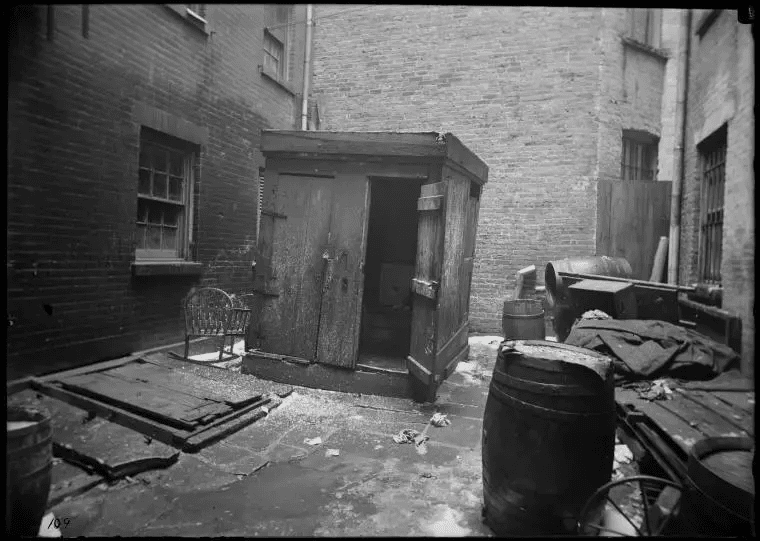
There was no sewage system in New York City as such. Only during the industrial revolution in the mid-19th century did systems close to the 21st-century water supply systems begin to appear in the United States.
At that time, New York City was one of the few cities in the United States that not only wanted to create a sewer system but also to make it as efficient as possible. It should be noted that until the end of the 19th century, many New York buildings did not have internal plumbing and, accordingly, sewage systems. In the old days, New Yorkers used small buildings in their yards as toilets as well as night pots. Sometimes there was one restroom for 20-30 people. Therefore, the sanitary condition in the city was deplorable. Parasites and various diseases associated with unsanitary conditions were common.
Before the development of a comprehensive sewer system, the city’s streets were littered with waste and garbage, leading to the spread of disease and an unbearable stench. The original sewer system, built in the 19th century, was primitive. It consisted of brick-lined trenches that collected waste and sent it to the Hudson River. The system was unreliable and often overflowed. This exacerbated the problem of poor sanitation in New York City.
Sewerage system development in the city
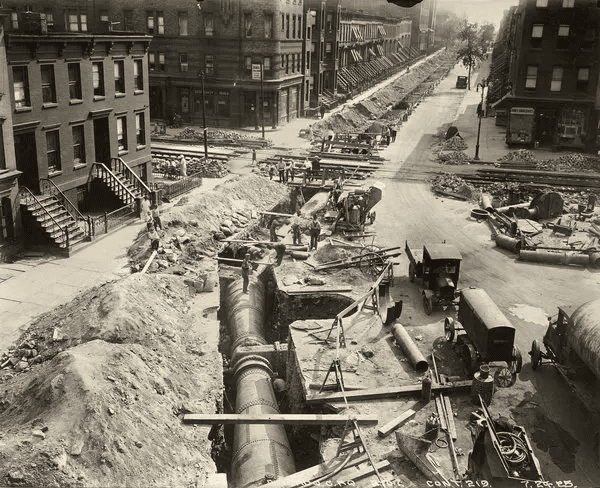
It was not until the late 19th century that New York City started implementing a more efficient sewer system. Engineers and city officials recognized the need for a more reliable and complex system that could cope with the ever-growing population and prevent the spread of disease. The new system was designed to collect and treat wastewater before it is discharged into rivers and oceans.
The new system was quite complicated. It included an extensive network of underground tunnels and pipes that carried wastewater to treatment plants located throughout the city. The treatment plants were equipped with advanced technologies of the late 19th and early 20th centuries. They filtered and removed harmful impurities from the wastewater, making it safe to discharge into the environment.
Despite the advances that the New York City government made in sewer development and waste management, the city continued to face problems related to its sewage system in the late 19th century. In particular, due to the overload of the sewer system, several large-scale sewage spills occurred in the city at the beginning of the 20th century. This caused a public outcry and concerns about the safety of the city’s waterways.
After this incident, the government of New York City had to invest heavily in modernizing the sewer system. Specifically, in the first half of the 20th century, new technologies and designs were introduced to prevent future spills. In addition, the city introduced regulations that required various businesses to treat wastewater before discharging it into the city sewer system.
In the 19th century, the New York City government had a misconception that sewer gases were the source of all diseases. Accordingly, for a long time, sewers were not connected to homes. But when the manhole was invented in the late 19th century, all fears were dispelled. At the beginning of the 20th century, in 1901, the New York City government issued a law requiring at least one toilet in every apartment in multiple dwelling buildings.
The New York City sewer system has come a long way in its development and formation. In the 21st century, it is one of the most advanced and comprehensive in the world. The system is constantly monitored and maintained, ensuring environmental and public health safety.
The development of the sewer system in New York City was an important undertaking that took more than a century. The city’s sewer system has evolved from a primitive brick-lined system of trenches into a vast network of tunnels and pipes equipped with advanced wastewater treatment technologies.