

A city like New York has always been progressive in various fields, including the sphere of innovation and ecology. In the face of constant challenges, climate change and environmental degradation, the New York government and its residents did their best to meet ecological sustainability and ensure a greener and brighter future for the next generations. In particular, the OneNYC initiative, adopted in 2015, contributed to the implementation of such innovations. Read more at new-york.name.
What is OneNYC and why is it important?
OneNYC is a plan launched in 2015 by then-Mayor Bill de Blasio, aimed at positioning NY as a global leader in sustainability. It encompasses such vital areas as climate control, economic growth, social equity and quality of life. OneNYC is not just another environmental initiative but a real strategic plan for sustainable development in New York. It has the potential to transform the “concrete jungle” into a green city in a decade.
Why is the initiative unique?
The OneNYC initiative is a comprehensive long-term plan for sustainable growth of New York in the future. It is based on key aspects of previous plans, one of which is PlaNYC. Growth, justice, equality and sustainability are among the core points of this ecological initiative. But there is much more than this. OneNYC is an extensive plan, and these four key themes include:
- 27 specific goals
- 62 indexes of effectiveness
- 199 initiatives.
It includes waste and transportation management, as well as adaptation to climate change and social justice. But what truly makes this plan distinctive is the special attention given to the interconnection between poverty alleviation and climatic change. For instance, through OneNYC, the city authorities are determined to lift 800,000 New Yorkers out of destitution by 2025.
Climate actions as part of the OneNYC plan
Carbon footprint in NY has been a pressing issue for many decades. As early as the 20th century, the government introduced various endeavors to reduce these greenhouse gases. The result was noticeable, but it was still not enough to combat ecological turnover, which is why OneNYC was devised.
Sea-level rise and extreme weather events are some of the inescapable consequences of climate change that New York experiences. Therefore, the central goal of OneNYC since 2015 has been to achieve an abatement in greenhouse gas emissions by 80% by 2050. In particular, this target includes the following measures:
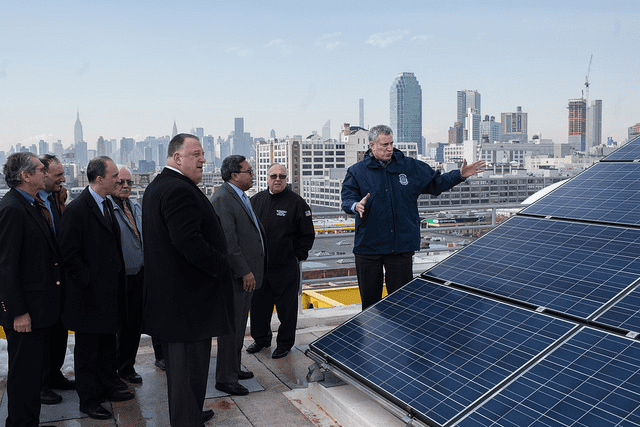
- Investments in wind and solar energy generation, as well as increasing the number of solar panels on rooftops
- Upgrading of old buildings using energy-efficient technologies
- Encouraging people to choose public transport is essential in reducing emissions. It implies expanding bike lanes and switching to electric buses
- Introduction of the most strict green building standards in the world
- Implementing resilience measures, including constructing dams and restoring wetlands to mitigate flooding.
Economic growth under OneNYC
OneNYC is not just an initiative focused solely on tackling climate change. It includes more global and ambitious plans that promote a green economy and create jobs.
This innovative development plan evidentiated that ecological stability can contribute to economic growth. Pivotal strategies in this field include:
- Investments in training programs, providing employment opportunities in the renewable energy, environmental conservation and sustainable construction sectors
- Providing incentives, such as tax advantages and simplified permitting procedures, to businesses that practice sustainability
- Supporting urban agriculture and local production of goods.
All these actions not only reduce carbon emissions but also invigorate the domestic economy by supporting farmers and food producers.
Social equity within OneNYC
One of the primary targets of the sustainable development plan until 2050 is to ensure a green and just city. Through OneNYC, the city government strives not only for a green economy and climate change control but also for social justice. Steps for social justice include:
- Providing affordable and energy-efficient housing for low and middle-income families
- Improving air quality and accessibility to green spaces in marginalized areas with elevated pollution
- Implementing social education programs.
Besides a sustainable future, NYC also pursues a higher quality of life for its residents through various OneNYC initiatives such as “Clean Air”, “Accessible Green Spaces”, as well as cultural and artistic programs.
This plan demonstrates the city’s ongoing commitment to a resilient future. These are just some of the measures included in this grandiose project. It covers every aspect of New York City life, making it better, greener and more sustainable. In the 21st century, this ambitious plan shows NY as a telling example of sustainable practices for many other cities around the world.