

Today, Bush Terminal is a creative hub in New York City. Spanning 35 acres along the waterfront, it’s home to over 650 companies employing more than 8,500 people. The complex features restaurants, shops, private event spaces, and a park, offering something for every New Yorker. Learn more about its history and evolution at new-york.name.
Founding and Early Operations
The industrial town, or Bush Terminal, was named after its founder, Irving T. Bush. In the late 19th century, the site was home to an oil refinery owned by the Bush & Denslow company. It was later purchased and dismantled by Standard Oil. After his father’s death, Irving T. Bush bought the land back.
The businessman initially built a one-story office building at the corner of First Avenue and 42nd Street. By 1897, six warehouses had been established on the property. Bush noticed that transporting goods in New York at the time required significant labor and time. Factories were scattered across the city, while railways and ships were on opposite shores. So, Irving T. Bush decided to bring all this crucial infrastructure together in one place, and he began building piers and freight terminals.
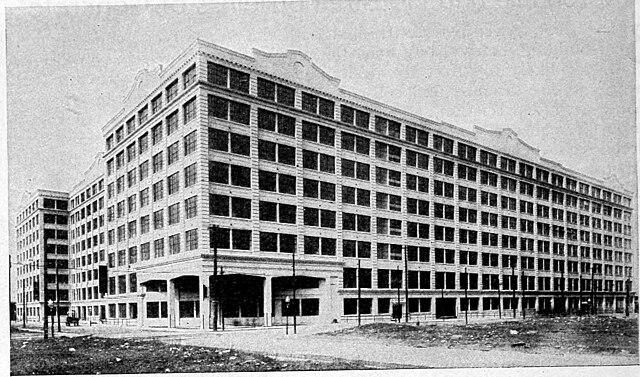
Few people took his project seriously at first. The terminal was far from Manhattan, New York’s business heart, the facilities were enormous, and the plan relied on using ferries. Railroad officials were especially skeptical, so Bush handled the first operations at the new terminal himself. He also ventured into the banana business to demonstrate that his piers could be used safely. The entrepreneur stored cotton and coffee in his new warehouses, leading by example for other business owners. Step by step, he managed to convince the business world of his project’s viability and grow it.
The Rise of Bush Terminal
In the early 20th century, Irving T. Bush’s company managed waterfront properties on 41st and 42nd Streets. Later, the company acquired land from 41st to 50th Street, as well as plots owned by the Standard Oil Co. The Bush Terminal Company began actively constructing factory buildings, warehouses, and piers. It’s worth noting that this shift away from oil refining was a positive step for the local environment.
By 1905, five piers had been built, and construction continued. At this point, the Bush Terminal Company owned ten of the twelve blocks in the area. Meanwhile, Manhattan’s shipping industry was becoming overburdened, which created excellent growth opportunities for Bush Terminal.
In 1909, three six-story factory buildings were constructed. The new complex proved so convenient that the first buildings were leased out even before construction was fully completed. The first tenants were from the printing and paper industries, and they operated there until the mid-20th century.
By the start of World War I, Bush Terminal had over 100 warehouses with 26,500,000 cubic feet of space. It also featured 16 factory buildings with a total of 4,500,000 square feet. The site housed around 300 companies and had become a vital part of the city’s economy. The surrounding neighborhoods grew and developed alongside it, as Bush Terminal employed tens of thousands of people. In 1928, it had 35,000 workers. Given its size, the terminal had its own police force, fire department, and court system.
Bush Terminal in the 20th Century
The rapid growth of Bush Terminal was halted by World War I. Construction on new projects ceased until 1926. It eventually resumed, but not on the same scale as in previous decades. In 1927, a National City Bank branch and a large children’s playground opened on the terminal’s grounds.
When the Great Depression began in 1929, the company initially held its ground. Its founder established a subsidiary, the Bush Services Corporation, to support small entrepreneurs. Seaplanes began operating flights between Bush Terminal and Philadelphia. Business was growing, albeit slowly. Additionally, in 1934, plans were announced to create a park on the site of an abandoned landfill next to the terminal.
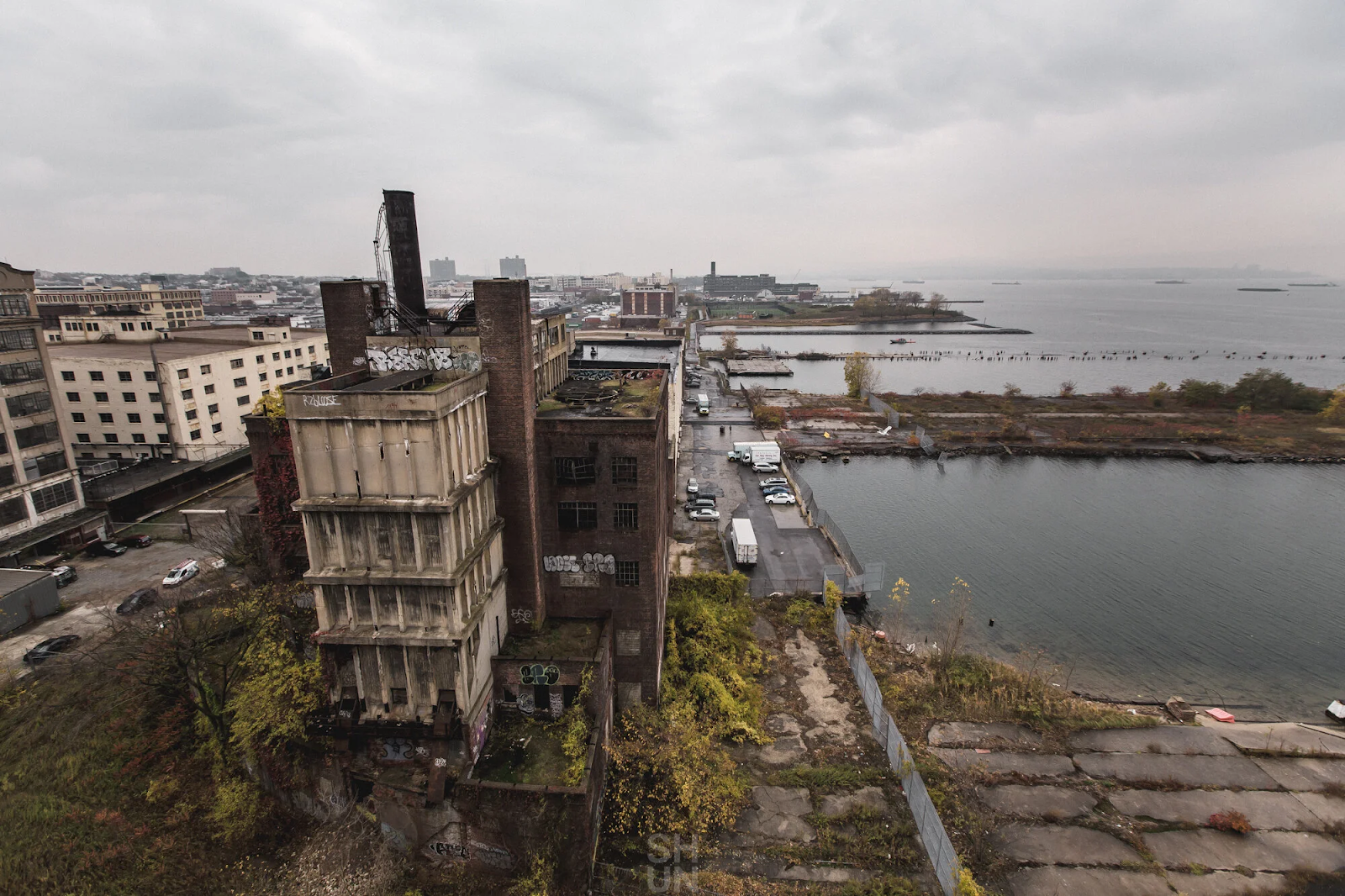
The project’s economic decline began during World War II and continued for several decades after. Bush Terminal was cut off from the rest of the neighborhood by the construction of an expressway over Third Avenue. Then, the maritime industry relocated to New Jersey, which further reduced the terminal’s activity. Irving T. Bush passed away in 1948. At that time, his company had only about 700 employees and 300 manufacturing tenants.
By 1976, 125 companies were renting space, employing 20,000 people. This number later began to grow but never reached pre-war levels. Meanwhile, the area between 41st and 50th Streets remained neglected and became dangerous. It was home to many impoverished people, and crime was a daily occurrence. Rumor had it that bodies of murder victims were dumped in the river. This situation did not help the urban landscape or the environmental conditions.
City officials began to consider how the space could be better utilized. Various projects were proposed, ranging from a prison to waste recycling plants. In 1989, the Southwest Brooklyn Industrial Development Corporation received approval to develop 1,500,000 square feet of Bush Terminal. Together with the New York City Economic Development Corporation, they began renovating and repurposing the old structures. Gradually, life returned to the area as a wide variety of tenants moved in.
Modern-Day Bush Terminal
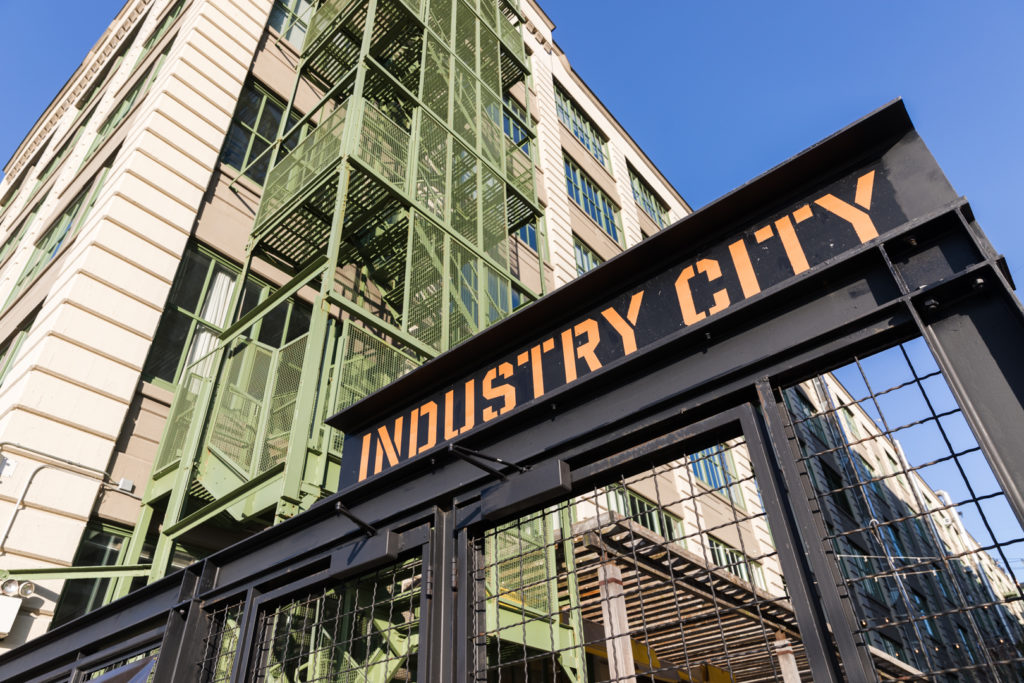
Today, Bush Terminal covers 71 acres and includes 16 former factory buildings and 11 warehouses. Renovation and expansion efforts have been ongoing since the early 21st century. In 2017, plans were announced for a significant expansion of the former industrial town. The plan includes building a film, television, and fashion manufacturing campus called “Made in NY.”
Additionally, a 24-acre park was created next to the site. The green space, located between 43rd and 50th Streets, features pedestrian and bike paths, baseball and soccer fields, ponds, and access to the piers. It opened in 2014 and has since become part of the Brooklyn Waterfront Greenway. This long greenway connects several city neighborhoods and reflects New Yorkers’ commitment to sustainability and developing the city with a focus on both industry and environmental care.
When it was first created, Bush Terminal was one of the world’s first and largest integrated freight and manufacturing sites. Tens of thousands of people worked there, in its industrial facilities, warehouses, and commercial spaces. The terminal became a true model for other industrial parks. Its creation had a major impact on New York’s development, generating jobs and new opportunities for businesses. Today, the industrial town has transformed into a multi-use campus for light industry, with spaces for art, daily life, and recreation.