

Richard Feynman was a renowned physicist of the 20th century and one of the founders of quantum electrodynamics. He was born in New York City on May 11, 1918. Feynman was noted for his innovative thinking and ability to simplify complicated concepts. In 1965, he was awarded the Nobel Prize in Physics for his work on quantum electrodynamics, a theory that describes the behavior of particles and electromagnetic radiation. Find out more at new-york.name.
The road to science
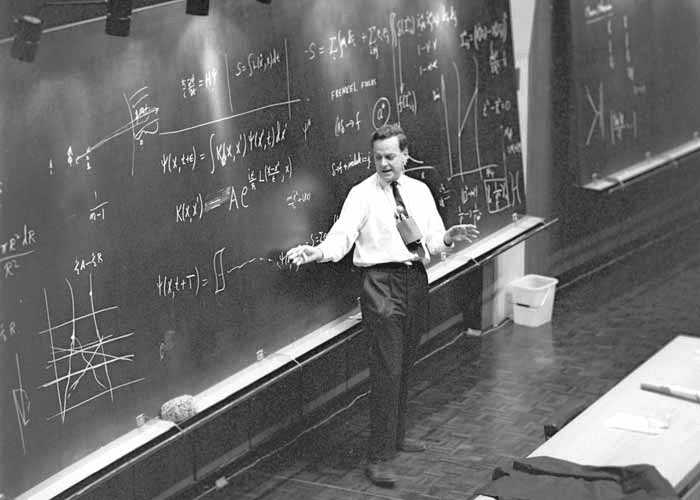
Feynman was raised in a family of Jewish immigrants from Belarus. His father worked in sales, while his mother was an ordinary housewife. Feynman’s interest in science developed at a young age. He was always captivated by the way things worked. Feynman was also an outstanding student in school, excelling particularly in mathematics and natural sciences.
After graduating from high school, Feynman entered the Massachusetts Institute of Technology, where he got a bachelor’s degree in Physics in 1939. He was extensively involved in scientific activities there, including writing several articles. In 1942, he obtained his doctorate from Princeton University. Feynman’s doctoral dissertation centered on the theory of positrons and electron antiparticles.
Interesting facts from personal life
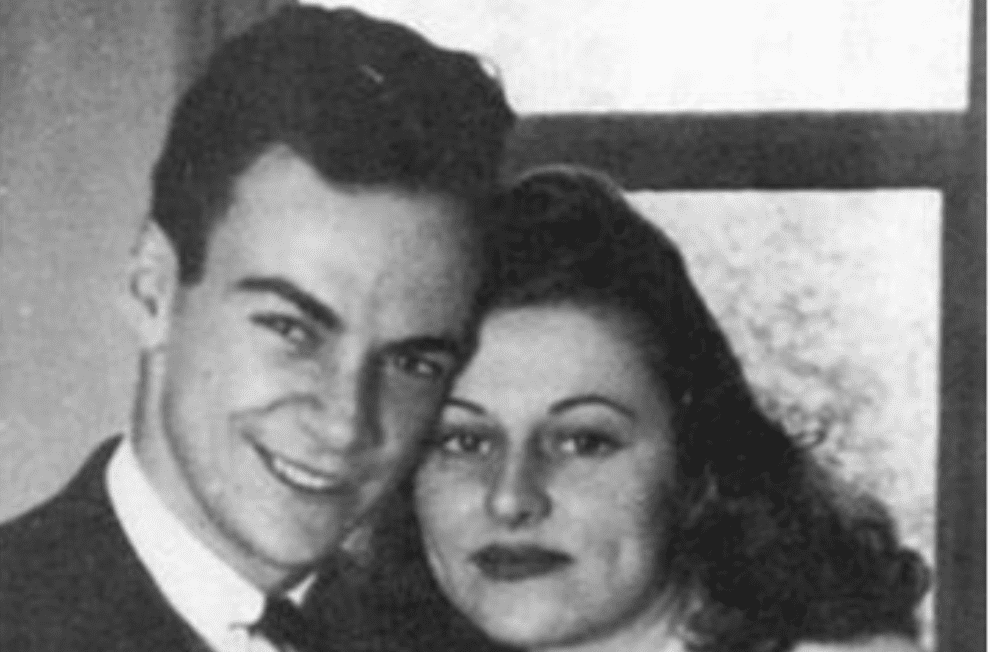
When Feynman took the Princeton University Entrance Exams, one of the primary criteria of the tuition was the absence of marriage. But he had a girlfriend at the time, who he had been seeing since high school. Feynman adored his chosen one and was set to marry her as soon as he graduated from Princeton University. He was willing to take a desperate step despite the fact that she was terminally ill with tuberculosis. This condition was incurable in the early half of the 20th century. His beloved could have survived only for another two years.
Feynman did marry his beloved in 1942. Together, they boarded the Staten Island Ferry. Their wedding was held in the city administration. They did not invite relatives or friends to the celebration but did invite several strangers as witnesses. Feynman only gave his chosen one a kiss on the cheek during the ceremony due to her condition. After the ceremony, he drove her to a nearby hospital, where he paid her visits every weekend.
World War II and the Manhattan Project
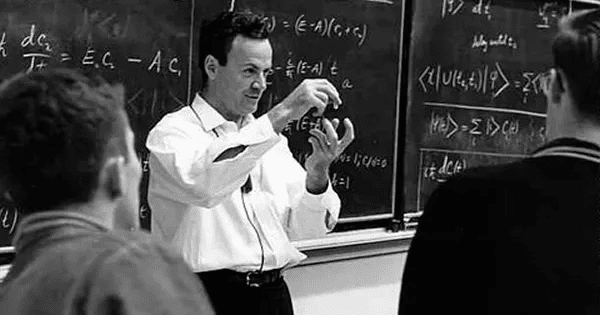
During WWII, Feynman worked on the Manhattan Project, a secret government project focused on creating the first atomic bomb. Feynman was in charge of establishing the theory of bomb detonation as well as the calculations necessary to determine the power of the bomb. During the war, his expertise in Physics was extremely valuable to the anti-Hitler coalition’s allies.
Feynman’s work on the Manhattan Project was both difficult and dangerous. The project was cloaked in secrecy, and the scientists who worked on it were constantly monitored. Feynman spent long hours working in tiny, windowless laboratories, continuously exposed to hazardous quantities of radiation.
Despite these challenges, Feynman worked relentlessly on the project. He wanted to develop the bomb as soon as possible because he was confident it would help end the war that Hitler had started. Feynman was well aware of the horrible losses that war would inflict on people all across the world, and he believed that the bomb was a necessary measure.
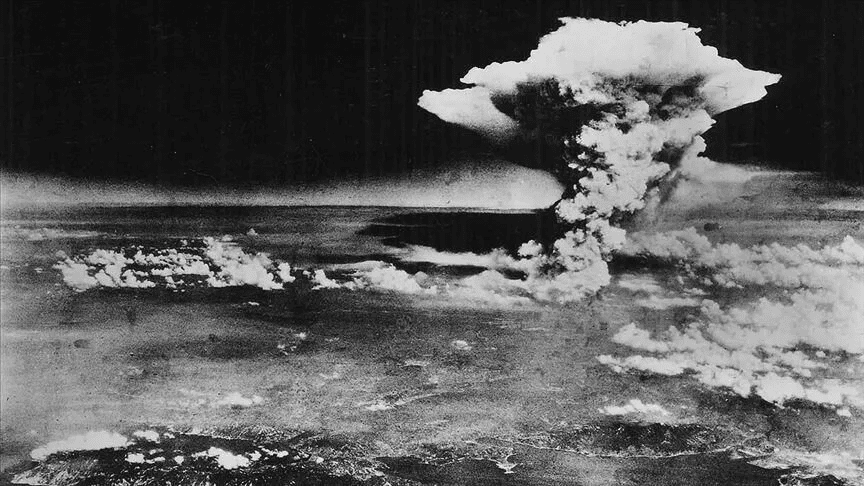
The Manhattan Project was a success, and the first atomic bomb exploded in Alamogordo, New Mexico, in 1945. It possessed a 20-kiloton power and was the most powerful weapon ever built at the time. The bomb’s deadly impact was fully exposed a few weeks later when it was detonated in the Japanese cities of Hiroshima and Nagasaki. Bombs killed thousands of people and put an end to the war.
Feynman carried on with his physics career after the war. He made significant contributions to the creation of quantum electrodynamics, a theory that describes particle and electromagnetic radiation behavior. In 1965, Feynman was awarded the Nobel Prize in Physics.
Feynman’s engagement in the Manhattan Project created controversy, with some criticizing him for his role in the development of the atomic weapon. Feynman, on the other hand, believed he had done the right thing. He believed that the bomb contributed to the conclusion of the war and saved countless lives.
Richard Feynman was a great physicist who contributed significantly to the Manhattan Project. His contributions to the project aided in the development of the atomic bomb, which was critical in ending the war.