

In the late 19th century, electricity was a novelty for New Yorkers. Only a few people had seen it in action, and it was mainly used to light up office buildings and factories. But everything changed in 1882, when the first city power plant was built on Pearl Street in New York. More at new-york.name.
The history of the first power plant in New York
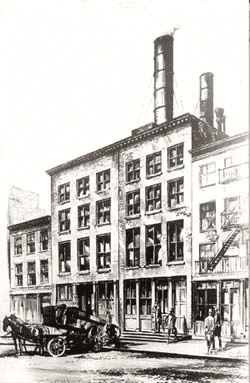
The development of the Pearl Street Light Rail station was a result of the efforts of Thomas Edison, the creator of the light bulb. Edison had been engaged in extensive electrical experimentation for a number of years, and he had already established several small power plants in other regions of the United States. But he knew that if he could build a large power plant in New York City, it could demonstrate the potential of electricity to a wider audience.
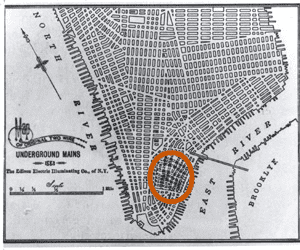
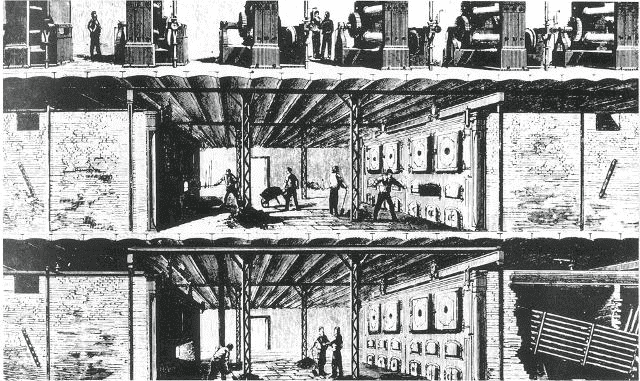
Pearl Street Station was launched in 1882. It was a real miracle of engineering. The power plant was composed of six dynamos, each weighing several tons. Together, they produced direct current electricity. The dynamos were driven by steam engines that ran on coal. They were located in the basement of the station. Consumers in a one-square-mile area of Lower Manhattan received DC electricity through underground cables.
Who was the first to get the light?
The first customer of the Pearl Street station was the offices of “JP Morgan”, which financed the project. “JP Morgan” was impressed by how reliable the electricity was. It was available 24 hours a day, seven days a week. They were also impressed with the cost, which was significantly lower than gas lighting.
The station also served the so-called “First District”, which was so named because of its importance in the history of the electric power industry. In addition to the Pearl Street power plant, several others later appeared in this neighborhood. As word of the Pearl Street station spread, more and more people signed up for the service. The station had more than 500 customers by the end of 1882, including businesses, homes and even streetlamps. The Pearl Street Stations success paved the way for the widespread introduction of electricity in New York City, as well as around the world.
Problems faced by the first power plant in New York in its history
The Pearl Street station was not without its problems. The direct current electricity it generated was not suitable for long-distance transmission, and it was difficult to generate high voltages using direct current. Consequently, power plants in other parts of the country and the world began to use alternating current electricity, which was more efficient and easier to transmit over long distances.
The Pearl Street station survived until 1890 despite these problems. A significant fire incident occurred at the station, which resulted in the destruction of everything but one dynamo. The first power plant in New York was rebuilt and operated until 1895. In particular, it was then completely decommissioned and replaced by new and more efficient power plants.
The 19th-century Pearl Street Power Station showed how electricity could be used as an energy source and helped build the modern power grid in the city. The Pearl Street Power Plant was an engineering marvel that ushered in a new era of electricity in New York City. It was Thomas Edison’s vision and dedication that enabled him to build a successful plant and create the modern power grid that New York City relies on today.
A part of the history of electricity in New York City, namely a dynamo that remained from the city’s first power plant after a fire in 1890, is now housed in the Greenfield Village Museum in Dearborn in the 21st century.