

Twenty-first-century New York is an incredibly lively, busy and crowded metropolis. The city has become packed not only with people but also with transportation. Every day, thousands of people travel from one end of the city to another by bus, taxi or metro. Furthermore, a significant portion of New York City’s population regularly uses private transportation. The extensive use of such means of transportation has a negative impact on the city’s environment as well as the world as a whole. The thing is that carbon dioxide is released into the atmosphere, causing the planet’s air temperature to rise year after year. To avoid global warming and environmental disasters, New York City officials resolved not only to incorporate sustainable practices into the city’s program but also to take steps to raise ecological awareness among the city’s residents. One of the New York environmental projects introduced in the twenty-first century was the transition to environmentally friendly transportation. In this article, you’ll learn about the popularity of eco-transportation in New York, as well as its benefits. Find out more at new-york.name.
Transportation-related environmental problems in New York City
For many years, New York City has suffered from bad ecology, which was partly caused by rapid industrialization, city growth, overpopulation and an increasing number of diesel and gasoline vehicles. As a result, New York City faced numerous environmental issues caused by transportation.
Car emissions might be named as one of the main issues. Over the last century, gasoline and diesel-powered vehicles have had a detrimental impact on the city’s ecology. Air contaminants included nitrogen oxides, carbon monoxide and solid particles. They not only harmed the environment but also had a negative impact on New Yorkers’ health and contributed to the formation of smog.
Furthermore, rapid industrialization, fast urban growth, overpopulation and the popularity of diesel cars caused massive traffic jams, resulting in higher fuel consumption and emissions from downtime and slow traffic.
In addition, such transportation is the primary source of greenhouse gas emissions in New York, contributing to global warming. Also, high traffic intensity produces significant noise pollution, which has an impact on the quality of life for many residents.
Eco-friendly transportation in New York in previous centuries
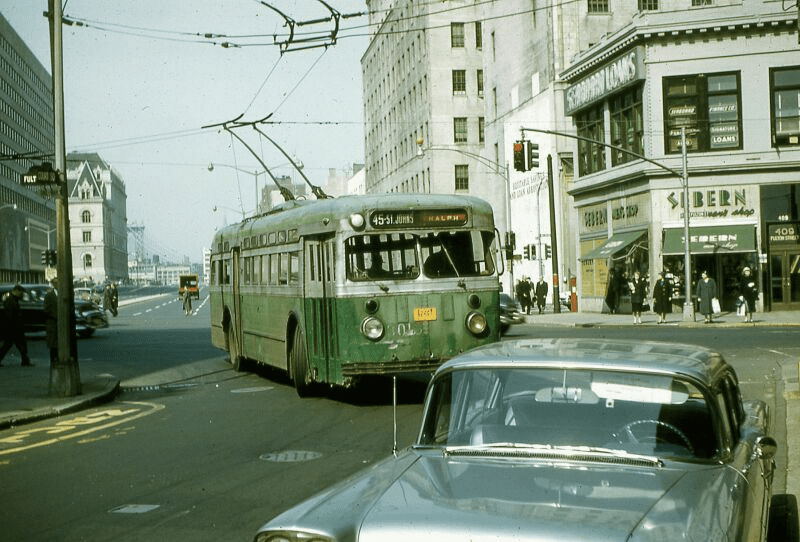
It should be noted that New York had environmentally friendly transportation even before the twenty-first century. Throughout the twentieth century, New York City saw the emergence of several modes of ecological transportation. Although the city government did not prioritize the concept of green transportation as we know it in the twenty-first century. Some modes of transportation created over the centuries have helped lower New York’s carbon dioxide emissions, the most popular of which were:
- Trams had become commonplace in New York City even back in the nineteenth century. They used electricity from wires to provide locals with a more environmentally friendly alternative to public transportation. It should also be recalled that trams were preceded by horse-drawn carts and steam vehicles.
- Trolleybus was another popular eco-friendly mode of transport in New York during the twentieth century. Launching of this kind of transportation has greatly reduced air pollution and has become an efficient mode of transportation for city dwellers.
- The metro, which began operation in 1904, immediately became one of the most vital components of the city’s public transportation network. The electric metro system has greatly reduced the demand for fossil-fueled ground transportation. The wide network of metro lines has helped to minimize traffic congestion and pollution, making it not only convenient but also ecologically friendly.
- Ferries have long been an important aspect of New York City’s transportation system, connecting neighborhoods and offering an alternative to roads and rail. Throughout the twentieth century, ferries remained a generally environmentally beneficial method of transportation, particularly those that transitioned from steam to diesel-electric, and eventually hybrid systems.
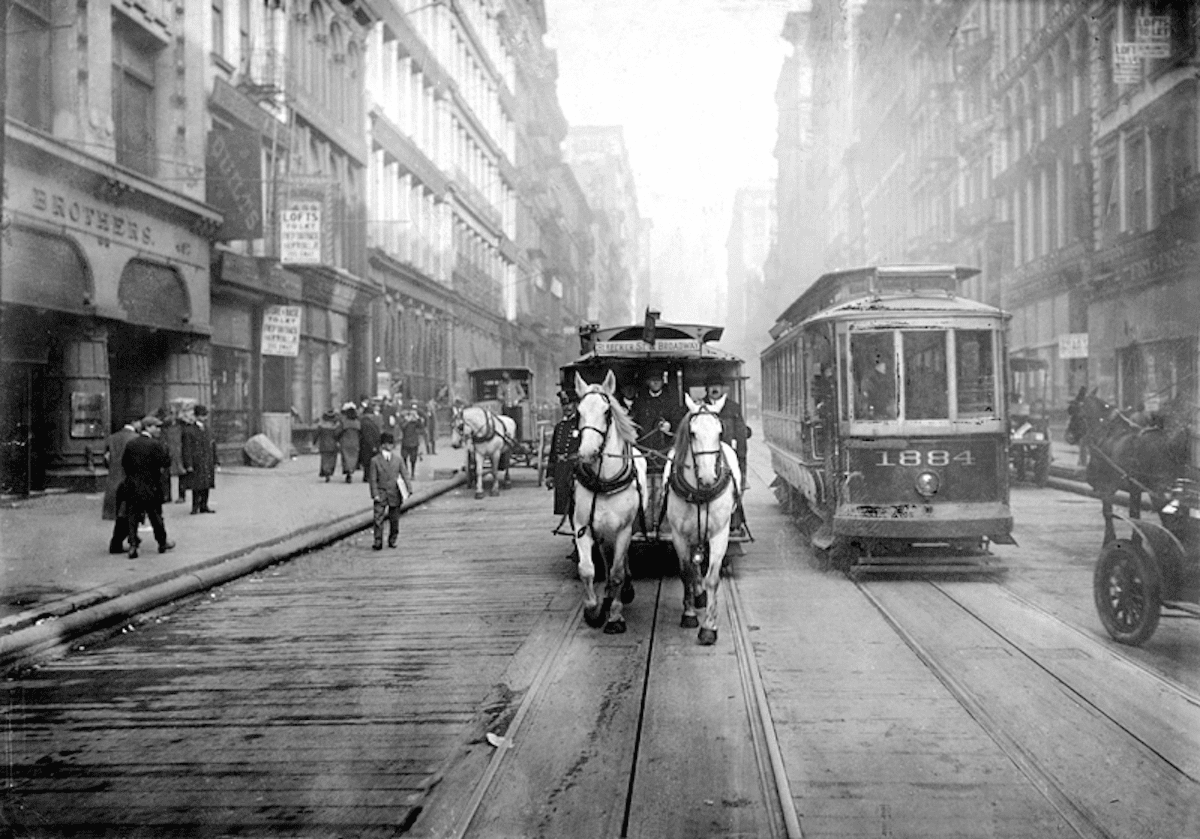
However, during the second half of the twentieth century, New York authorities decided to take a more deliberate approach to environmentally friendly modes of transportation. In the twenty-first century, there aren’t many modes of transport in New York, but owing to different projects and initiatives by city officials in the field of ecology, the city can see an improvement in eco-friendly means of transport.
Eco-friendly transportation in New York in 21st-century
The twenty-first century is an age of technological advances and innovation. New York City does not lag behind these trends and aims to improve every aspect of urban living. One of these is environmentally friendly transportation. In the twenty-first century, New York offers a wide range of alternatives to traditional transportation, from bicycles and scooters to the subway and “flying” trams.
Even though yellow taxis in New York are regarded as iconic, the city has proposed more environmentally friendly alternatives to replace them. The first thing worth noting is the fairly extensive cycling infrastructure. The city’s bicycle infrastructure began to form near the end of the twentieth century and, throughout this time, it expanded on an unparalleled scale. Therefore, for those who own a bike or rent one from city services, there are all the conditions for a comfortable ride: bike paths, parking, entire cycling areas and much more. The local officials have created all of the necessary conditions for people to pick an alternative to public transportation and desire to get around the city by eco-friendly means, making it easier for them to get to work, go to the store or simply go for a ride. The Citi Bike program, which offers inexpensive and convenient bike rentals, has been a big success in the city. By encouraging cycling, the city reduces its environmental impact.
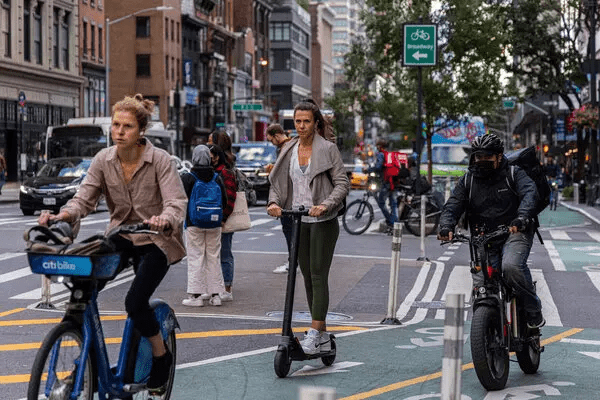
Of course, just like bike rental, scooter rental is highly popular in New York. Furthermore, many residents have their own eco-friendly electric vehicles. The city authorities have also provided all of the necessary infrastructure for them. In the city, you can easily find parking and charging stations for your scooter.
Electric buses are another convenient alternative to traditional fuel-powered public transportation. At the beginning of the twenty-first century, the city’s Transportation Administration began gradually replacing diesel buses with electric ones. This transition not only reduces carbon dioxide emissions but also considerably lowers the amount of other air pollutants including nitrogen oxides and particulate matter.
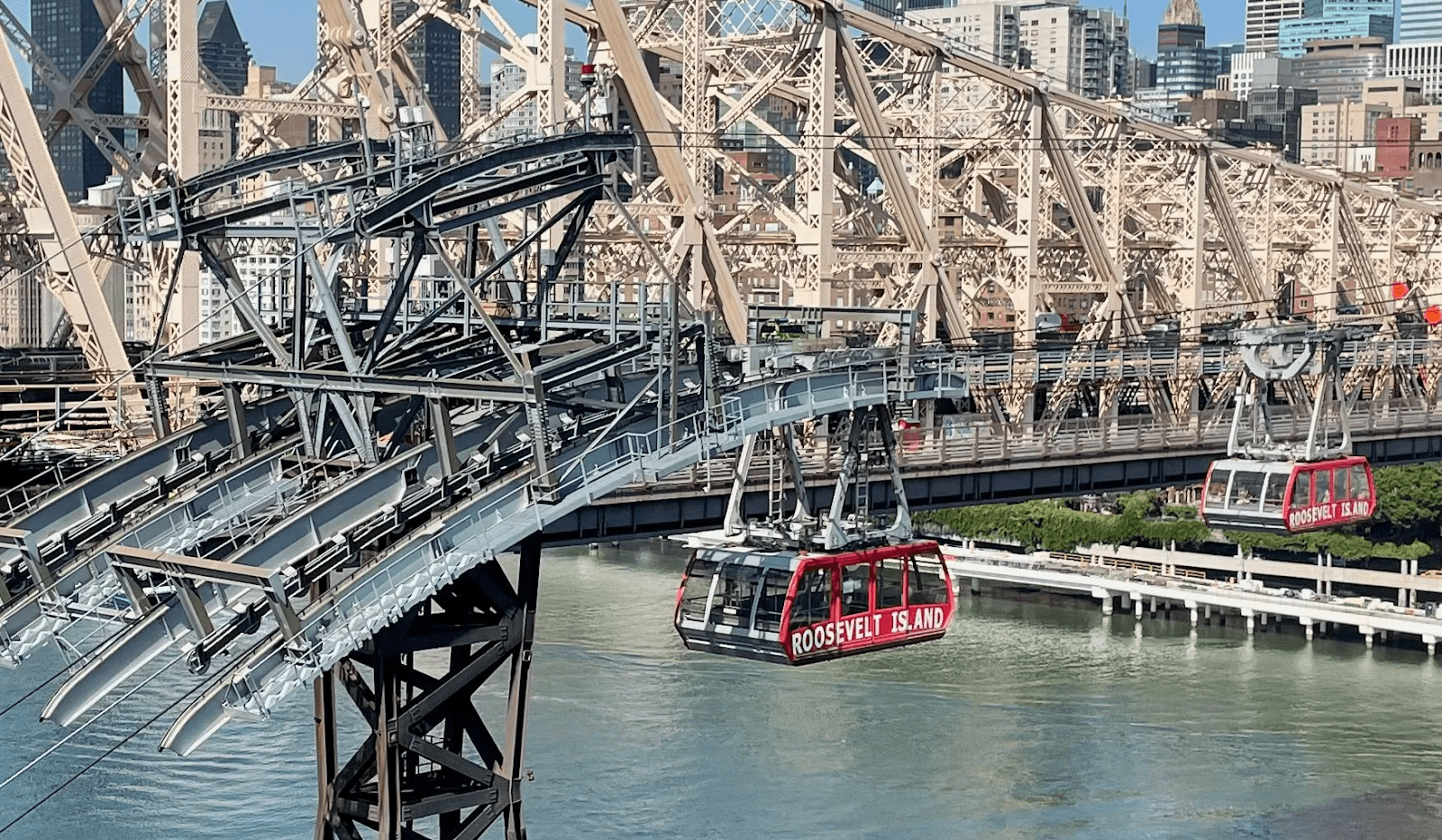
Of course, it is worth mentioning the city metro, which has been operating since the beginning of the twentieth century. Also, in terms of environmentally friendly transportation, city officials took a huge stride forward by creating an innovative tram. This is the Roosevelt Island Tramway, the world’s most modern cable car. This environmentally friendly mode of transportation runs approximately every 7-15 minutes. You may take it from 59th Street or Second Avenue in Manhattan and drive to Tramway Plaza on Roosevelt Island.
Benefits of eco-friendly transportation in New York
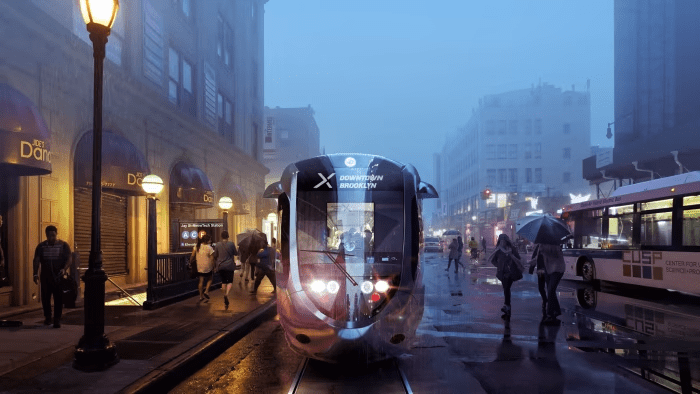
The first and most significant effect of converting to an eco-friendly mode of transportation is reducing the environmental impact. One of the most notable advantages of clean transportation in New York is a substantial reduction in greenhouse gas emissions. Furthermore, given the tough requirements of the emission reduction program, the transition and promotion of such transportation is critical to ensuring a sustainable future and preventing global warming.
One of the most notable achievements in the field of eco-friendly transportation in recent years has been the significant expansion of the network of bike paths and pedestrian-friendly areas. This not only decreases the amount of emissions but also contributes to reducing traffic jams. Furthermore, transitioning to an environmentally friendly method of transportation in New York provides economic benefits. For example, owners of electric vehicles save money on fuel and maintenance as compared to gasoline-powered vehicles. In addition, programs such as Citi Bike provide economical alternatives to public transportation and car ownership.
In addition to environmental and economic benefits, green transportation programs help New Yorkers improve their quality of life.