

Park · New York · ⭐ 9.5/10 · 17535 reviews · updated: 2026-08-04 20:06:34
Address: Little Island, Pier 55 at Hudson River Park, Hudson River Greenway, New York, NY 10014, United States
Little Island — a public park grown on 132 concrete tulips above the Hudson
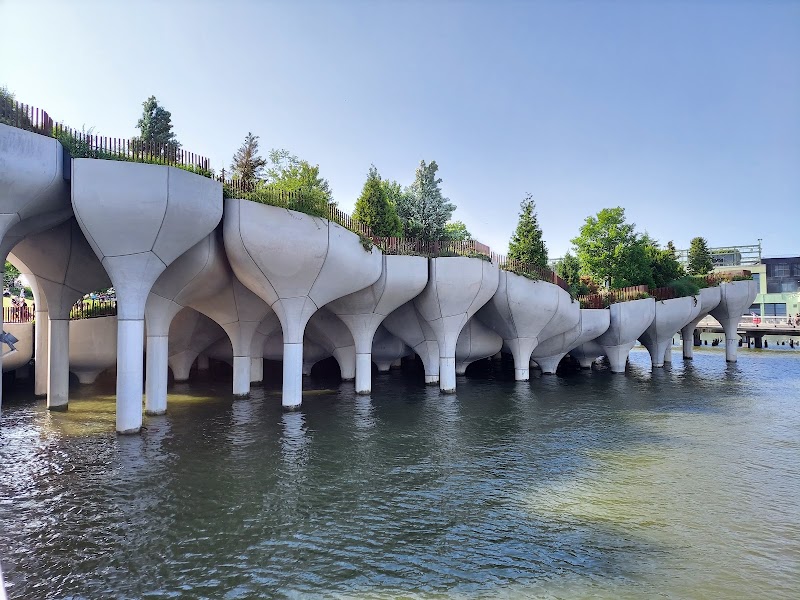
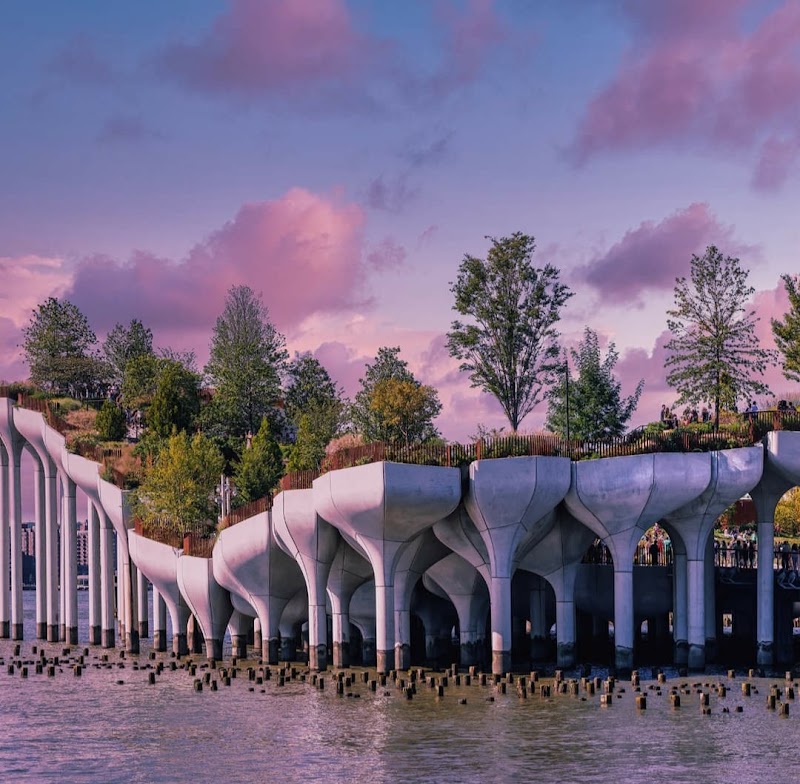
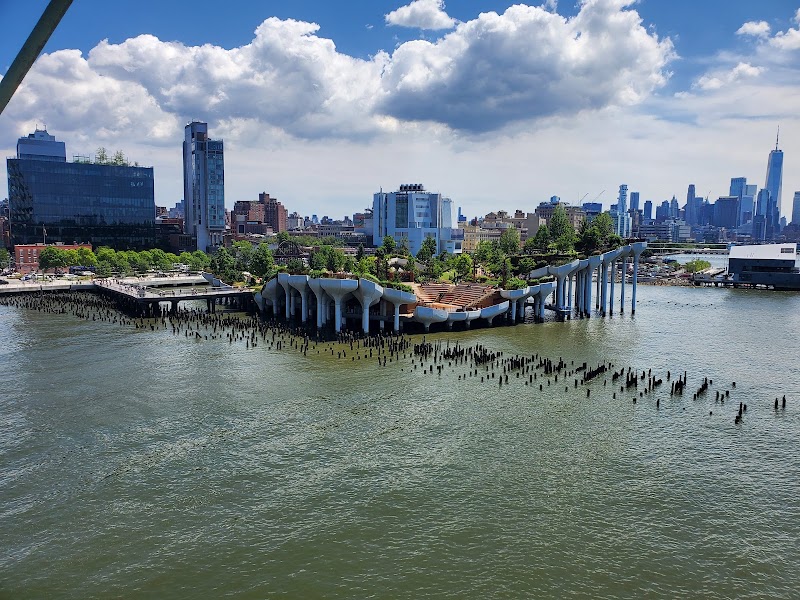
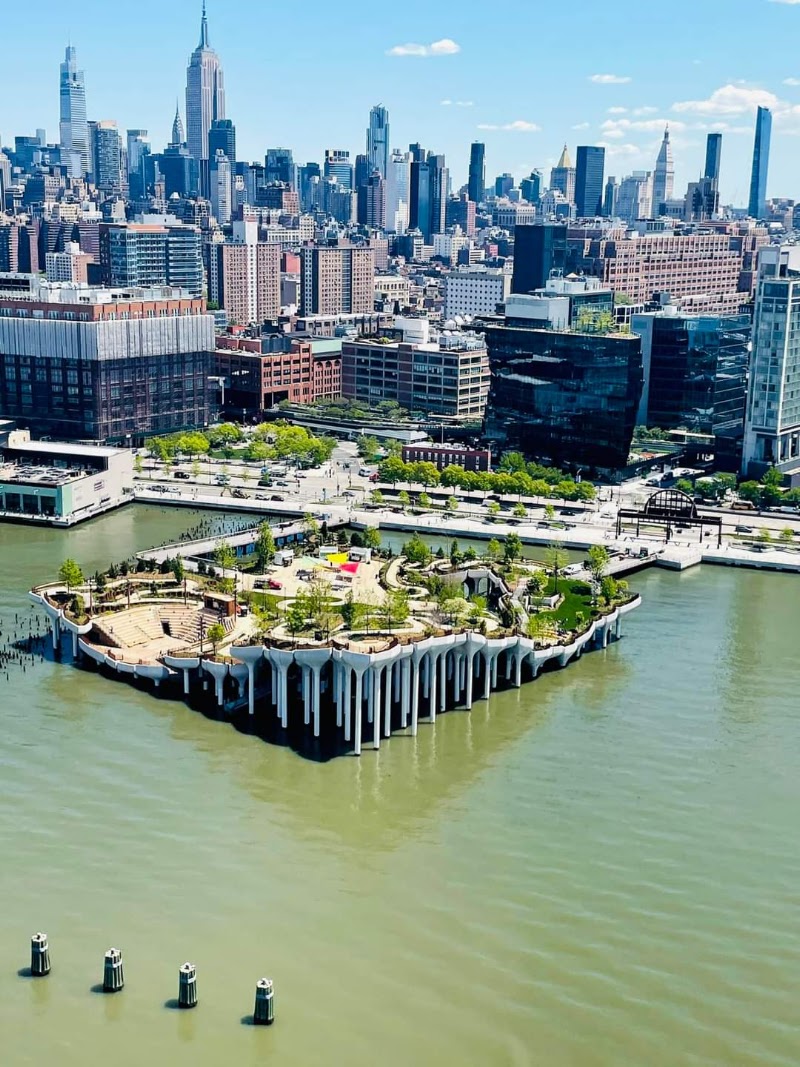
Nothing else in New York looks like it. Little Island is a 2.4-acre park that does not touch the shoreline: it floats on 132 pot-shaped precast concrete piers, nicknamed tulips, whose rims rise anywhere from about fifteen to sixty-two feet above the water. The unequal heights make an artificial topography — hills, valleys, overlooks — where none could exist on a flat pier deck. Designed by Heatherwick Studio with the landscape architect Signe Nielsen of MNLA, it opened on May 21, 2021, on the site of Pier 54, the Cunard-White Star berth where the Carpathia landed the survivors of the Titanic. The park cost roughly $260 million, was almost entirely paid for by the Diller–von Furstenberg Family Foundation, was killed by litigation in 2017, and was resurrected a month later. It is free.
Highlights
- The tulips — 132 precast concrete pots, each a planter and a structural column at once, standing on roughly 267 concrete piles driven as deep as 200 feet into the Hudson riverbed. No two are the same shape, and the tilt of their rims is what turns a flat pier into a landscape you climb.
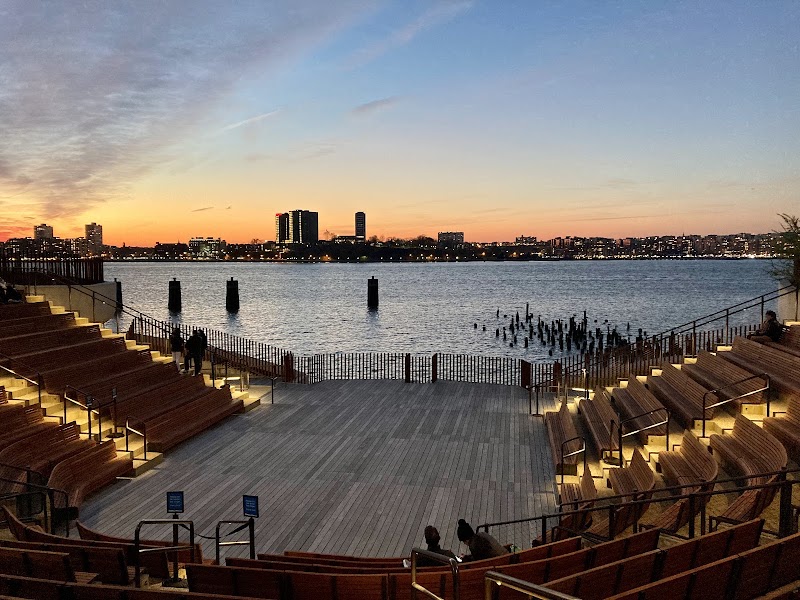
- The Amph — a 687-seat open-air amphitheater built into the southwestern high ground, with the river and the New Jersey shore as its backdrop. It carries a full commissioned season of music, dance and theater, and the park’s founding agreement commits it to keeping the majority of tickets low-cost or free.
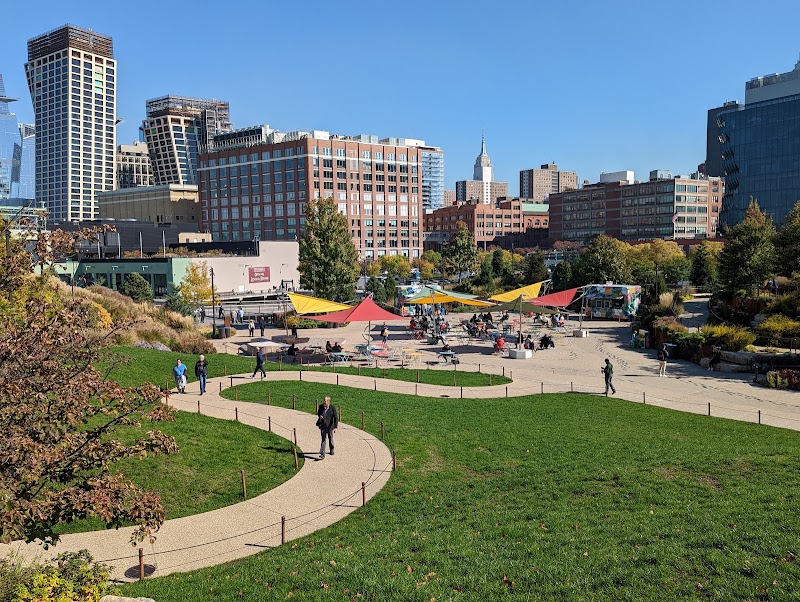
- The Glade and the Play Ground — a small, tree-screened stage used for intimate performances, storytelling and family programs, and a lower plaza with food and drink kiosks, a lawn and the park’s most sociable seating.
- The planting — more than 350 species in all: roughly 35 kinds of trees, 65 kinds of shrubs and about 270 perennials and grasses, with 114 trees and some 66,000 bulbs going in before opening. The scheme is layered so that something is in flower, fruit or seed-head in every month of the year.
- The Pier 54 arch — the steel gateway of the old Cunard-White Star terminal still stands on the shoreline beside the South Bridge entrance, a rusting frame that survived the pier it once announced.
- The overlooks — four raised viewpoints looking down the Hudson toward the harbor, back at the Manhattan skyline, and straight out at the sunset, which is the single most reliable reason New Yorkers come here in summer.
What you’ll find
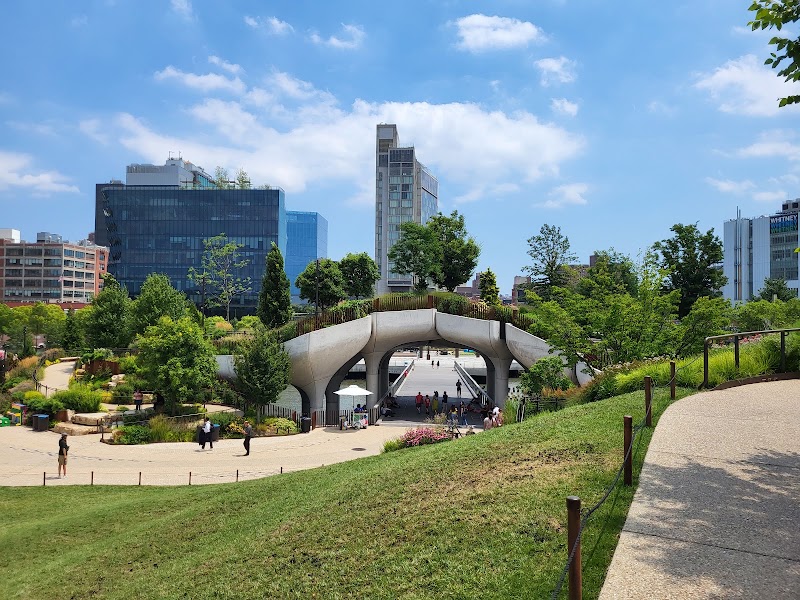
The park is small and deliberately slow to walk. Paths spiral rather than run straight, so 2.4 acres take longer to cross than they should, and every few steps the sightline changes. Two bridges connect it to the Hudson River Park greenway on the mainland, and the whole surface is planted — there is no leftover paving.
- Winding paths and stairs climbing between the tulip tops, with level, ramped routes running parallel so nothing is stair-only.
- The Amph, an open-air theater cut into the highest corner of the park.
- The Glade, a sheltered performance clearing among the trees.
- The Play Ground plaza, with seasonal food and drink kiosks and picnic-style seating on a lawn.
- Four overlooks with benches, plus dozens of informal perches on low walls and boulders along the way.
- Restrooms, drinking water, two loaner wheelchairs available from staff, and accessible seating positions in the Amph at both stage level and the top of the house.
Things to do — and who it’s for
- First-time visitors to New York — one of the very few free attractions that is genuinely new, genuinely strange and genuinely photogenic, and it takes under an hour.
- Sunset watchers and photographers — the park faces open water to the west with nothing in the way, and the elevated overlooks give you height without a ticket to an observation deck.
- Families — short distances, constant changes of level, a lawn to sit on, food on site and free family programming in the Glade during the season.
- Performance audiences — the Amph runs a commissioned summer season of music, dance and theater; much of the wider programming across the park is free and unticketed.
- Architecture and engineering enthusiasts — a rare chance to read a structure honestly: the columns are the planters, the geometry is visible from below at the water line, and the piling logic is legible from the greenway.
- Anyone doing a waterfront walk — it slots naturally into a route that also takes in the High Line, the Whitney Museum and the rest of Hudson River Park.
Getting there & practical
Little Island sits in Hudson River Park on the Meatpacking District waterfront, on the boundary with the West Village and Chelsea. The A, C, E and L trains all stop at the Fourteenth Street–Eighth Avenue complex, a walk of about ten minutes toward the water; the 1, 2 and 3 stop at Fourteenth Street; PATH trains from New Jersey stop at Fourteenth Street and at Christopher Street. Crosstown buses run to the waterfront, and the Hudson River Greenway brings walkers and cyclists directly to both bridges. Entry to the park is free and there is no admission charge of any kind. In peak season the park has used free timed-entry reservations for its busiest afternoon and evening hours; the requirement is set season by season rather than permanently, so check the official Little Island site shortly before a summer visit. Performances in the Amph are ticketed separately. The park opens at six in the morning; closing is seasonal and runs late in summer. Allow an hour, or two if you eat or stay for a show. Paths are fully accessible with ramped alternatives to every stair, and staff keep loaner wheelchairs. Bicycles and scooters must be left on the mainland, and dogs are not permitted apart from working service animals.
When to visit
Spring is the loudest the planting ever gets: tens of thousands of bulbs come up first, followed by the flowering trees and shrubs, and the paths are still uncrowded on weekday mornings. Summer is the park’s headline season — the performance program runs, the food kiosks are open, the park stays open late, and evenings around sunset are by far the busiest hours, which is exactly when reservation requirements have applied in the past. Autumn is the connoisseur’s choice: the ornamental grasses are at their best, the light is low and clean, the air over the river sharpens and the crowds fall off after the season closes. Winter strips the park to structure and view — cold and genuinely windy out on the water, but the long sightlines down the Hudson toward the harbor are at their clearest, and you may have an overlook entirely to yourself.
Good to know
The ground the park replaced had a heavy history. From about 1910 to 1935, Pier 54 was the Manhattan terminal of the Cunard-White Star line, and on the evening of April 18, 1912, the Carpathia landed there with the survivors of the Titanic — she had already dropped the Titanic’s empty lifeboats at Pier 59 before working her way to 54, where a crowd of tens of thousands waited in the rain. Three years later, on May 1, 1915, the Lusitania sailed from the same pier; she was torpedoed off the Irish coast six days later. The steel arch of the Cunard-White Star gateway still stands beside the South Bridge entrance. In the pier’s long decline it became an important gathering place for New York’s LGBTQ community, and from 1986 it hosted the Dance on the Pier party for more than twenty-five years as part of Pride. Hurricane Sandy, in 2012, finished off what was left of the decking. In 2013 Barry Diller’s foundation, working with the Hudson River Park Trust, proposed replacing the ruin with something entirely new rather than rebuilding a pier. The design came from Thomas Heatherwick’s studio with landscape architect Signe Nielsen; costs climbed past $200 million; and in 2015 the City Club of New York sued over the project’s environmental review. The suit dragged on, a permit was invalidated, and in September 2017 Diller announced the project was dead — at which point it emerged that the litigation had been funded by the developer Douglas Durst. Governor Andrew Cuomo brokered a settlement, and by October 25, 2017 the project was alive again. Piles went in through 2018 and 2019, the cornerstone was laid in December 2018, the first trees were planted in March 2020, and the park opened on May 21, 2021. The final cost was about $260 million, with roughly $17 million from the city and $18 million from the state and the overwhelming remainder from the Diller–von Furstenberg Family Foundation, whose total commitment including decades of operating support has been put at around $380 million. By 2023 the park had presented well over five hundred performances and passed three million visitors.
Visitor tips
- Go up before you go around: take the stairs to the high southwestern corner first, get the long view, then let the spiral paths bring you back down past the Glade.
- If you are coming for sunset in summer, check the official site that same week for a reservation requirement, and arrive at least half an hour early — the western overlooks fill first.
- Combine it with the High Line and the Hudson River Park greenway in one walk; the park itself is genuinely small, and treating it as a single destination usually leaves people with time to spare.
Questions & answers
Is Little Island free? Yes. There is no admission charge to enter the park. In peak season it has used free timed-entry reservations to manage the busiest afternoon and evening hours, and the policy is reviewed season by season, so confirm on the official Little Island site before a summer visit. Performances in the Amph are separately ticketed.
What is the park actually standing on? A field of 132 precast concrete pots — the tulips — carried on roughly 267 concrete piles driven into the riverbed, some of them as deep as 200 feet. The pots hold the soil and the plants and act as the structure at the same time, which is why the park has hills at all.
How long does a visit take? Most people spend forty-five minutes to an hour and a half. It is only 2.4 acres, but the paths curve and climb, and there are four overlooks worth stopping at.
What was here before? Pier 54, the Cunard-White Star transatlantic terminal from about 1910 to 1935 — the pier where the Carpathia landed the Titanic’s survivors in April 1912 and from which the Lusitania sailed in May 1915. It decayed for decades, served as a beloved gathering place and Pride venue, and was wrecked beyond saving by Hurricane Sandy in 2012.
Can I bring my dog? No. Little Island does not admit dogs. Working service animals assisting people with disabilities are welcome; emotional support animals are not treated as service animals under the park’s policy.
Is it accessible for wheelchairs and strollers? Yes. Every stair has a ramped or graded alternative, the whole loop can be done without steps, staff keep loaner wheelchairs on site, and the Amph has accessible seating positions at both stage level and the top of the house.
Who paid for it? Overwhelmingly the Diller–von Furstenberg Family Foundation, founded by Barry Diller and Diane von Furstenberg, with about $17 million from the city and $18 million from the state. Construction ran to roughly $260 million, and the family’s commitment including long-term operations has been reported at around $380 million.
Why was the project nearly cancelled? The City Club of New York sued in 2015 over the environmental review; a permit was invalidated and the case dragged on until Barry Diller pulled out in September 2017. It then emerged that the developer Douglas Durst had funded the opposition. Governor Andrew Cuomo brokered a settlement, and the project restarted within weeks.
Photos
Show 1 more photos
Visitor reviews
Reviews last updated: 2026-08-04 20:06:34
Data is refreshed monthly. Sources: new-york.name and editorial picks based on reviews.
A really cool place to sit and relax or just take a walk. A cool piece of architecture!!!
A wonderful little island with free admission. A marvel of engineering and landscape design! A must-visit in New York!
An interesting place. They say the Titanic was supposed to arrive here. I also got the information that the emigrants who arrived in America disembarked there, and then they were sent on to different cities
A beautiful art object and a place for a walk It has a great view of the city