

Park · New York · ⭐ 9.3/10 · 32941 reviews · updated: 2026-08-04 20:08:28
Address: New York, 10012, United States
Washington Square Park — Greenwich Village’s living room, built over a burial ground
Nine and three-quarter acres, one marble arch, one fountain that doubles as a stage, and roughly twenty thousand people buried underneath. Washington Square is the most concentrated public space in New York: a park that is simultaneously New York University’s quad, the city’s most reliable outdoor concert venue, a serious chess arena, a protest ground and a tourist landmark. It became a park because the potter’s field beneath it filled up and was closed in the 1820s, and it has never stopped being contested since — over a roadway Robert Moses wanted to run through it, over whether folk singers needed permits to sing at the fountain, over who the square really belongs to. The arch is Stanford White’s, the elm in the northwestern corner is older than the United States, and on any warm afternoon the fountain plaza is doing four things at once.
Highlights
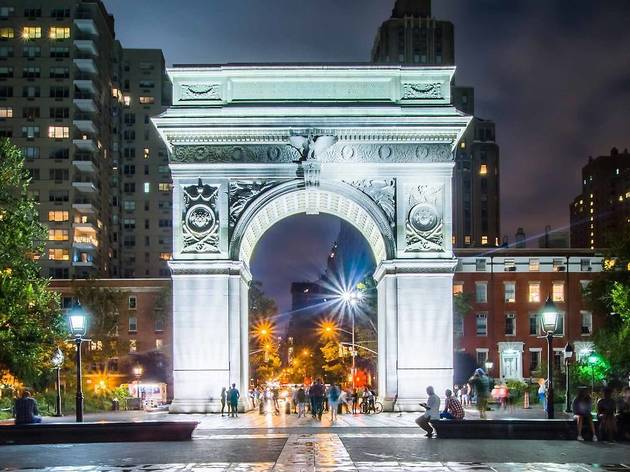
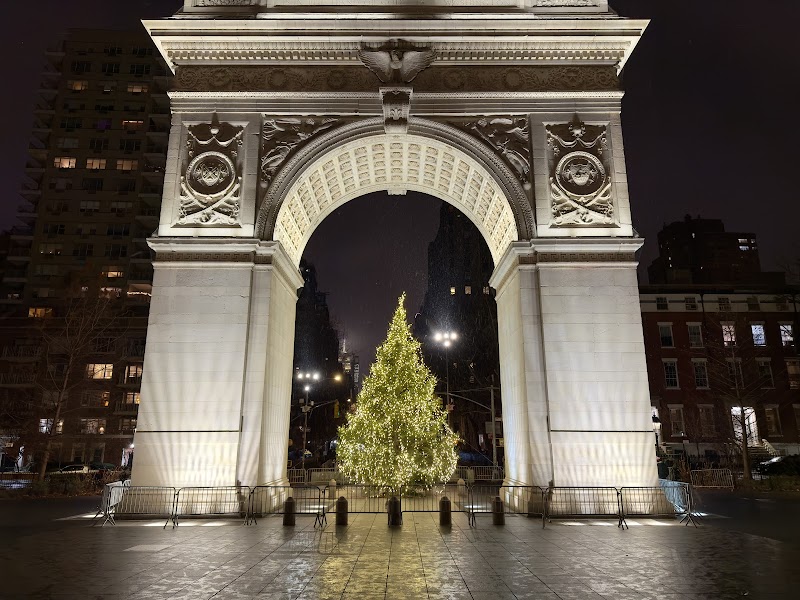
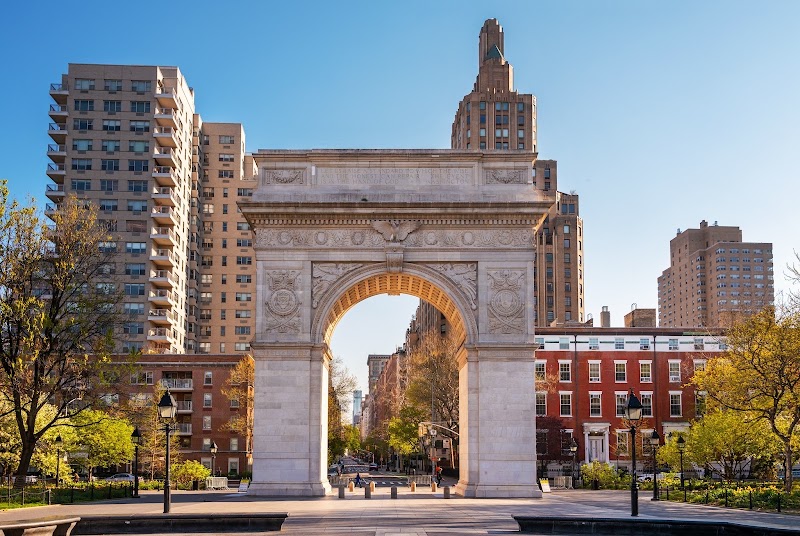
- The Washington Arch — Stanford White first built a temporary plaster-and-wood arch in 1889 for the centennial of Washington’s inauguration; it was so popular that the city funded a permanent one. The Tuckahoe marble arch, standing about seventy-seven feet high, was completed in 1892 and formally dedicated on May 4, 1895. Two statues of Washington were added later: Washington at War by Hermon Atkins MacNeil in 1916 and Washington at Peace by Alexander Stirling Calder in 1918.
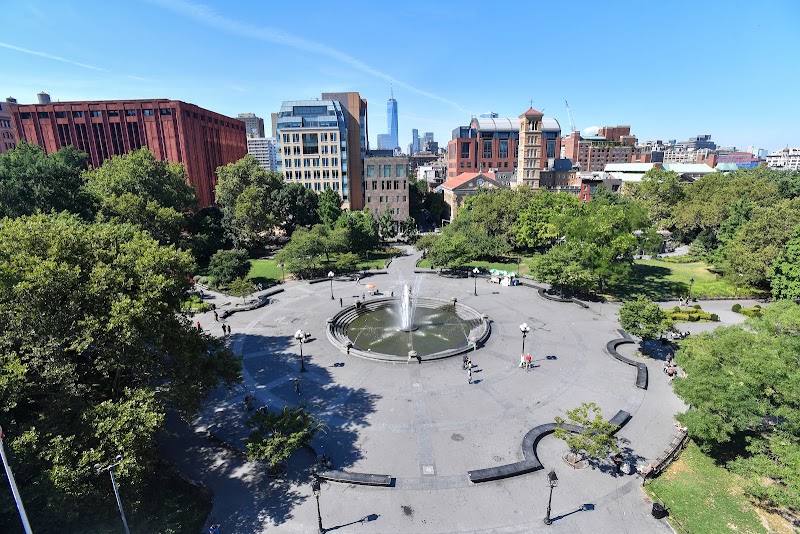
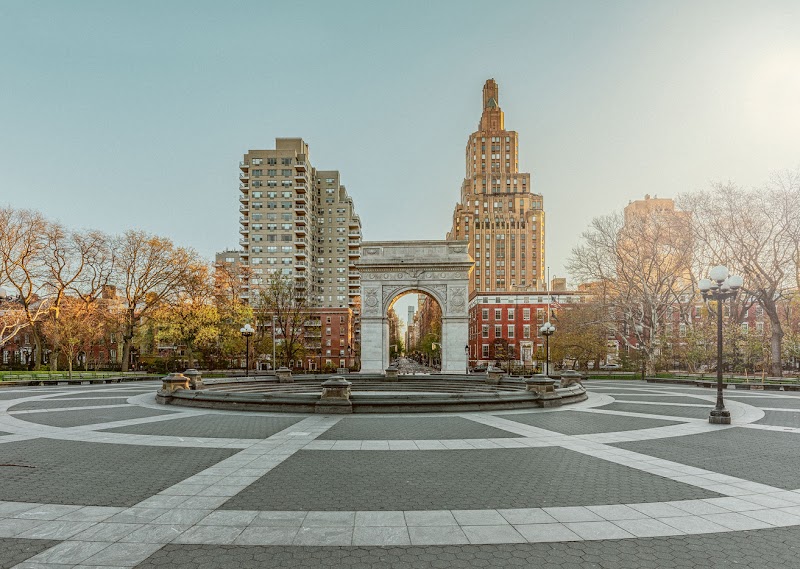
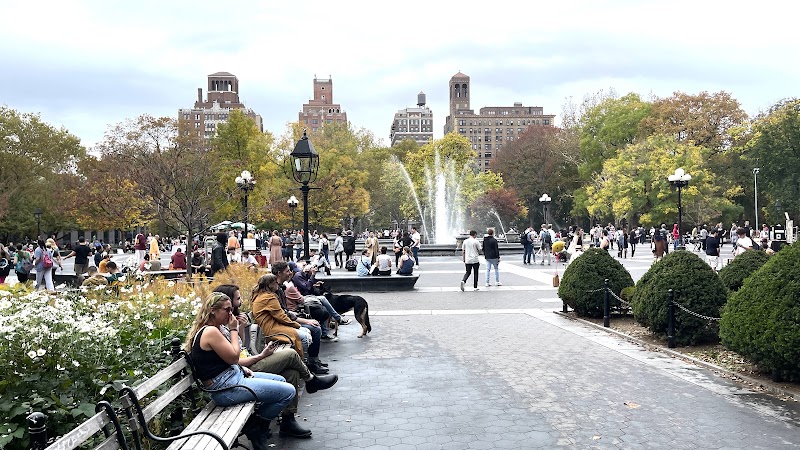
- The fountain — the park’s true center of gravity, whose sunken basin works as an amphitheater for buskers, dancers, acrobats and demonstrations. Its history goes back to 1852; it was moved into the park’s center during Ignaz Pilat’s redesign around 1870, and in the renovation completed in the 2010s it was shifted again so that it finally lines up with the arch on a single axis.
- The Hangman’s Elm — an English elm in the northwestern corner that NYC Parks has dated at more than three hundred and thirty years, making it the oldest known tree in Manhattan. Despite the name, no execution has ever been documented as taking place on this tree; the name grew out of the era when the square was a potter’s field and public executions were carried out in the vicinity.
- The chess tables — the stone tables in the southwestern corner have been the city’s best-known open-air chess ground for decades, played by regulars, hustlers, students and passing grandmasters alike.
- The Garibaldi statue — Giovanni Turini’s bronze of 1888, honoring Giuseppe Garibaldi, who lived briefly on Staten Island, and a monument to the Italian presence in the old Village.
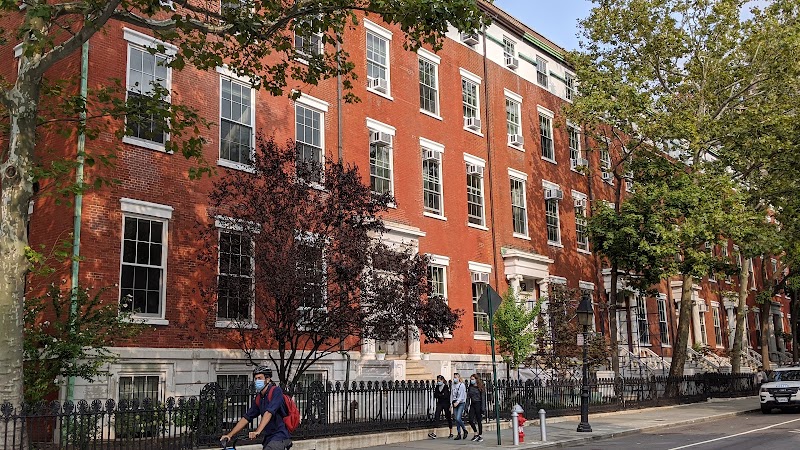
- New York University all around it — the university, founded in 1831, put its first building on the square’s eastern side, where Samuel Morse worked on the telegraph and Winslow Homer kept a studio; today NYU’s buildings form most of the park’s frame, and the park serves as its de facto campus green.
What you’ll find
The park is laid out around a strong central axis — arch, plaza, fountain — with quieter quadrants of lawn, trees and specialized corners around the edges. A phased renovation carried out between 2007 and 2014, costing in the region of thirty million dollars, rebuilt the fountain, realigned the plaza, added a new park building and reworked the lawns and paths without altering the essential nineteenth-century plan.
- The great fountain plaza, sunken and ringed with steps, in constant use by performers and crowds.
- Open lawns on both sides of the central axis, fenced and rotated so the grass survives the traffic.
- The chess corner, the petanque area and the two dog runs, one of them reserved for small dogs.
- Two children’s playgrounds and the mounds — the low grassy hills long used by generations of Village children.
- The Park House built during the renovation, with restrooms and staff facilities, designed to a green building standard.
- Monuments and markers: the arch and its two Washingtons, Garibaldi, the bust of the engineer Alexander Lyman Holley, and the Hangman’s Elm with its plaque.
Things to do — and who it’s for
- People-watchers — there is no better free show in New York; the fountain plaza runs an unscheduled, uncurated performance program from late morning until dark.
- Chess players — the southwestern tables welcome anyone who sits down, at every level from beginner to very strong; expect to be beaten and expect to be taught.
- Students and readers — the park works as NYU’s quad and as a general-purpose outdoor study room, with the lawns and shaded benches busy from the first warm week of spring.
- History travelers — the potter’s field, the arch, the Triangle fire site on the square’s eastern side and the story of the fight against Robert Moses are all within a few minutes of each other.
- Families — two playgrounds, the mounds, wide flat paths for strollers, restrooms on site and constant free entertainment in the plaza.
- Musicians and performers — the fountain’s acoustics and audience are the reason people have come here to play since the 1940s; the right to do so was won in court and on the pavement.
Getting there & practical
The park is the geographic and social center of Greenwich Village, with NoHo and the East Village to the east and SoHo below. Subway access is very good: the A, C, E, B, D, F and M all serve West Fourth Street–Washington Square, a short walk away; the N, R and W stop at Eighth Street–NYU; the 6 stops at Astor Place; and the 1 stops at Christopher Street–Sheridan Square. PATH trains from New Jersey stop at Ninth Street, also within a few minutes. Entry is free and unrestricted at all hours the park is open, which runs from six in the morning until midnight. There is no ticket, no reservation and no charge for any of the performances in the plaza, although performers pass a hat. Allow forty-five minutes to an hour for a walk-through; most people who sit down at the fountain stay considerably longer. Paths are level and accessible, restrooms are on site in the Park House, and the surrounding blocks are dense with cafés and food.
When to visit
Spring is the park at its most euphoric — the first warm weekend fills every inch of the lawns, the performers return in force, and the NYU academic year is still running, which keeps the square young and loud. Summer is the peak for music and tourists: the fountain runs, children play in the spray, and evenings around the arch are among the liveliest in the city, though midday heat pushes everyone into the shade. Autumn is the connoisseur’s season, when the canopy turns, the light comes in low through the arch and the crowd thins to regulars and students. Winter empties the park down to its structure: the arch and the bare plane trees read beautifully against a grey sky, the chess players keep going in gloves at the southwestern tables, and snow on the fountain steps is one of the classic Village sights.
Good to know
The burial ground is not a legend. In 1797 the city’s Common Council bought this land for use as a potter’s field — a public burial ground for the poor, for the unidentified and for the many dead of the yellow fever epidemics — and it stayed in use until about 1825. Estimates of the number interred range from roughly ten thousand to well over twenty thousand, and the remains were never removed; they are still there, beneath the lawns and paths. Archaeology has repeatedly confirmed it: a sandstone headstone belonging to James Jackson, an Irish immigrant who died in 1799, was recovered during works in 2009, and in November 2015 a burial vault was uncovered during water main construction on the park’s edge, followed within days by a second vault containing coffins and nameplates. Remains disturbed by later construction have been reinterred in the park. Before that, in the 1640s, the Dutch West India Company had granted farmland along Minetta Creek here to formerly enslaved Africans under conditional freedom. In 1826, on the fiftieth anniversary of independence, the filled burial ground was declared the Washington Military Parade Ground, and the city bought further parcels to make it a public square in 1827. The park was redesigned in 1849 and 1850, came under the new Parks Department in 1871, and acquired the fountain at its center. Stanford White’s temporary arch of 1889, put up to mark the centennial of Washington’s inauguration, proved so popular that the marble arch was built in its place, completed in 1892 and dedicated in 1895. On January 23, 1917 a small group including Marcel Duchamp and the painter John Sloan climbed the arch’s internal stairway, hung balloons and declared the “Free and Independent Republic of Washington Square” — an episode that fixed the square’s reputation for bohemian mischief. Six years earlier, on March 25, 1911, one hundred and forty-six garment workers had died in the Triangle Shirtwaist Factory fire in the Asch Building on the square’s eastern side, now part of NYU; the funeral processions and the labor movement that followed passed through here. From 1952 Shirley Hayes fought Robert Moses’s plan to drive a roadway through the park; Jane Jacobs joined the campaign, and rather than settling for a narrower road the committee got the park closed to traffic entirely in a trial that began in November 1958 and became permanent in 1959. The victory is now taught as a turning point in American urban planning. Music followed the cars out: the fountain had drawn Sunday singers since the 1940s, and when Parks Commissioner Newbold Morris refused the folk musicians’ permits in the spring of 1961, roughly three thousand people came to the park on April 9 to sing anyway. Police made arrests in what became known as the Beatnik Riot; by May the city had backed down and the permits resumed. The park was rebuilt in phases between 2007 and 2014, and the Washington Square Park Conservancy, founded in 2012, became the official nonprofit partner of NYC Parks in 2025.
Visitor tips
- Approach from the north so you walk in under the arch — the axis was rebuilt in the recent renovation specifically so that the arch, the plaza and the fountain now line up, and the view only works from that direction.
- The fountain plaza is at its best in the late afternoon, when the performers have set up and the light comes down the axis; if you want the park quiet and photogenic instead, come before nine in the morning.
- Find the Hangman’s Elm in the northwestern corner — it is the oldest known tree in Manhattan at over three hundred and thirty years, and the plaque is easy to walk past.
Questions & answers
Are there really bodies buried under the park? Yes, and this is documented rather than folklore. The site was the city’s potter’s field from 1797 until about 1825, and estimates put the number of burials at around twenty thousand or more. The remains were never relocated. Burial vaults were uncovered during construction on the park’s edge in November 2015, and a headstone from 1799 was recovered in 2009.
Who designed the arch? Stanford White. He designed a temporary plaster-and-wood arch in 1889 for the centennial of Washington’s inauguration, and the permanent Tuckahoe marble version was completed in 1892 and dedicated on May 4, 1895. The statues of Washington on its northern face were added in 1916 by Hermon Atkins MacNeil and in 1918 by Alexander Stirling Calder.
Is the Hangman’s Elm really a hanging tree? The tree is real and remarkable — an English elm in the northwestern corner, dated by NYC Parks at over three hundred and thirty years and the oldest known tree in Manhattan. The hanging story, however, is not documented; the name comes from the period when this was a potter’s field and public executions took place in the area.
Is the park free? Yes. There is no admission charge and no ticket, including for the constant performances around the fountain. The park is open daily from six in the morning until midnight.
Can I play chess there? Yes. The stone tables in the southwestern corner are open to the public and there is almost always someone willing to play. Standards range from casual to genuinely strong, and money games are common, so agree the terms before you sit down.
What was the fight with Robert Moses about? Moses wanted to run a roadway through the park to feed his planned expressway across Lower Manhattan. Shirley Hayes began organizing against it in 1952 and Jane Jacobs joined; instead of accepting a smaller road, the campaign got the park closed to traffic altogether — a trial closure in November 1958 that became permanent in 1959, and one of the founding victories of modern community-led urban planning.
What happened in the Beatnik Riot? In the spring of 1961 the Parks Commissioner, Newbold Morris, refused to renew the permits that let folk musicians play at the fountain. On April 9, 1961 about three thousand people gathered and sang anyway; police broke up the crowd and made arrests. Public outrage forced the city to reverse course within weeks, and the permits were restored.
Is it connected to New York University? Closely. NYU was founded in 1831 and built its first home on the square’s eastern side; today its buildings surround most of the park, and the square functions as the university’s campus green. The Brown Building on that side is the former Asch Building, where the Triangle Shirtwaist Factory fire killed one hundred and forty-six workers on March 25, 1911.
Is the park good for children? Yes. There are two playgrounds, the grassy mounds, wide level paths, restrooms in the Park House, and, in summer, the fountain spray. The plaza performers are usually the main attraction for children anyway.
Photos
Show 1 more photos
Visitor reviews
Reviews last updated: 2026-08-04 20:08:28
Data is refreshed monthly. Sources: new-york.name and editorial picks based on reviews.
We're foreigners and we came to New York this year for the Christmas atmosphere. One of the items on our program was the carols at Washington Square. At first everything was quite fun and pleasant, I felt like I was amon…
It was a pleasant walk with the family.
A place to relax and for the musical antics of local amateurs!