

At the very heart of New York City lies the famous Central Park. It’s a true green oasis amidst the concrete jungle. It’s often called the “lungs of the city” because it not only serves as a place for rest and recreation but also plays a vital environmental role for New York. Specifically, the park improves air quality, regulates temperature, preserves biodiversity, and positively impacts the health of residents. Despite its beauty and cultural significance, many people overlook its importance to the city’s ecology. Find out more at new-york.name.
The Need for Green Space in New York City
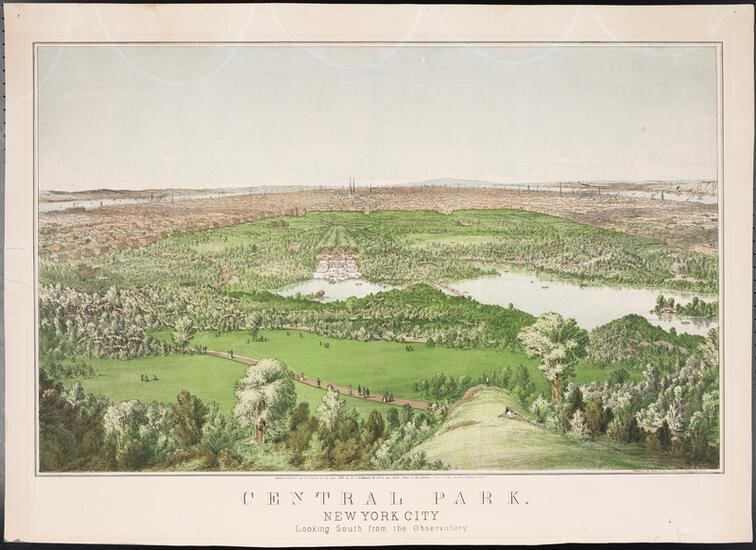
In the 19th century, New York was expanding rapidly, with industry, housing, and commerce taking up nearly all available space. Unlike many European cities, New York at that time had few designated green areas, and residents—especially those living in crowded tenements—had limited access to nature.
This pressing issue led to a strong need to create a large green space: Central Park.
Creating Central Park
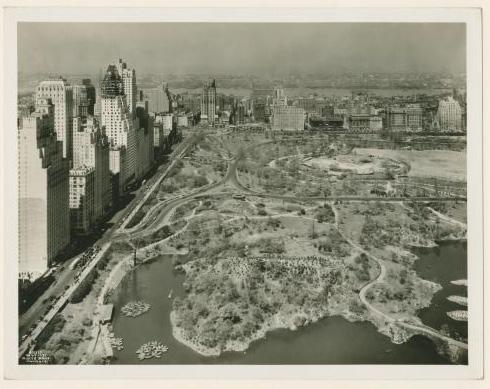
Between 1821 and 1855, the population of New York City almost quadrupled. City residents were looking for more than just housing; they were looking for places to relax, often choosing city cemeteries. At the time, these were some of the only open spaces, a refuge from the noise and hustle of the city.
The 1811 Commissioners’ Plan, which laid out Manhattan’s modern street grid, designated a few small recreational areas but did not include a large park.
By the 1840s, the city’s elite were actively advocating for the creation of a large park in Manhattan. At that time, the city had 17 public squares, totaling 165 acres (67 hectares), with the largest being Battery Park—only 10 acres (4 hectares) at the southern tip of the island.
The idea of creating a spacious green area gained support from William Cullen Bryant, the editor of the New York Evening Post, in 1844, and was later endorsed by Andrew Jackson Downing in 1851, one of the first American landscape architects. This marked the beginning of Central Park’s history. At that point, a suitable site was scouted, numerous architectural competitions were held, and the layout for the greenery was planned.
It’s worth noting the difficulties they faced during the park’s construction. The site chosen for the park was a rocky and swampy terrain. To prepare the area, they had to remove about five million cubic feet (140,000 m³) of soil and rock. The work required so much gunpowder that its use surpassed the scale of the Battle of Gettysburg during the American Civil War.
The local soil wasn’t fertile enough, so more than 18,500 cubic yards (14,100 m³) of topsoil were brought in from Long Island and New Jersey. They used state-of-the-art steam engines and tree-transplanting equipment to clear the area.
Work on the green space in the heart of New York City continued from 1857 to 1876. The first sections of the park opened to visitors in late 1858. Additional land in the northern part of Central Park was purchased in 1859, and the park was officially completed in 1876.
Central Park’s Role in NYC’s Ecosystem
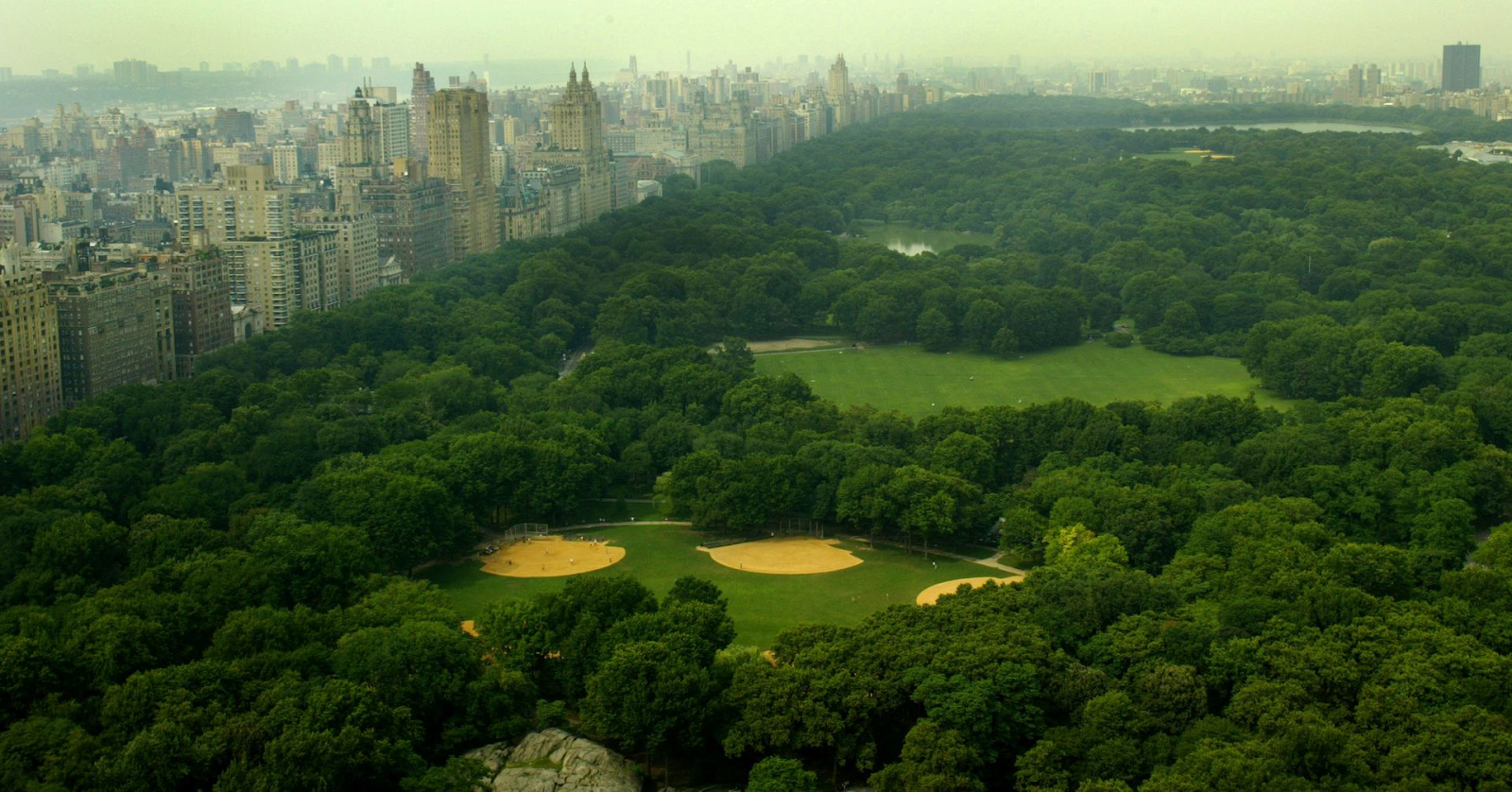
Beyond its appeal as a place for leisure and recreation, Central Park provides essential ecological services that help sustain New York’s environment.
First and foremost, with the arrival of the green oasis in the heart of New York, the city’s air quality began to improve. At the time, New York’s streets were filled with vehicles, industry, and millions of people, contributing to air pollution. But with the park’s creation, it began to act as a natural air filter thanks to its rich variety of greenery. The park absorbed pollutants like carbon dioxide, sulfur dioxide, and nitrogen oxides, while releasing fresh oxygen.
The park’s more than 18,000 trees remove tons of pollutants from the air each year, making it easier for New Yorkers to breathe. Even in the 21st century, Central Park continues to play a vital role in the city’s ecology, helping to reduce its carbon footprint and playing an important part in the fight against climate change.
It’s also worth noting that Central Park played an equally important role in regulating temperature. The urban heat island effect is well known to city residents, where intense heat is generated because asphalt, concrete, and steel absorb sunlight and radiate heat. This makes the air in the city significantly hotter than in surrounding rural areas. Central Park cools the city naturally:
- with shade from dense tree canopies;
- by absorbing heat rather than reflecting it;
- by lowering temperatures by several degrees in surrounding areas, providing relief during hot summers.
Since its creation, Central Park has repeatedly saved the city from floods by absorbing excess rainwater. It has prevented undue strain on New York’s drainage systems. The park’s lakes, ponds, and soil act as natural “sponges,” reducing the risk of flooding. Its extensive root system also prevents soil erosion and stabilizes the ground.
Even though Central Park is located in the middle of a concrete jungle, it is a well-developed ecosystem that supports a diverse range of wildlife. More than 200 species of birds call the park their home. Additionally, birds migrating along the Atlantic Flyway stop here. The park is also home to raccoons, turtles, fish, butterflies, and insects. Central Park helps the environment by sustaining biodiversity in an urban setting.
It’s also worth mentioning that New York’s streets are filled with taxis, construction sounds, and endless chatter. Central Park acts as a buffer, absorbing sound and providing a peaceful retreat.
Despite its immense value, Central Park faces environmental challenges that require constant attention. These include soil erosion, littering, and damage to vegetation. In the 21st century, rising temperatures and unpredictable weather also impact the park’s ecosystem. Warmer winters affect the growth cycles of trees, and powerful storms uproot them.
Decades have passed, but Central Park remains the “lungs” of New York. Its creation was the right engineering solution at the time, helping to solve several of the city’s ecological problems.