

Park · New York · ⭐ 9.1/10 · 16223 reviews · updated: 2026-08-04 20:06:36
Address: Broadway &, Chambers St, New York, NY 10007, United States
City Hall Park — the colonial Common where New York rehearsed the Revolution
Before it was a park it was the Common, and before it was the Common it was the edge of town: a rough triangle of grazing land where colonial New York put the things it wanted outside the city — an almshouse, a gaol, a prison workhouse, a gallows, and a militia parade ground. Then, between 1766 and 1776, it became the place where New Yorkers raised Liberty Poles and British soldiers cut them down, again and again, until the argument turned violent. Washington had the Declaration of Independence read to his troops here on July 9, 1776, with British ships already in the harbor. Two and a half centuries later it is the front lawn of City Hall: just under nine acres of lawn, London plane trees and gravel, with a restored Victorian fountain at its center and the mayor’s office at the top of the green.
Highlights
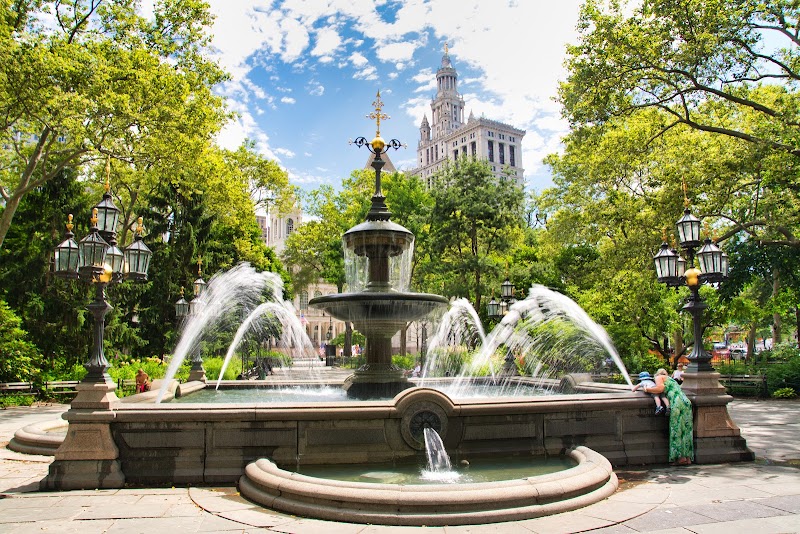
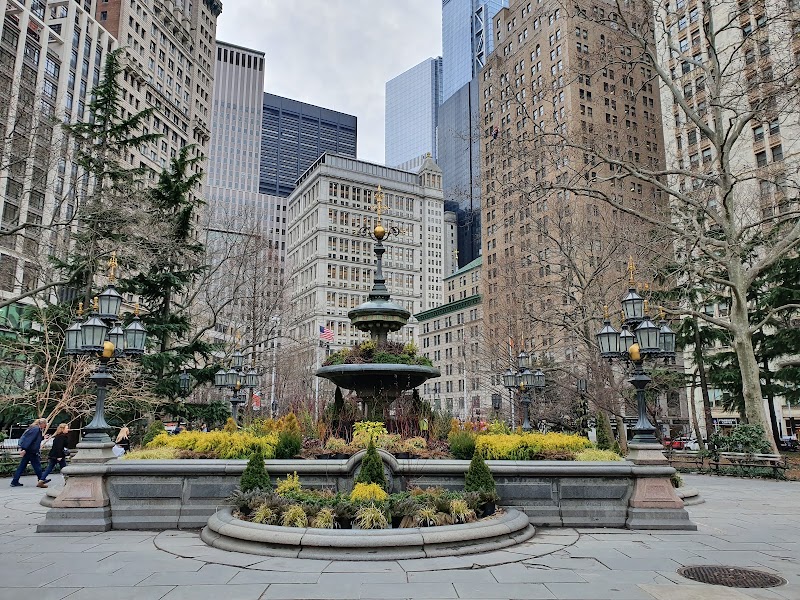
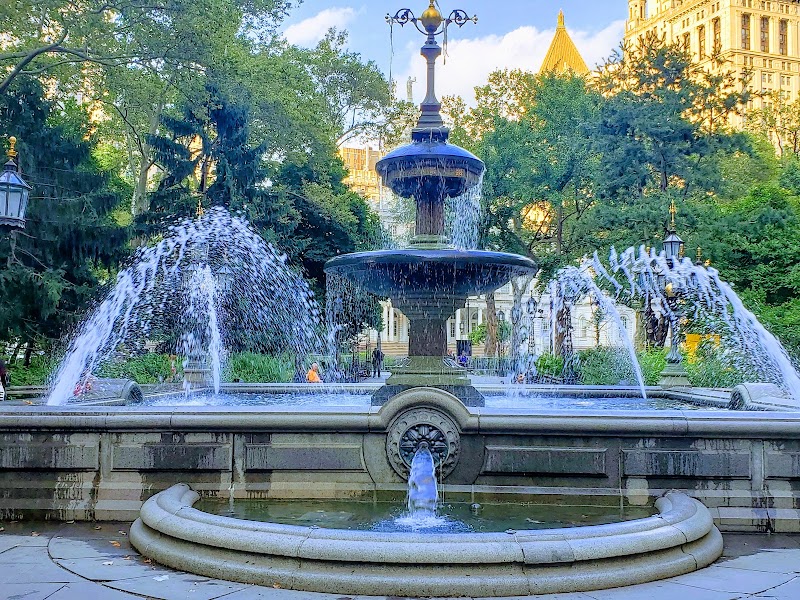
- The Jacob Wrey Mould fountain — the extravagant 1871 design by the architect who gave Central Park much of its ornament: a large square granite basin with a granite and bronze column rising from the middle and four elaborate gas-lit candelabra at the corners. It was dismantled and shipped to Crotona Park in the Bronx in 1920, and the granite base came home in 1999, with the centerpiece, candelabra and flickering gas lamps recreated from Mould’s own drawings.
- The Liberty Pole site — between 1766 and 1770 the Sons of Liberty raised a succession of poles here, the first on May 21, 1766 to celebrate the repeal of the Stamp Act, each in turn destroyed by British soldiers. The quarrel produced the Battle of Golden Hill on January 19, 1770, a bloody clash between soldiers and the Liberty Boys under Isaac Sears that some historians count as the first blood of the Revolution. A commemorative pole was placed near the original site in 1921.
- The Declaration read to the army — on July 9, 1776, Continental Army units and civilians assembled on the Common to hear the Declaration of Independence read on Washington’s order. Afterward part of the crowd went down to Bowling Green and pulled down the gilded lead statue of George III, which was shipped to Connecticut and melted into musket balls.
- Nathan Hale by Frederick MacMonnies — the bound, defiant figure of the young officer hanged by the British as a spy in September 1776, dedicated by the Sons of the Revolution on November 25, 1893, and moved in 1999 to the lawn facing City Hall’s entrance plaza.
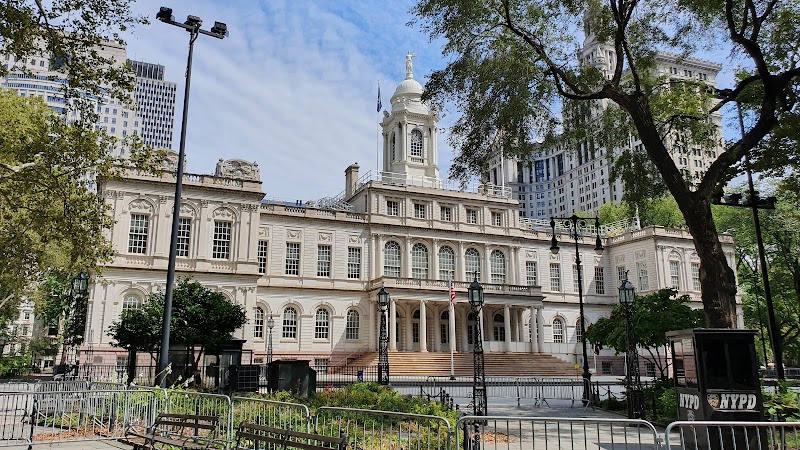
- City Hall itself — completed in 1812 to a design by Joseph-François Mangin and John McComb Jr., a Federal building with French detailing that is one of the oldest working city halls in the United States, still housing the mayor’s office and the City Council.
- Horace Greeley in bronze — John Quincy Adams Ward’s seated portrait of 1890 of the founder of the New York Tribune, moved into the park in 1916 from the newspaper district that once surrounded it.
What you’ll find
The park you see today is largely the product of a single ambitious restoration completed in 1999, which pulled up acres of paving, put back lawn and trees, laid a central walkway and returned the Mould fountain. The result reads as a formal nineteenth-century civic garden rather than a modern plaza, which is exactly the intention.
- The restored fountain at the center, running seasonally, with its four candelabra and its ring of benches.
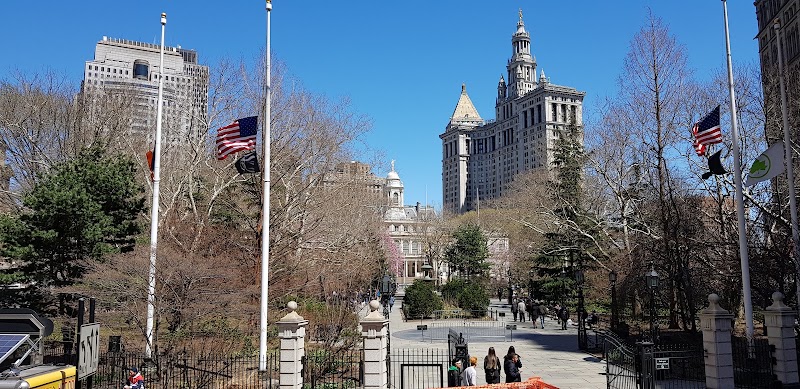
- Lawns and mature London plane trees, laid out along a central axis running up to City Hall.
- Period-style lamps, iron fencing and granite benches installed in the 1999 works.
- Monuments to Nathan Hale and Horace Greeley, plus the commemorative Liberty Pole.
- Shaded gravel walks that fill at lunchtime with workers from the courts, the municipal offices and the surrounding financial district.
- Direct connections to the Brooklyn Bridge pedestrian walkway and to the African Burial Ground National Monument a short walk away.
Things to do — and who it’s for
- History travelers — this is the densest concentration of Revolutionary-era civic history in Manhattan, and the ground itself is the exhibit; every major episode happened within the fence line.
- Brooklyn Bridge walkers — the park is the natural staging point before or after the bridge crossing: shade, benches, water and somewhere to sit down at the end.
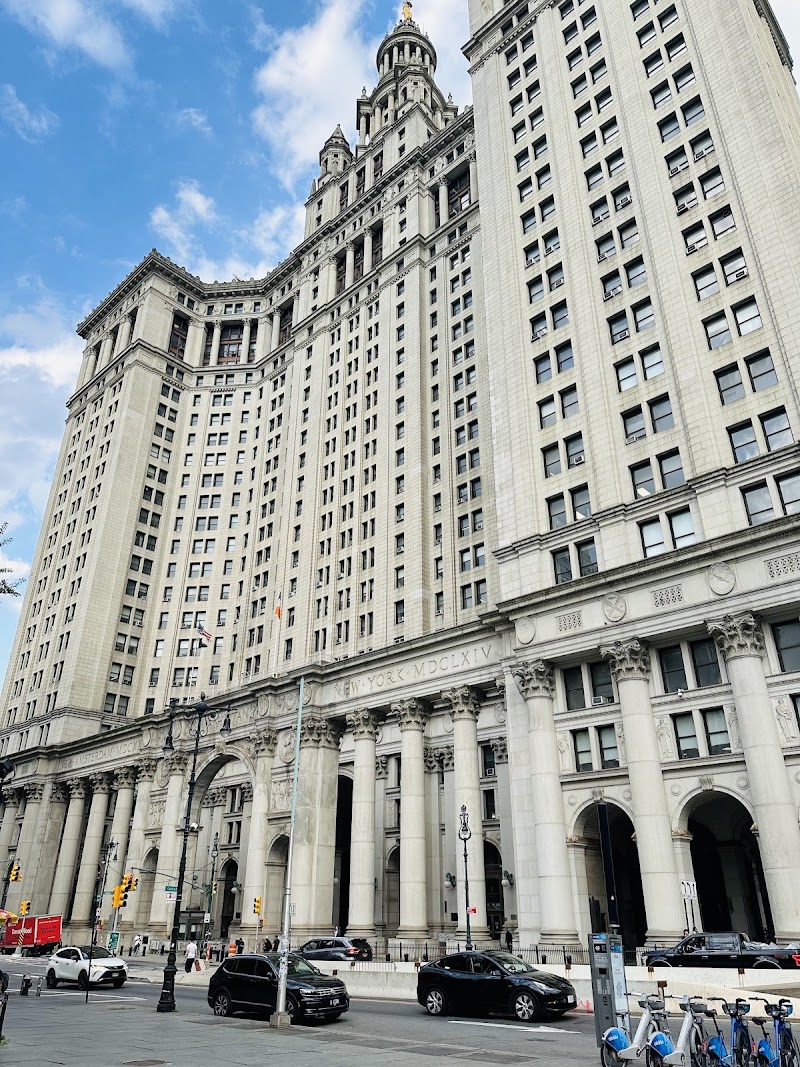
- Architecture followers — City Hall, the Tweed Courthouse, the Municipal Building and the Woolworth Building are all visible from the same lawn, which is a rare stack of American civic architecture from 1812 to the skyscraper age.
- Downtown workers — the most pleasant lunch park in the Civic Center, and the only one with real grass and a working fountain.
- Photographers — the fountain with City Hall behind it is the classic shot; the surrounding towers give you a hundred and fifty years of skyline in one frame.
- News watchers and civic observers — press conferences, rallies and the finish of the city’s ticker-tape parades all happen here, which means the park is still doing the job the Common did.
Getting there & practical
The park is the heart of the Civic Center district in Lower Manhattan, wedged between the Financial District, Tribeca and the Brooklyn Bridge approach. Transit is exceptional: the 4, 5 and 6 stop at Brooklyn Bridge–City Hall on the park’s edge; the R and W stop at City Hall; the 2 and 3 stop at Park Place; the A, C, J and Z stop at Chambers Street; and the E, together with PATH trains from New Jersey, reaches the World Trade Center a few minutes away, with the Fulton Center hub nearby as well. Entry to the park is free and unrestricted during park hours, which run from early morning to late evening. City Hall itself is a working seat of government behind security fencing and can only be visited on a booked tour, but the park, the fountain and all the monuments are freely open. Allow around thirty to forty minutes; add time if you are combining the visit with the Brooklyn Bridge or the African Burial Ground National Monument. Paths are level and accessible.
When to visit
Spring is the busiest and prettiest season, when the trees leaf out, the fountain is switched back on and the flow of walkers heading for the Brooklyn Bridge is at its heaviest — early morning is markedly calmer. Summer turns the park into the shaded lunch room of the Civic Center; it is at its most alive between noon and two on weekdays and surprisingly empty at weekends, when the surrounding offices and courts are closed. Autumn is the connoisseur’s season: the plane trees turn, the low light rakes across City Hall’s facade, and the crowds fall away after the summer tourist peak. Winter reveals the plan — with the leaves gone you can read the axial layout, the fencing and the architecture of City Hall as designed, and the park is at its quietest, although the fountain is normally shut down against frost.
Good to know
This was the town Common of colonial New York, well outside the built city, and it carried the institutions no one wanted nearby: an almshouse built in 1736, the New Gaol of 1759, and the Bridewell prison workhouse of 1775, along with British barracks. Public punishments were carried out here. During the British occupation after 1776 the gaol and Bridewell held American prisoners of war in conditions that killed hundreds. The Common was also the city’s political stage. New Yorkers gathered here in 1765 to oppose the Stamp Act and again on March 18, 1766 to celebrate its repeal; on May 21, 1766 the Sons of Liberty raised the first Liberty Pole, topped with a sign reading “George 3rd, Pitt — and Liberty.” Redcoats cut it down that August, and a further sequence of poles was raised and destroyed until the confrontation escalated into the Battle of Golden Hill on January 19, 1770. On July 9, 1776 Washington had the Declaration of Independence read to assembled troops and citizens here, with more than a hundred and fifty British ships in the harbor; the crowd then destroyed the equestrian statue of George III at Bowling Green. After independence the Common became the seat of city government: the cornerstone of City Hall was laid in 1803, the building opened in 1811 and was completed in 1812, designed by Joseph-François Mangin and John McComb Jr., whose French-inflected Federal design has kept the building in continuous municipal use ever since. The Croton Fountain was installed in 1842 to celebrate the city’s first reliable clean water supply, and in 1871 Jacob Wrey Mould’s ornate fountain replaced it. The Tweed Courthouse rose on the park’s northern portion between 1861 and 1881, its cost inflated by the Tweed Ring into one of the defining corruption scandals of American municipal history. From 1880 to 1939 an enormous Second Empire post office by Alfred B. Mullett occupied the park’s southern tip, widely disliked and eventually demolished. Mould’s fountain went to the Bronx in 1920. The Delacorte Fountain of 1972 stood here until 1999, when a restoration reported at some $34.6 million stripped out the paving, restored lawns and gardens, moved the Nathan Hale statue to face City Hall and brought Mould’s fountain back — the base original, the bronze work and gas lamps recreated from his drawings and unveiled as the park reopened.
Visitor tips
- Come on a weekday if you want the park in use — courts, City Hall and the municipal offices fill it at lunchtime; come at the weekend if you want the fountain and the monuments to yourself.
- Pair it with the Brooklyn Bridge walkway, which begins right beside the park, and with the African Burial Ground National Monument a few minutes away; together they make a coherent morning of pre-Revolutionary and colonial New York.
- Look at the fountain closely: the granite basin is Mould’s original, returned from the Bronx, while the bronze column, the candelabra and the gas lamps are careful modern recreations from his nineteenth-century drawings.
Questions & answers
Is City Hall Park free to visit? Yes. The park, the fountain and all its monuments are free and open during park hours. Only City Hall itself is restricted: it is a working seat of government and requires a booked tour.
Was the Declaration of Independence really read here? Yes. On July 9, 1776, on Washington’s order, it was read aloud to Continental Army units and to civilians assembled on the Common, at a moment when a large British fleet was already in the harbor. Part of the crowd then went and pulled down the statue of George III at Bowling Green.
What is the Liberty Pole? A mast raised by the Sons of Liberty as a symbol of resistance. The first went up on the Common on May 21, 1766, celebrating the repeal of the Stamp Act; British soldiers destroyed it and its successors, and the running fight led to the Battle of Golden Hill in January 1770. The pole standing near the site today was placed in 1921.
Why is the fountain significant? It is Jacob Wrey Mould’s design of 1871, by the architect responsible for much of Central Park’s ornamental detail. It was removed to Crotona Park in the Bronx in 1920 and returned in 1999, with the granite base original and the bronze centerpiece, candelabra and gas lamps recreated from Mould’s drawings.
What was on this land before the park? The colonial Common — an almshouse from 1736, the New Gaol from 1759, the Bridewell prison workhouse from 1775, British barracks and a place of public punishment. Under British occupation the gaol and Bridewell held American prisoners of war, many of whom died there.
How old is City Hall? Its cornerstone was laid in 1803, it opened in 1811 and was completed in 1812, designed by Joseph-François Mangin and John McComb Jr. It is among the oldest city halls in the United States still used for its original purpose.
Who are the statues? Nathan Hale, the young officer hanged as a spy by the British in 1776, sculpted by Frederick MacMonnies and dedicated in 1893; and Horace Greeley, founder of the New York Tribune, sculpted by John Quincy Adams Ward in 1890 and moved into the park in 1916.
How long should I allow? Thirty to forty minutes is enough to walk the park, read the monuments and take in City Hall. Budget more if you are crossing the Brooklyn Bridge or continuing to the African Burial Ground National Monument.
Photos
Show 1 more photos
Visitor reviews
Reviews last updated: 2026-08-04 20:06:36
Data is refreshed monthly. Sources: new-york.name and editorial picks based on reviews.
A pretty little park in front of City Hall. In the middle there's a nice fountain and a few benches. There are often food trucks in front of City Hall if you want a bite to eat in the park. I wouldn't call it a destinati…
A very interesting museum. Lots of landmarks
Quite beautiful when it's not too crowded