

At first glance, New York City seems completely unsuitable for raising honeybees: skyscrapers abound, sidewalks are crowded, and there is hardly any open space. However, thousands of successful bee colonies are hidden on rooftops and in secluded backyards across all five boroughs. Here is on new-york.name an overview of how beekeeping is thriving in New York City.
Bees Amidst the Metropolis Skyscrapers
In New York, where every square foot is worth gold, even bees have their rules. This is not just a whim of the city authorities—it is a system that allows for harmony between hives, people, and the big city.
Beekeeping in New York City only became legal in 2010. Before that, honeybees were considered “prohibited animals,” on par with boa constrictors and ferrets. But thanks to the persistence of local enthusiasts, the ban was lifted. Since then, bees have officially become a part of urban life.
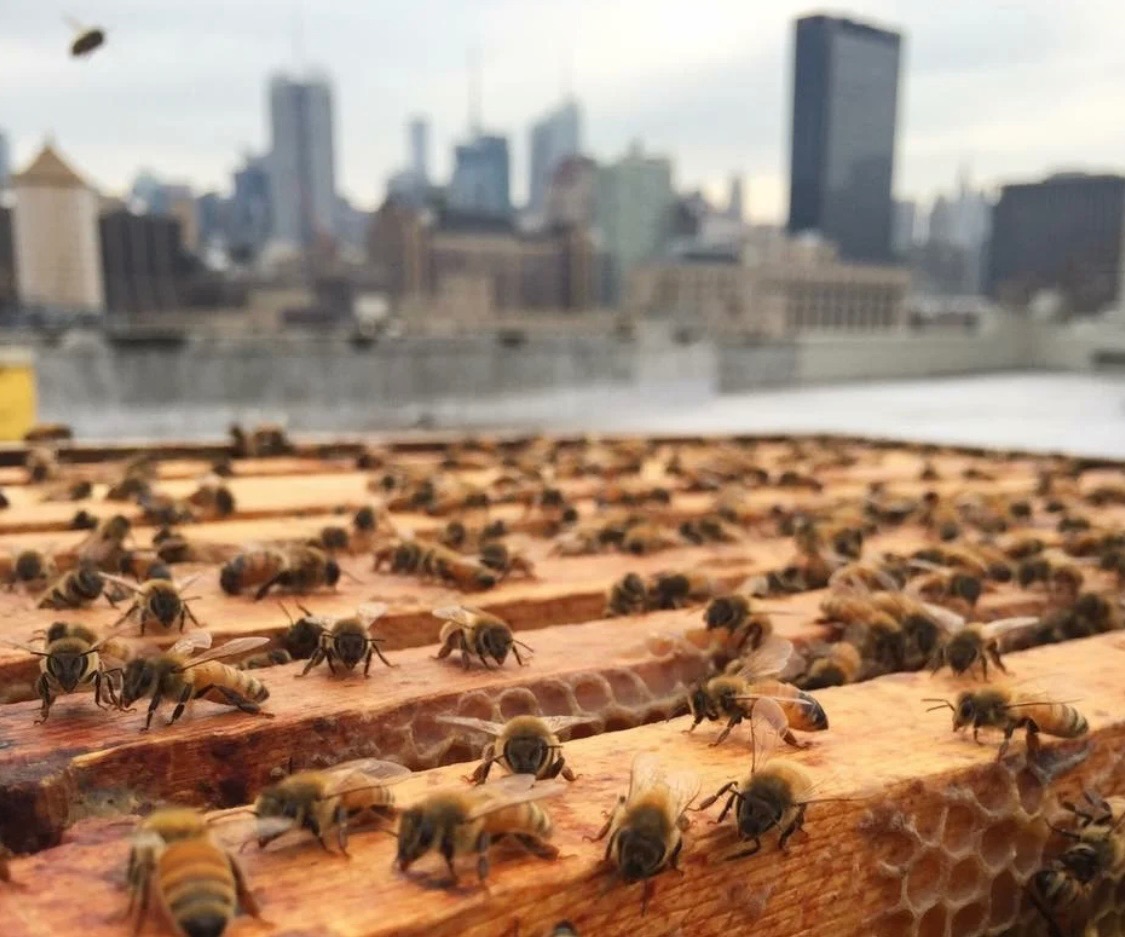
Every beekeeper is obligated to register their hives annually with the Department of Health (DOHMH). It is free and takes only a few minutes, but it is very important. This data allows the city to warn beekeepers if spraying is planned nearby or to detect the source of a disease among bees.
Another requirement is to be registered with the New York State Department of Agriculture and Markets.
The New York City Health Code clearly dictates:
- Hives must be well-maintained. Removable frames allow for quick checks of the colony’s health, and broken parts must be replaced immediately.
- Bees must have water. A simple bird bath or fountain keeps the insects from flying into a neighbor’s wading pool.
- The flight path should not interfere with people. Beekeepers often install six-foot fences or place hives so that bees immediately ascend above head level.
Most urban apiaries are located on rooftops—offering space, safety, and tranquility. While the law does not set an official distance between a hive and a neighbor’s property, five feet is a good rule of courtesy.
The Varroa mite and American foulbrood have not bypassed New York. Therefore, regular monitoring and prevention are mandatory. Local beekeeping clubs conduct training on organic treatments, sharing experiences, and even tracking infection statistics by borough.
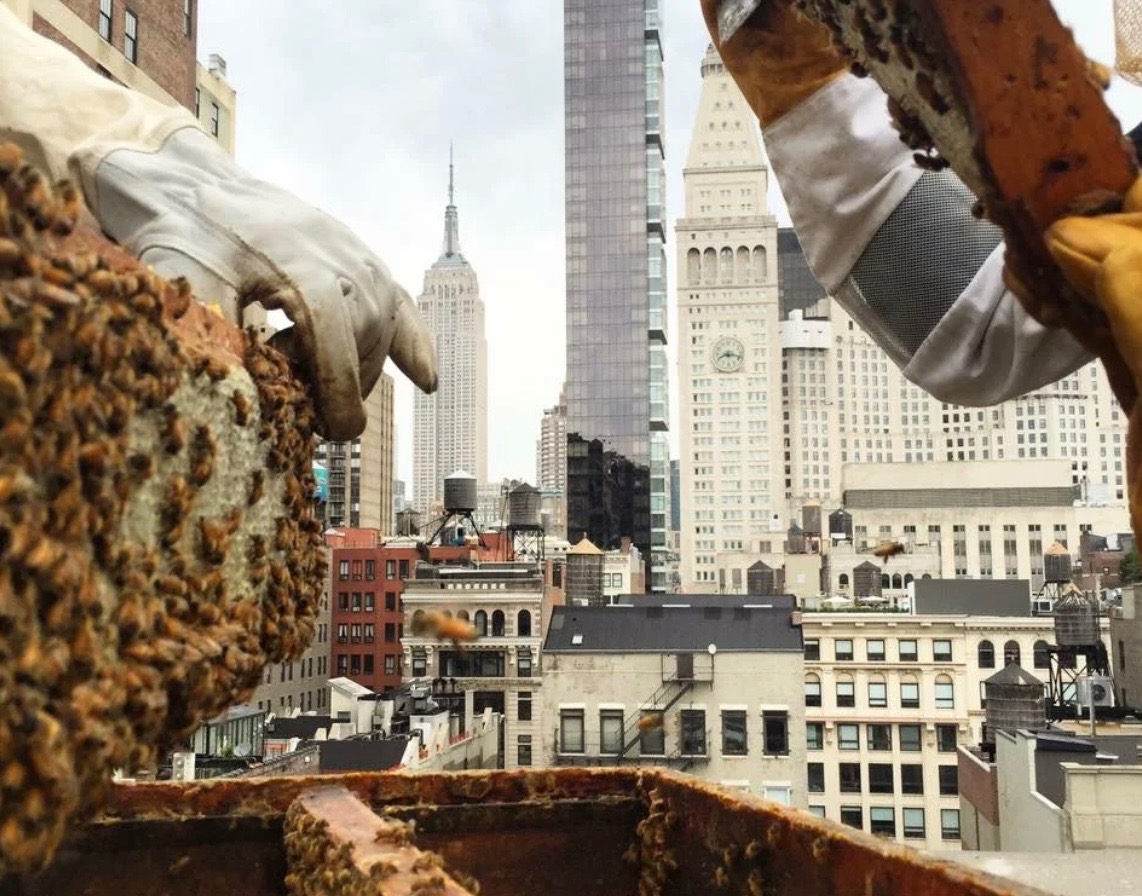
Today, New York’s bees fly between skyscrapers, pollinating parks, rooftops, and urban gardens. Their buzzing has become part of the great symphony of a city that has learned to live in harmony even with its smallest residents.
How Bees United a Community: The Birth Story of Bee U NYC
Bee U NYC was born from a small idea that grew into a powerful movement. It all started in 2021 when, during a city council election campaign, campaign manager Wairimu Ogunyemi was looking for ways not just to engage the community but to give it something truly valuable.
The search led him to a close acquaintance—Saint-Jour, who managed urban hives as part of the City Growers initiative in Brooklyn. It was there that Wairimu saw how a few hundred bees could rally entire blocks around them.
“What if we make bees a symbol of environmental education and community development?” he thought.
That question was the starting point. The team launched a small initiative—a few hives and a handful of willing volunteers. But the community’s reaction exceeded all expectations: residents were captivated, asked questions, came with children, and brought water for the bees. Thus, Bee U NYC was born—not just a project, but a future school for urban youth, where the apiary is the classroom and the hive is the textbook.
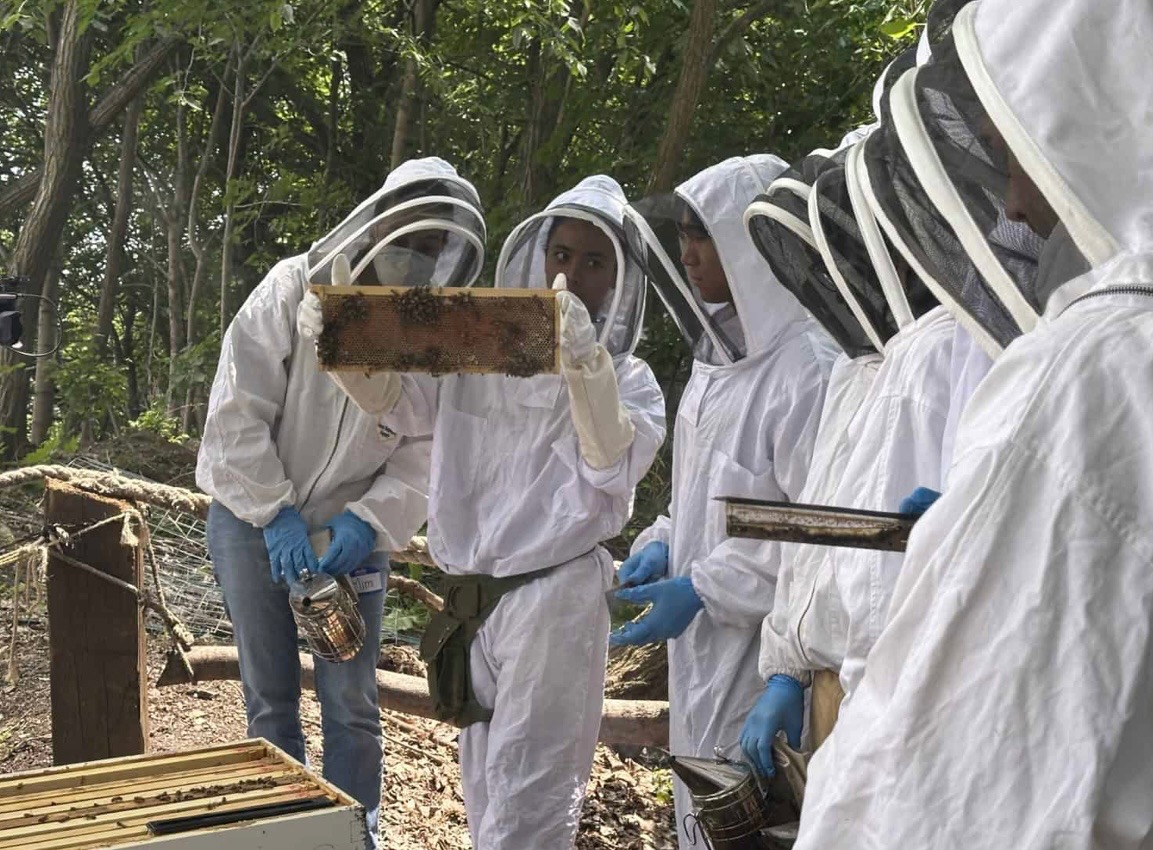
“We realized we could create something bigger than just an apiary. We could give young people skills, confidence, and a path to environmental leadership,” says Wairimu.
Bee U NYC focuses its work in Staten Island neighborhoods like Stapleton and Park Hill—communities that often remain marginalized from environmental initiatives. There, bees become not only teachers but ambassadors for justice.
Furthermore, the lack of green spaces and ecological programs in urban areas creates inequality in access to future “green” professions. This is where Bee U NYC changes the situation—by working directly in these communities, the organization offers education, mentorship, and practical training to youth, particularly representatives of underrepresented groups—women, LGBTQ+ youth, Black, and Latino communities.
“We don’t wait for someone to come to nature,” says Kazi, one of the Bee U NYC mentors. “We bring nature to the people. The hive is just the beginning. The real impact goes far beyond it.”
Bee U NYC Programs: How Bees Help Build the Future
Bee U NYC develops its initiatives around three main areas:
- Environmental education, founded on principles of justice and equity.
- Developing a green workforce through the Green Jobs Pipeline program.
- Community engagement and fostering new local leaders.
The main Bee U NYC program—the Urban Beekeeping Fellowship—lasts several months and is designed for youth aged 16 to 24. Participants study leadership, environmental justice, and, of course, the fundamentals of beekeeping. The program is built on the principle of learning through experience; fellows not only attend lectures but also work directly with hives, harvest honey, and participate in community projects.
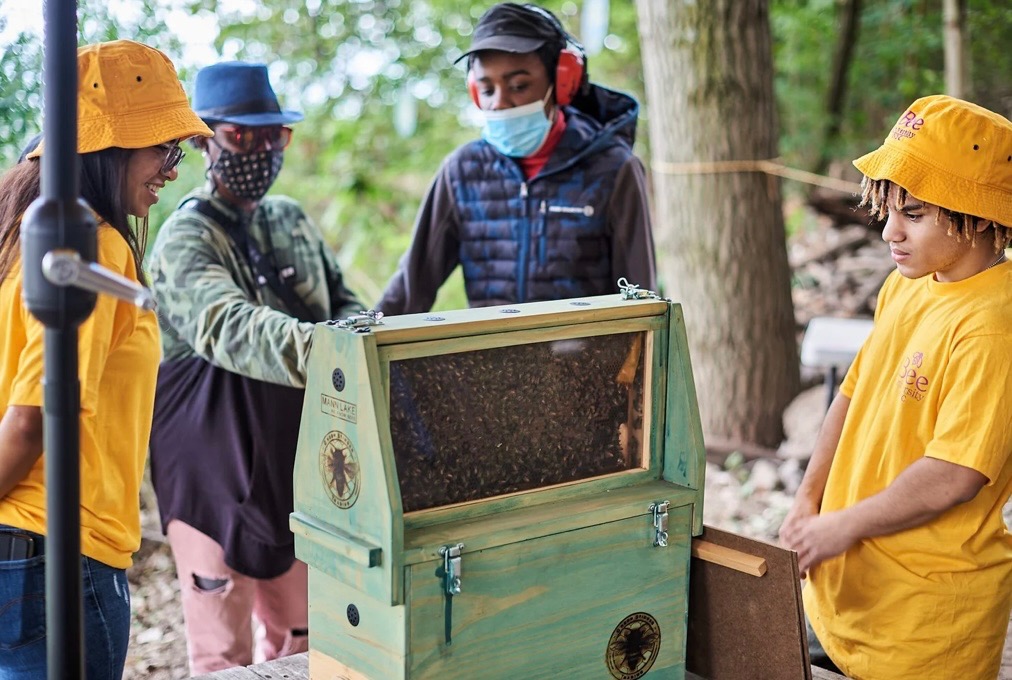
Bee U NYC actively helps graduates take their first steps in “green” professions. Former fellows can become program coordinators or environmental educators, intern with the New York Bee Club, or join partners like Beezy Bees or Astor Apiaries.
Another popular initiative is Hive Experiences. These are 60–90-minute interactive workshops during which participants learn about honeybees, understand the role of pollinators, and explore how climate and food systems are interconnected.
Bee U NYC is deeply rooted in its community. Every spring, the organization hosts an Open House at Maker Park—with hive painting, candle making, and presentations from the New York Bee Club. The team also regularly participates in local events, inspiring residents to get involved in environmental change.
Among Bee U NYC’s partners are the Gowanus Canal Conservancy, the LES Ecology Center, the DJ McManus Foundation, the Citizens Committee for New York City, and the Staten Island Foundation. Thanks to this support, the organization recently launched a new cohort at the Weeksville Heritage Center in Brooklyn.
Bee U NYC also collaborates with the New York Harbor School, where it runs a year-long urban beekeeping program for high school students. Students study the biology of honeybees, pollination, hive management, and the role of pollinators in urban ecosystems.
Bee U NYC proves that change can start small—even with a bee. Their programs don’t just teach hive management; they nurture a new generation of environmentally conscious leaders who are capable of transforming their communities and the world around them.
The Story of Andrew Coté: New York’s Urban Beekeeper
Andrew Coté was born into the world of bees—literally. His family has been beekeeping for four generations.
“Bees were as natural in our family as the French language in our home in northern Quebec,” he jokes.
But despite this inherited profession from the cradle, Andrew tried his hand in the academic world before finally embracing the call of the hives.
“I didn’t aspire to be a beekeeper,” he admits. “I just wanted to spend more time with my father, whom I loved very much.”
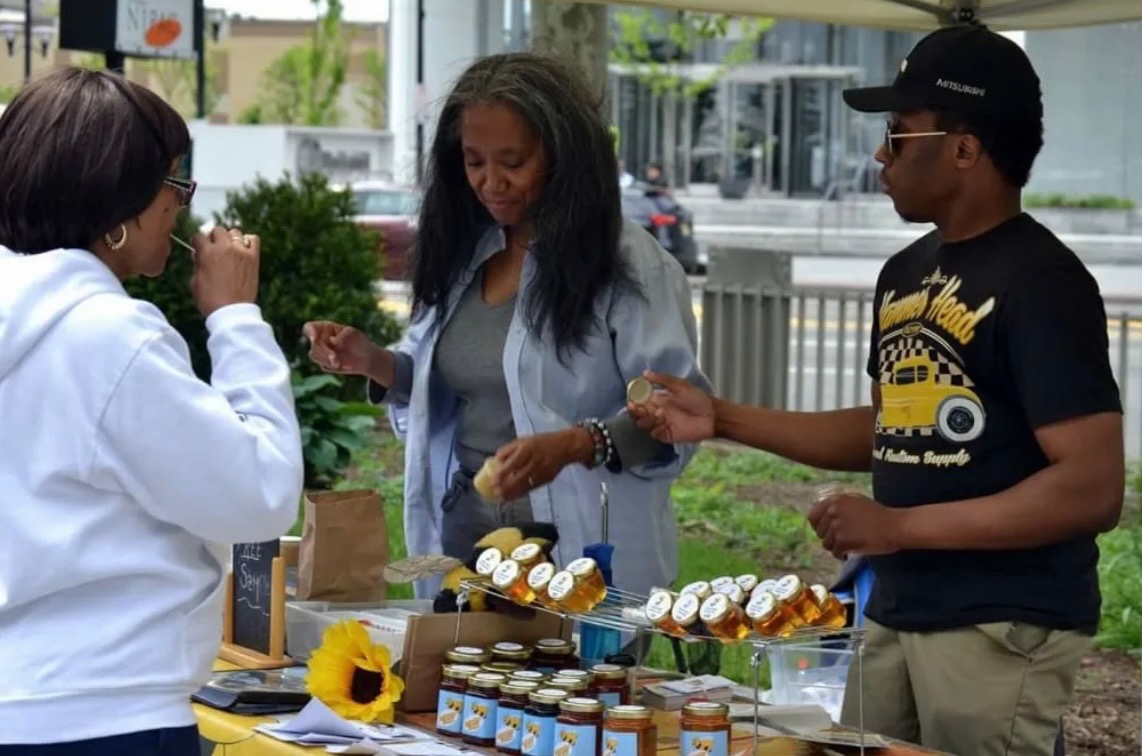
So, in 2005, along with his father and brother, he founded Andrew’s Honey—a small family business that later became part of New York’s gastronomic landscape. Their honey is sold at the Union Square Greenmarket, graces the tables at Eleven Madison Park and Gramercy Tavern, and sits on the shelves of famous culinary personalities—from Jean-Georges Vongerichten to Padma Lakshmi—and even at the UN headquarters. Andrew jokes that his job isn’t just standing on a roof and smiling at bees. It involves early mornings, heavy boxes, endless trips, sticky clothes, and 14-hour days at farmers’ markets. Despite all the difficulties, it is in the hives that he finds peace.
“When I stand alone on a rooftop and watch the bees in their harmonious flurry turn the sun into honey—I feel true meditation.”
His work has long since spread beyond New York. Andrew helps create “bee fences” in Tanzania to keep elephants from trampling crops, conducts beekeeping training in Iceland, gives lectures in Fiji, and sets up apiaries in the Cayman Islands.
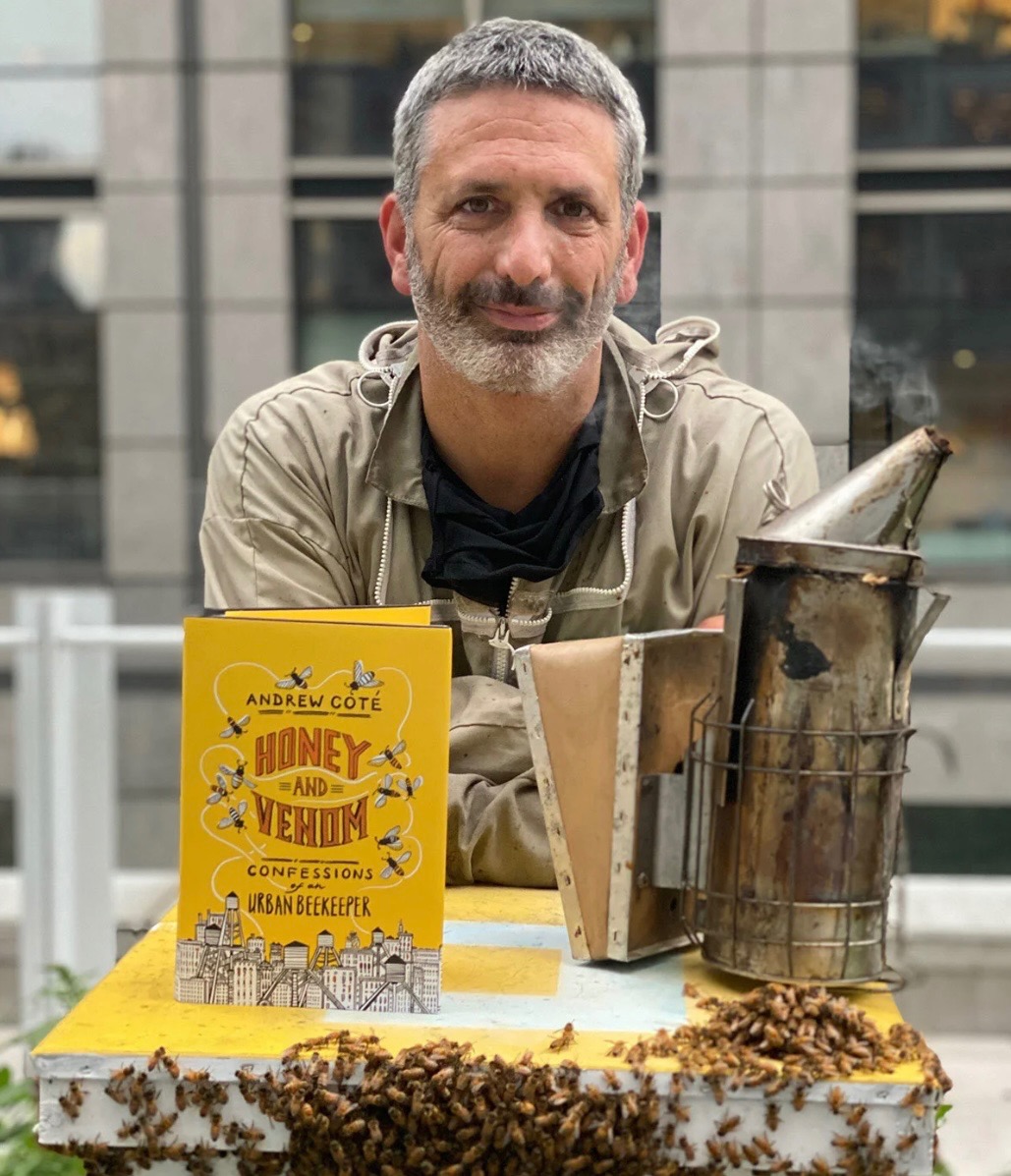
He is the author of the book Honey and Venom: Confessions of an Urban Beekeeper, in which he shares not only practical advice but also a philosophy of life among the bees. The 2020 pandemic was a severe blow; tourists, restaurants, and office workers—the main buyers of his honey—disappeared. But even then, Andrew did not lose his optimism or abandon the life’s work he loved.
Regarding the future, Coté remains a realist:
“I don’t think I’m changing the industry, but I want to be part of its evolution. To those who dream of this profession, I would advise starting with love, not money. Beekeeping is not the path to wealth, but the path to a deep understanding of the world. There are over 250 species of bees in New York. The honeybee is only one of them. And although our hives are small, every drop of honey created in the city is worth its weight in gold.”