

New York is home to countless prominent individuals who have made enormous contributions to the region’s development. Among them, Seth Green stands out as the father of American fish culture. He laid the foundation for commercial fish farming in the U.S. Read more at new-york.name.
The Life of Seth Green
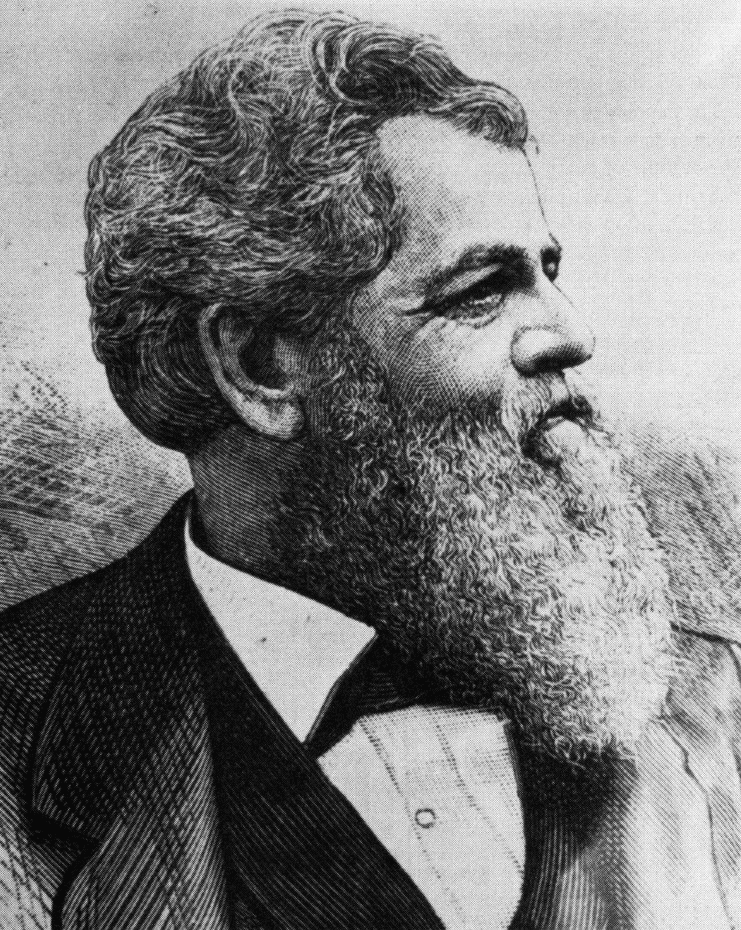
Seth Green was born in Rochester, New York, way back in 1817. He grew up on a family farm, so he was no stranger to nature from a young age. But perhaps his favorite pastime in his youth was fishing. Green often fished with his father and local Native Americans near the small village of Carthage, along the Genesee River near Rochester.
Even though Green had a special passion for nature and fishing and helped his parents on the farm, his formal education was limited to the fifth or sixth grade at a local district school in Carthage. He would later become a pioneer of commercial fishing.
The Decline of Fish Populations
In 1837, when the financial panic severely impacted the economy of Carthage, Green made the decision to leave home and start his career in the fishing industry. He was 20 years old at the time. He settled along the Genesee River, where he gradually began to develop his fishing business. Soon, he and his partners established a small market where they sold fresh fish. By 1857, Green’s market employed over 100 people, a testament to the colossal success of his venture. It wasn’t just a good market with fresh fish; it was one of the largest and most prosperous fish markets in all of New York State.
To keep his market in Carthage supplied with fresh fish, Green traveled extensively along the shores of Lake Ontario, searching for the best fishing spots. The fishermen he hired supplied the market with 1,000 to 6,000 pounds of fish daily. In addition to fishing, Green also observed the spawning of Atlantic salmon near Cobourg, Ontario. This observation prompted him to consider raising his own fish to replenish stocks for both commercial sale and sport fishing. He was particularly motivated by concerns over the declining fish populations in the mid-19th century.
Unfortunately, overfishing was rampant at the time, which quickly led to the destruction of fish habitats and a decline in fish stocks. Green realized the importance of using sustainable methods that would replenish fish populations and maintain ecological balance. At the time, Green’s idea of breeding and conserving fish was revolutionary, as most people then believed that fish were an inexhaustible resource.
A Revolution in Fish Farming and the First Fish Hatchery
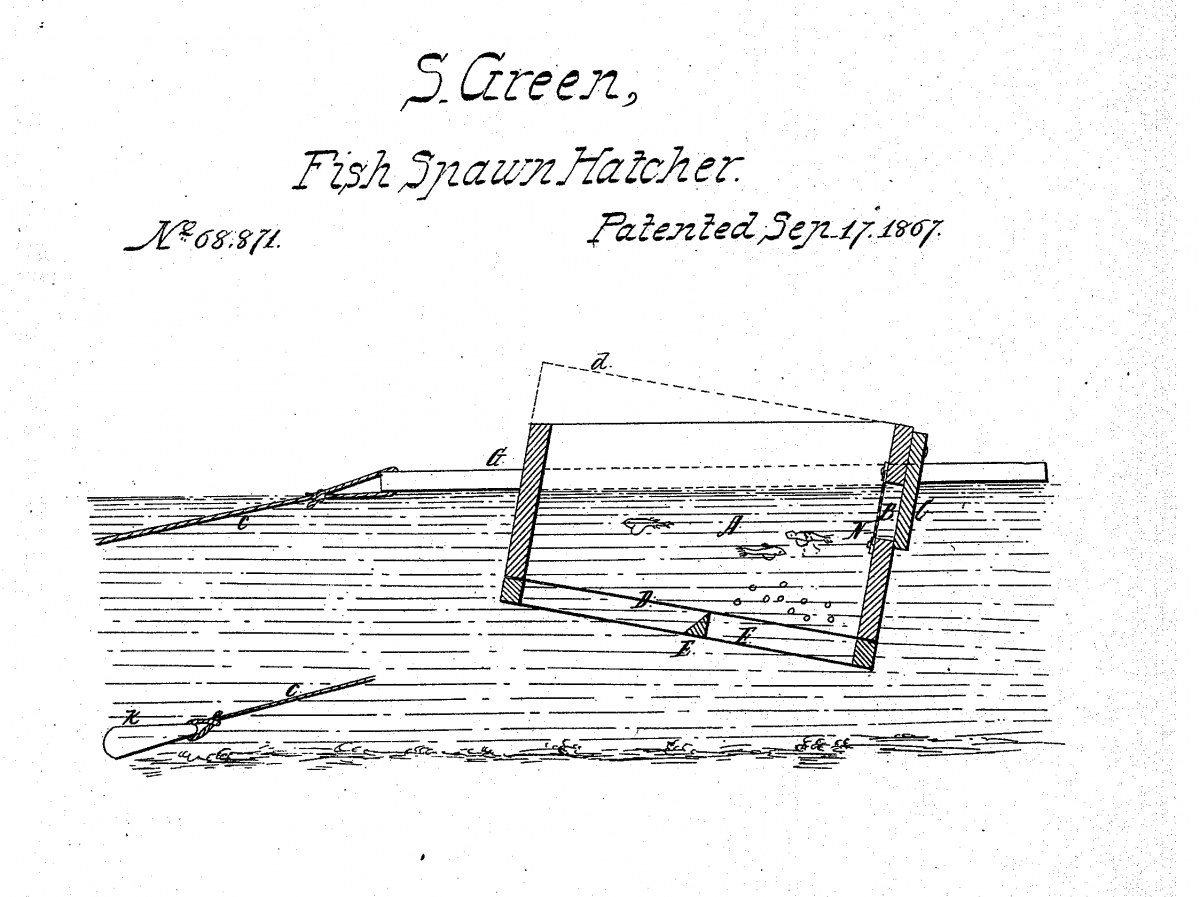
Green’s first major breakthrough came in 1864 when he successfully bred and raised brook trout, which garnered significant attention. This wasn’t just a scientific achievement; it was a practical solution to a pressing ecological problem. By controlling the breeding and hatching process, Green could ensure a stable supply of fish, which was crucial for both commercial and recreational fishing.
Green’s entire operation was based solely on his own observations, ancient fish farming texts, and the experiments he frequently conducted along the Genesee River.
In addition to becoming the first person in the Western Hemisphere to establish a fish hatchery in the 1860s, Green was also the innovator of a new fertilization method he called “dry fertilization.” He kept all his methods for raising and breeding fish a strict secret. This allowed him to successfully raise and sell Atlantic salmon and brook trout for many years. Over time, Green expanded the types of fish he raised, adding herring, rainbow trout, and brown trout to his repertoire.
In the 1860s, Green also studied herring and developed methods for their successful reproduction. He managed to increase the number of herring in the Connecticut River by stocking it with fingerlings, which later led to a massive harvest in 1870. This harvest was 60% larger than the 1811 harvest, which was considered the largest ever recorded in history.
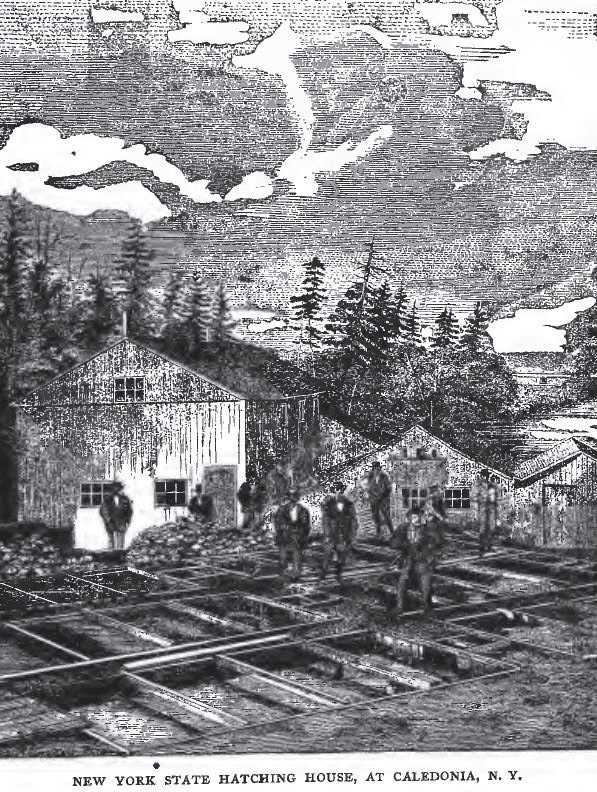
The success of his experiments led to the creation of the first fish hatchery in the U.S. in Caledonia, New York. The Caledonia Fish Hatchery became a model for other fish hatcheries across the country and even internationally. Green’s methods were groundbreaking, including collecting fish eggs, fertilizing them under controlled conditions, and then releasing the fingerlings into rivers and lakes. These methods drastically increased fish survival, ensuring that depleted stocks could be restored.
From a young age, Seth Green understood that fish were not an infinite resource and that overfishing could easily deplete rivers and lakes. In addition to his fishing business, Green served as a public official in the 1860s and 1870s, initiating the creation of the state’s Fisheries Commission. Green was one of New York’s first Fish Commissioners. His duties included surveying lakes and rivers and working to increase fish production in New York State’s waters. It’s worth noting that although Green represented New York State, he actively promoted his business, his breeding methods, and his stocking practices all along the East Coast.
The prominent fish industrialist died in 1882 at the age of 71. He passed away from typhoid pneumonia, which he contracted during a fishing trip to the Carolina coast.
Sources: